How a lost Greek manuscript on burning mirrors changed the history of geometry
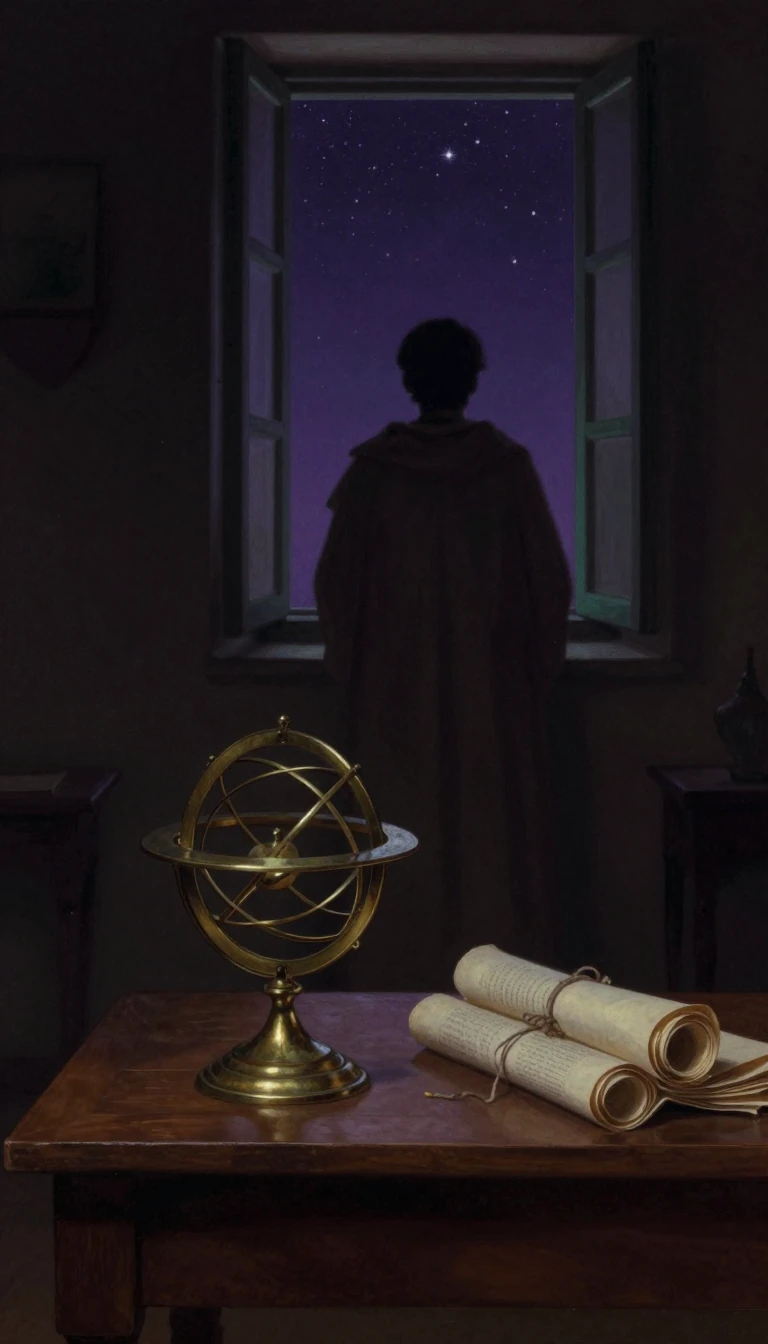
In short: For centuries, the mathematician Diocles was a ghost, known only through fragments cited by others. The 1976 discovery of an Arabic translation of his work, On Burning Mirrors, finally revealed his pioneering role in the theory of conics, his invention of the cissoid curve, and his proof of the parabola's focal property.
Born around 240 BC and dying near 180 BC, Diocles was a contemporary of Apollonius. For much of history, his contributions were known only through Eutocius, who preserved fragments of his work in a commentary on Archimedes. It was not until the discovery of an Arabic translation in the Shrine Library in Mashhad, Iran, that scholars gained a clearer picture of his mathematical output. This text, published by G. J. Toomer in 1976, contains sixteen geometric propositions that offer a remarkable look at conic theory in the early second century BC.
The treatise, titled On Burning Mirrors, is likely an amalgamation of three separate works. It covers the focal properties of parabolic mirrors, Archimedes' problem of cutting a sphere into a given ratio, and the duplication of the cube. Diocles was the first to prove that a parabolic mirror focuses rays at a single point, a discovery that later influenced Arab mathematicians like al-Haytham. He also invented the cissoid curve, which he used to solve the problem of finding two mean proportionals between magnitudes—a method essential for duplicating the cube.
Diocles’ work suggests that terms like 'parabola' and 'ellipse' were in use before Apollonius, challenging long-held historical beliefs. While he worked in Arcadia, he was part of a decentralized network of Hellenistic scholars who communicated through travel and correspondence. His research even extended to complex problems regarding caustic curves and sundial construction. Although some of his more advanced arguments may have been omitted by later copyists who struggled to follow his logic, his influence eventually reached European mathematicians via Latin translations of al-Haytham around 1200.
The survival of his work highlights the vital role of Arabic translations in preserving Greek mathematical thought. Through these texts, we see Diocles not as a minor figure, but as an innovative geometer whose explorations of conic sections and mirror optics bridged the gap between the classical era and the later developments of the Middle Ages.
Opens the Intellect+ feed with this card first. Swipe up for the next one.
Sources
- Summary by Intellect · source: Diocles - Biography
- Also: Diocles (mathematician)
To cite this card, link to https://intellectplus.co.uk/app/science-diocles-mathematician.
How we source, check and correct cards: Editorial standards.
General information, not professional advice. Spotted an error? Flag the card or see corrections and complaints.
Intellect Plus is a visual educational discovery platform for exploring fascinating facts and ideas. Brain Food, Not Brain Rot. What is Intellect Plus?
Related
More in Mathematicians · More in Science · Latest · A–Z · All topics
