Can music mean anything if it has no words, story, or external message?
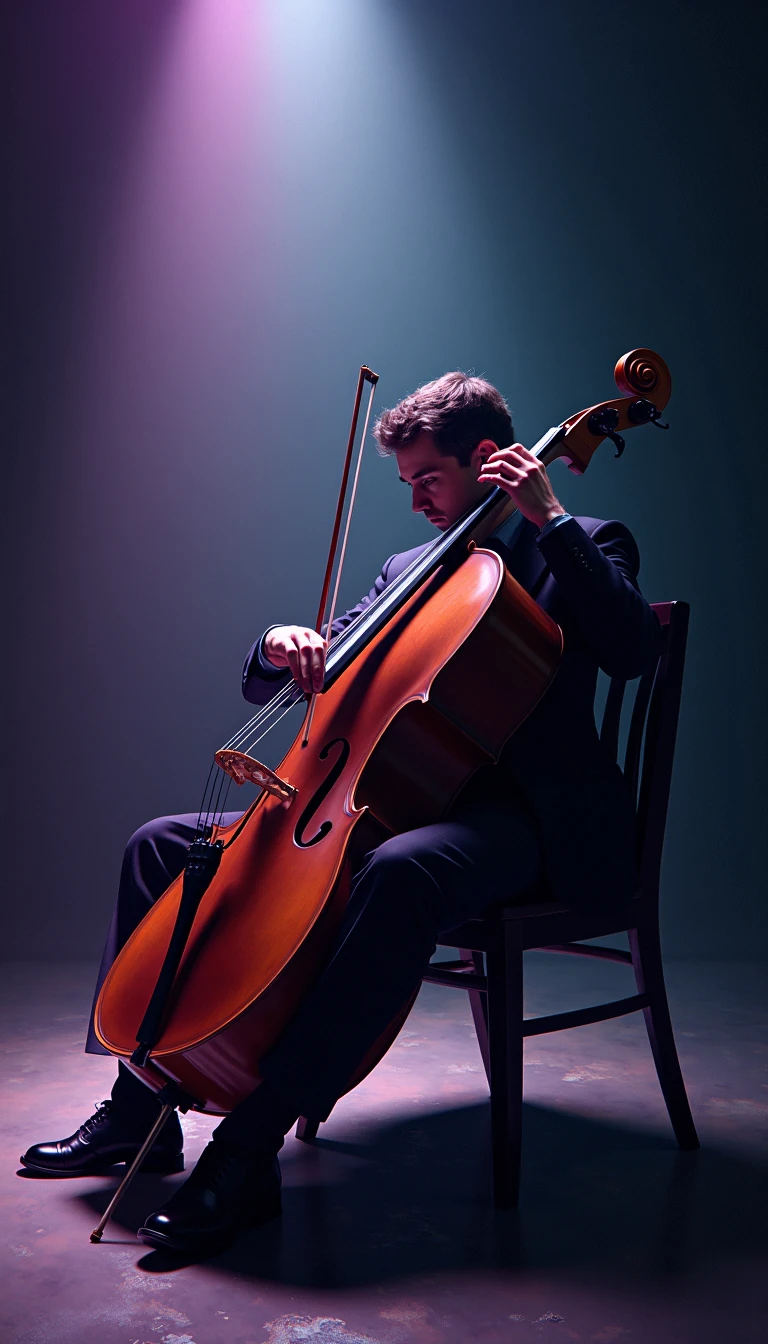
In short: Eduard Hanslick, the 19th-century critic who defined the War of the Romantics, argued that music’s meaning is found solely in its form. By rejecting the era's obsession with programmatic storytelling, he championed absolute music and became the fiercest opponent of Wagner’s dramatic, extra-musical compositions.
Born in Prague in 1825, Eduard Hanslick rose to become the chief music critic for Vienna’s Neue Freie Presse, a position he held from 1864 until his death in 1904. His intellectual legacy rests on his 1854 treatise, Vom Musikalisch-Schönen (On the Beautiful in Music). In this landmark work, Hanslick posited that music is expressive only through its internal structure—its melodies, harmonies, and rhythms—rather than through its ability to depict emotions, narratives, or external events. This formalist perspective served as the philosophical bedrock for his career-long defense of absolute music.
Hanslick’s aesthetic convictions placed him at the center of the 19th-century 'War of the Romantics.' He championed the tradition of Mozart, Beethoven, and his close friend Johannes Brahms, while aggressively criticizing the 'Music of the Future' associated with Richard Wagner and Franz Liszt. Hanslick viewed Wagner’s reliance on dramatics and word painting as fundamentally inimical to the nature of music. This rivalry was deeply personal; Wagner famously attacked Hanslick in his 1869 essay Jewishness in Music and is widely believed to have caricatured him as the pedantic critic Beckmesser in the opera Die Meistersinger von Nürnberg.
Despite his reputation as a conservative, Hanslick’s influence was profound. He became a professor of music history and aesthetics at the University of Vienna in 1870 and served as a juror for major musical competitions. While he was often harsh—famously accusing Tchaikovsky’s Violin Concerto of 'stinking to the ear'—his critical advocacy helped shape the canon of Western classical music. Hanslick’s insistence that the meaning of music is the form of music remains a central, if contested, pillar in the philosophy of art, forcing listeners to consider whether music requires a story to be beautiful or if its structural purity is enough.
Opens the Intellect+ feed with this card first. Swipe up for the next one.
Sources
- Summary by Intellect · source: Eduard Hanslick
To cite this card, link to https://intellectplus.co.uk/app/science-eduard-hanslick.
How we source, check and correct cards: Editorial standards.
General information, not professional advice. Spotted an error? Flag the card or see corrections and complaints.
Intellect Plus is a visual educational discovery platform for exploring fascinating facts and ideas. Brain Food, Not Brain Rot. What is Intellect Plus?
Related
More in Social scientists · More in Science · Latest · A–Z · All topics
