Why do some chemical reactions release energy while others demand it from their surroundings?
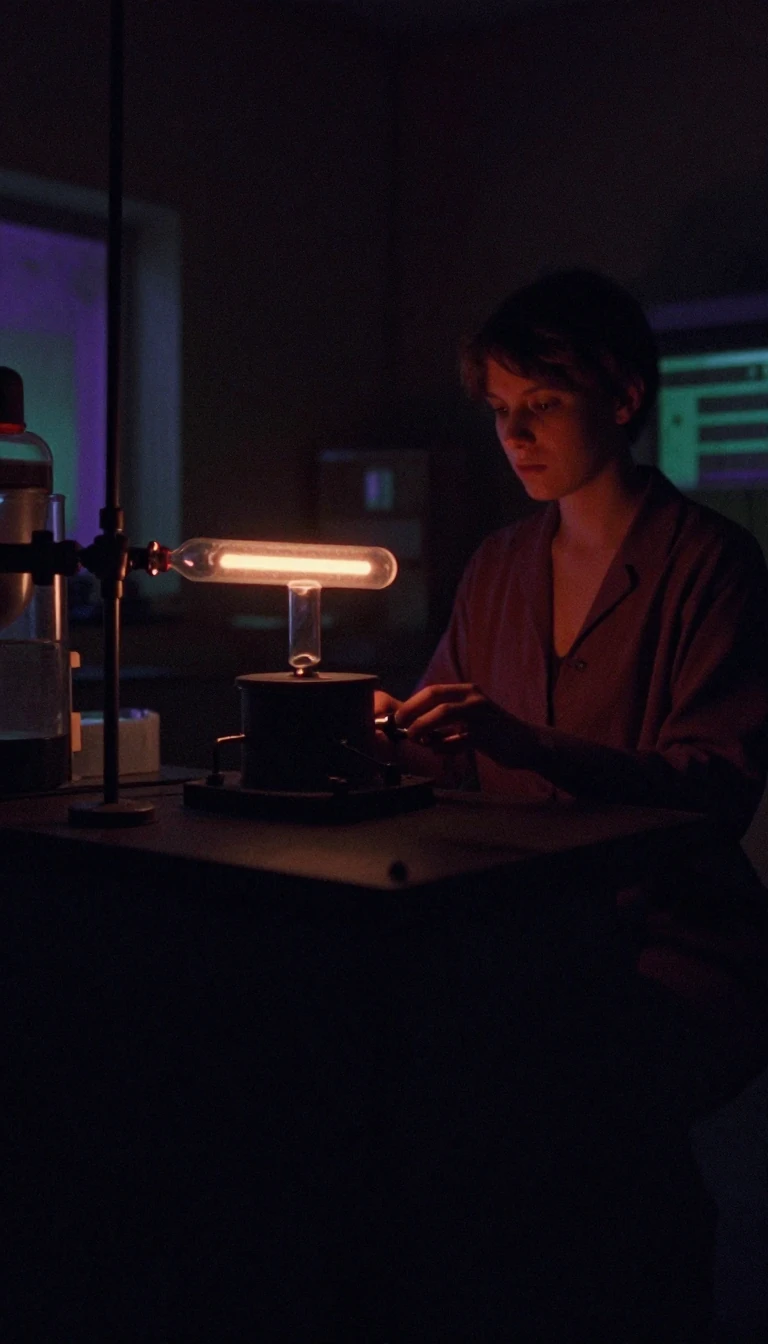
In short: An exothermic process is a reaction that sheds energy, often as heat, light, or sound. Coined by 19th-century chemist Marcellin Berthelot, the term describes a fundamental thermodynamic shift. While endothermic reactions absorb energy to proceed, exothermic reactions release it, making them generally more spontaneous and vital to life itself.
At its core, an exothermic process is defined by the release of energy from a system to its surroundings. According to the IUPAC, these reactions are characterized by a negative overall standard enthalpy change. While heat is the most common byproduct, energy can also manifest as light, electricity, or sound. For instance, the combustion of hydrogen produces a distinct sound, while the transition of electrons between quantum energy levels can release light. This light energy is equivalent to a portion of the chemical bond energy stabilized during the reaction.
The mechanism relies on activation energy—the initial input required to trigger the process. In an exothermic reaction, this activation energy is lower than the total energy subsequently released, resulting in a net output. If this process occurs within an adiabatic system, where no heat is exchanged with the environment, the internal temperature of the system will inevitably rise. Under constant pressure, this heat release is equivalent to the change in enthalpy, whereas at constant volume, it corresponds to the change in internal energy.
These processes are ubiquitous in nature and industry. From the nuclear fusion powering stellar cores to the cellular respiration that breaks down glucose to fuel biological life, exothermic reactions drive essential transformations. Common examples include the combustion of fuels like coal or wood, the reaction of alkali metals with water, and the setting of epoxy resins. In contrast, endothermic processes like photosynthesis require an external input of radiant energy to convert carbon dioxide and water into sugar. Understanding this balance is crucial, as exothermic reactions are generally more spontaneous than their endothermic counterparts, which often require favorable entropy increases to overcome their energy demands.
Opens the Intellect+ feed with this card first. Swipe up for the next one.
Sources
- Summary by Intellect · source: Exothermic process
To cite this card, link to https://intellectplus.co.uk/app/science-exothermic-process.
How we source, check and correct cards: Editorial standards.
General information, not professional advice. Spotted an error? Flag the card or see corrections and complaints.
Intellect Plus is a visual educational discovery platform for exploring fascinating facts and ideas. Brain Food, Not Brain Rot. What is Intellect Plus?
Related
More in Thermodynamics · More in Science · Latest · A–Z · All topics
