Beyond the Periodic Table: The Strange Reality of Exotic Matter
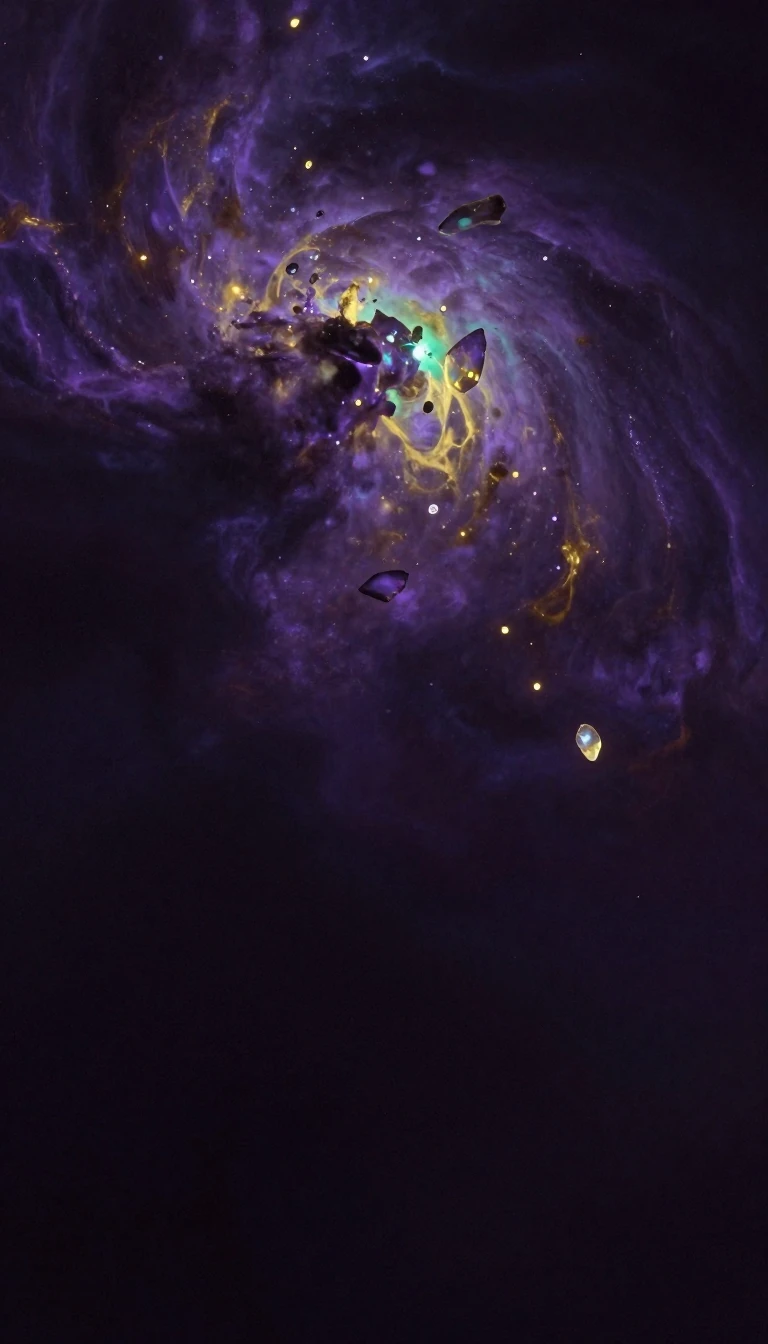
In short: Exotic matter is not just science fiction; it is a broad category of substances that challenge our understanding of physics. From particles that defy gravity to compounds that break the rules of classical chemistry, these materials exist at the fringes of the Standard Model and within extreme, high-pressure environments.
Exotic matter encompasses a diverse range of phenomena, from states of matter that are rarely encountered to entirely hypothetical concepts. Within mainstream physics, we find states like Bose-Einstein condensates, quark-gluon plasma, and time crystals. These are not 'exotic' because they defy physics, but because they exist in conditions far removed from our daily experience. Similarly, ordinary matter can behave in unexpected ways under extreme pressure. For instance, researchers have discovered that sodium chloride can form 'forbidden' compounds like Na3Cl and NaCl3 when subjected to high pressure. These materials, which may exist in planetary cores or the deep ocean, include two-dimensional metals that layer insulators and conductors to manipulate electricity in novel ways.
The term also covers more speculative territory, such as negative mass. While it sounds like a contradiction, negative mass is mathematically consistent with the laws of conservation of energy and momentum. It would possess the bizarre property of accelerating in the opposite direction of an applied force. While no such substance has been found in nature, the Casimir effect produces a region of pseudo-negative-pressure density that serves as the closest real-world representative. Such concepts are essential to theoretical models involving artificial wormholes or the Alcubierre drive.
Other forms of exotic matter remain elusive or controversial. Tachyons, for example, are hypothetical particles with imaginary rest mass that would theoretically travel faster than light. Because relativity suggests tachyons could facilitate communication backwards in time, most physicists believe they either do not exist or cannot interact with normal matter. Meanwhile, substances like dark matter and mirror matter remain poorly understood, representing significant gaps in our current cosmic map. Whether these materials are confirmed particles within the Standard Model or elusive cosmic components, they represent the frontier of our quest to understand the fundamental building blocks of the universe.
Opens the Intellect+ feed with this card first. Swipe up for the next one.
Sources
- Summary by Intellect · source: Exotic matter
To cite this card, link to https://intellectplus.co.uk/app/science-exotic-matter.
How we source, check and correct cards: Editorial standards.
General information, not professional advice. Spotted an error? Flag the card or see corrections and complaints.
Intellect Plus is a visual educational discovery platform for exploring fascinating facts and ideas. Brain Food, Not Brain Rot. What is Intellect Plus?
Related
More in Physics basics · More in Science · Latest · A–Z · All topics
