Did Frederick Winslow Taylor invent the modern workplace or just a rigid, dehumanizing myth?
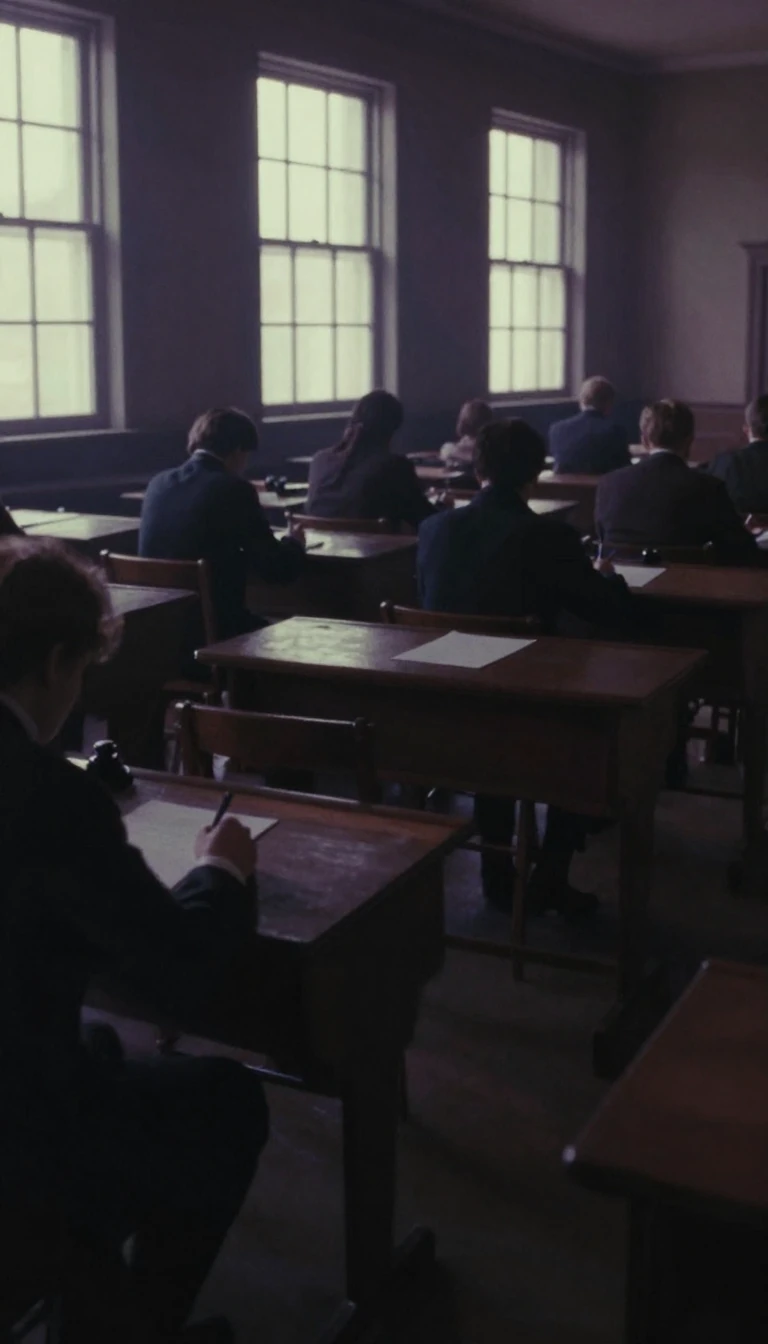
In short: Frederick Winslow Taylor, the father of scientific management, promised to reconcile labor and capital through ruthless efficiency. By breaking tasks into measurable components, he aimed to eliminate waste and boost productivity. Yet, his legacy remains a polarizing mix of industrial revolution and the suppression of worker dissent and human agency.
Born in 1856 to a wealthy Philadelphia family, Taylor abandoned his path toward Harvard law after experiencing eye trouble, pivoting instead to a machinist apprenticeship. His rise at Midvale Steel was rapid, fueled by both talent and family connections. It was there he observed 'soldiering'—workers intentionally slowing their pace—and began his quest to standardize labor. He believed that by replacing rule-of-thumb methods with scientific analysis, management could dictate the 'one best way' to perform any task, thereby maximizing output.
Taylor’s methodology, often called Taylorism, rested on four principles: scientific task study, systematic employee selection and training, detailed supervision, and a strict division of labor between planning and execution. He famously used a stopwatch to break jobs into hundredths of a minute. His efforts to optimize shoveling, for instance, involved calculating an ideal load of 21.5 pounds. While he claimed his system allowed workers to earn more, his methods were frequently met with strikes and resentment. Critics argue that Taylor often suppressed evidence of worker dissatisfaction and embellished his success stories, such as the famous tale of 'Schmidt' carrying pig iron.
Despite the controversy, Taylor’s influence was profound. His 1911 book, The Principles of Scientific Management, was later voted the most influential management text of the twentieth century. His work laid the foundation for industrial engineering, and his disciples, such as Henry Gantt and Frank Gilbreth, expanded his ideas into scheduling charts and motion studies. While Taylor himself was forced out of Bethlehem Steel and faced resistance even within the American Society of Mechanical Engineers, his vision of separating mental planning from manual labor fundamentally reshaped the global factory floor, leaving a legacy that remains debated by historians and management scholars today.
Opens the Intellect+ feed with this card first. Swipe up for the next one.
Sources
- Summary by Intellect · source: Frederick Winslow Taylor
To cite this card, link to https://intellectplus.co.uk/app/science-frederick-winslow-taylor.
How we source, check and correct cards: Editorial standards.
General information, not professional advice. Spotted an error? Flag the card or see corrections and complaints.
Intellect Plus is a visual educational discovery platform for exploring fascinating facts and ideas. Brain Food, Not Brain Rot. What is Intellect Plus?
Related
More in Inventors and engineers · More in Science · Latest · A–Z · All topics
