George Biddell Airy: The Astronomer Royal who corrected his own vision and weighed the Earth
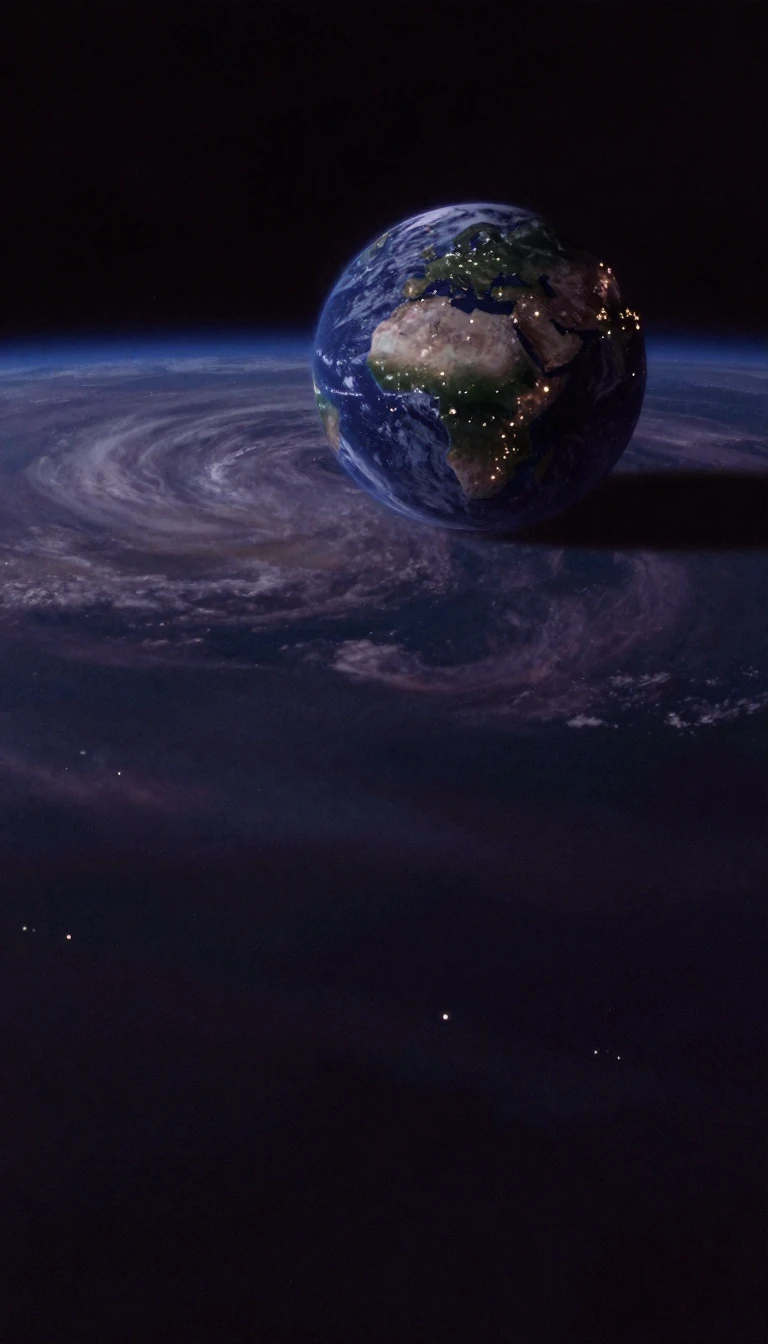
In short: George Biddell Airy was a man defined by order, rising from poverty to become a scientific titan. He revolutionized the Greenwich Observatory, pioneered the correction of astigmatism, and attempted to weigh the entire planet by dropping pendulums into deep mine shafts. His life was a masterclass in relentless, systematic achievement.
Born in 1801, George Biddell Airy’s path to becoming the seventh Astronomer Royal was anything but conventional. Raised in financial hardship after his father lost his job as a tax collector, Airy relied on his uncle, Arthur Biddell, for both intellectual and financial support. This upbringing fostered a rigid, lifelong commitment to organization; he famously never destroyed a document, keeping meticulous records of his thoughts and work throughout his career.
Airy’s scientific contributions were as diverse as they were precise. In 1827, he identified and corrected his own astigmatism by designing a cylindrical eyeglass lens, a landmark in optics. His later work included the 'Airy disk' in diffraction patterns and the theory that mountain ranges possess low-density roots to maintain isostatic equilibrium. Perhaps his most ambitious project was the 1854 experiment at the Harton pit, where he measured gravity at the top and bottom of a 383-meter mine to calculate the Earth’s mean density.
Despite his brilliance, Airy was not without controversy. He faced severe criticism for his role in the 1845 failure to search for Neptune, a delay that strained British-French scientific relations. Furthermore, he held strong views on institutional science, often opposing government funding for pure research. Whether he was being praised for his punctuality at the Royal Greenwich Observatory or blamed for missing a planet, Airy remained a central, polarizing figure in 19th-century science until his death in 1892.
His legacy is one of immense productivity and systematic rigor. As a student at Trinity College, Cambridge, he graduated as Senior Wrangler in 1823, a testament to his ability to master vast amounts of material. He held the Lucasian Chair of Mathematics before moving to astronomy, where he transformed the field through sheer force of will and organizational genius, leaving behind a record that continues to offer insight into the scientific landscape of his era.
Opens the Intellect+ feed with this card first. Swipe up for the next one.
Sources
- Summary by Intellect · source: George Airy - Biography
- Also: Sir George Biddell Airy | Astronomer, Mathematician & Geophysicist | Britannica
- Also: George Biddell Airy
To cite this card, link to https://intellectplus.co.uk/app/science-george-biddell-airy.
How we source, check and correct cards: Editorial standards.
General information, not professional advice. Spotted an error? Flag the card or see corrections and complaints.
Intellect Plus is a visual educational discovery platform for exploring fascinating facts and ideas. Brain Food, Not Brain Rot. What is Intellect Plus?
Related
More in Mathematicians · More in Science · Latest · A–Z · All topics
