Is gravity a physical force pulling you down or just the shape of space?
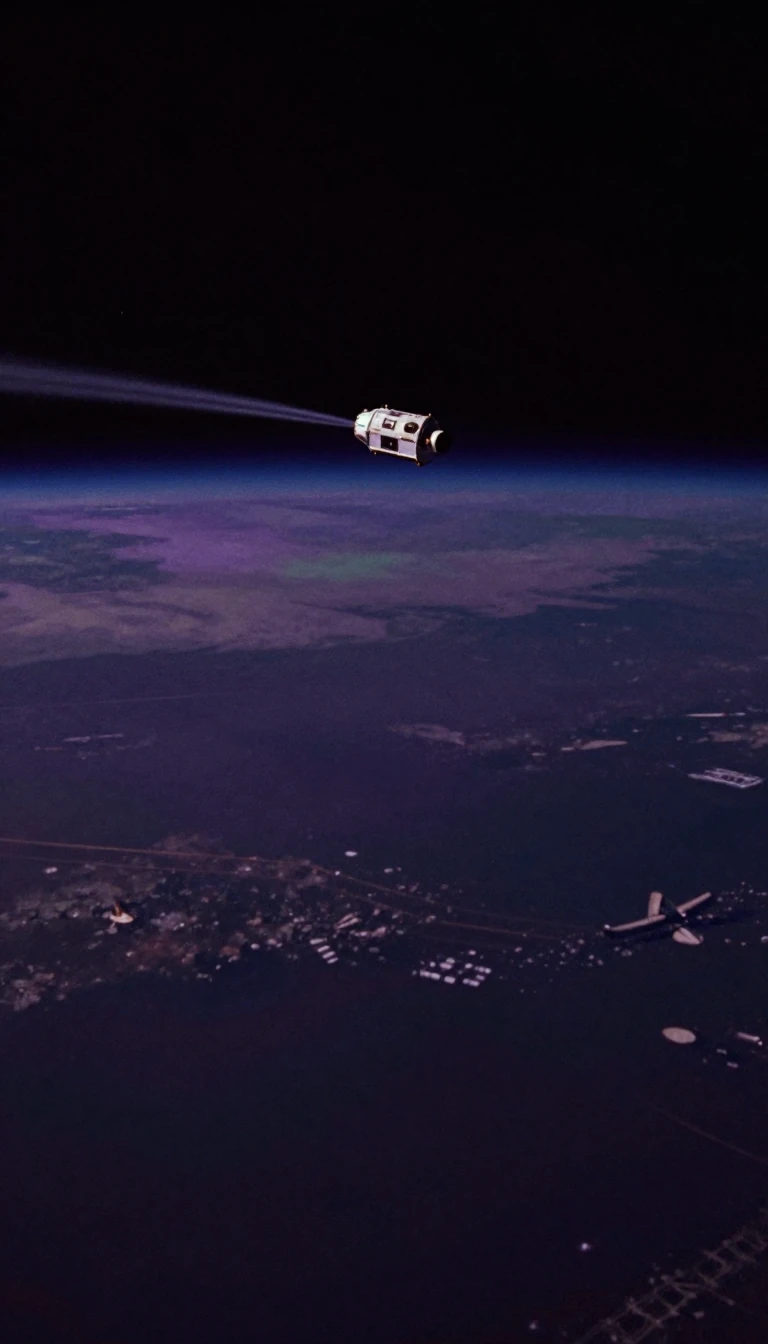
In short: We often imagine gravity as an invisible tether pulling objects together. Yet, modern physics suggests a more elegant reality: mass warps the fabric of the universe itself. Whether you view it as a classical force or a geometric distortion, understanding this field is key to navigating the cosmos.
In classical physics, we treat gravity as a vector field that describes how a massive object influences the space surrounding it. This model, which evolved from Isaac Newton’s work, defines gravity as a force per unit mass. It is essentially a map of acceleration; at any given point, the field tells you exactly how an object would be pushed toward a source of mass. Because this force field is conservative, we can also describe it using a scalar potential, often visualized as a topography of gravitational wells.
The perspective shifts dramatically with general relativity. Here, gravity is not a force acting at a distance between two particles. Instead, mass and energy distort the geometry of spacetime. Objects do not move because they are being pulled; they follow paths dictated by the curvature of the space they inhabit. In this framework, what we perceive as the force of gravity—such as the sensation of being held against the Earth's surface—is actually a fictitious force resulting from our resistance to the natural curvature of spacetime.
While Newtonian mechanics and general relativity often yield similar results for everyday observations, they diverge in significant ways. General relativity accounts for the distribution of stress and momentum, not just mass, and it predicts phenomena like the deflection of light that classical models cannot explain. By solving the Einstein field equations, which relate the Einstein tensor to the stress–energy tensor, physicists can map the curvature of the universe. This transition from viewing gravity as a simple attraction to understanding it as a fundamental property of geometry remains one of the most profound shifts in scientific history.
Opens the Intellect+ feed with this card first. Swipe up for the next one.
Sources
- Summary by Intellect · source: Gravitational field
To cite this card, link to https://intellectplus.co.uk/app/science-gravitational-field.
How we source, check and correct cards: Editorial standards.
General information, not professional advice. Spotted an error? Flag the card or see corrections and complaints.
Intellect Plus is a visual educational discovery platform for exploring fascinating facts and ideas. Brain Food, Not Brain Rot. What is Intellect Plus?
Related
More in Mechanics · More in Science · Latest · A–Z · All topics
