How a wartime radio tinkerer learned to trap a single electron in space
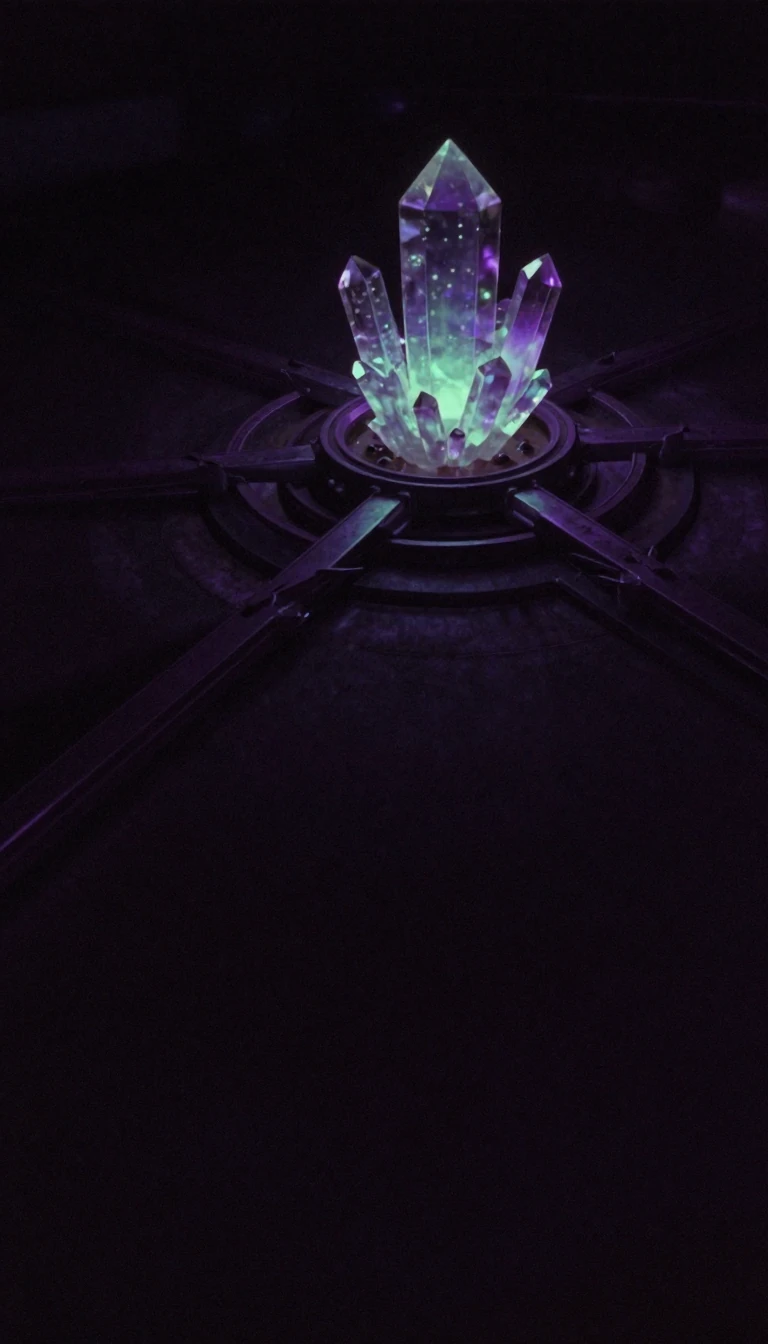
In short: Hans Georg Dehmelt transformed physics by mastering the art of isolation. By developing the Penning trap, he achieved the impossible: capturing individual subatomic particles in a vacuum. This breakthrough allowed scientists to observe single electrons and ions for extended periods, leading to measurements of unprecedented precision in the quantum world.
Born in 1922, Hans Georg Dehmelt’s path to the Nobel Prize was unconventional. Raised in Berlin, he spent his youth obsessed with radio projects, a hobby that persisted even through his service in the German army during World War II. After being captured by American forces during the Battle of the Bulge and spending a year in a prisoner of war camp, he returned to academia at the University of Göttingen. There, he studied under giants like Werner Heisenberg and Max Planck, eventually earning his doctorate in 1950.
Dehmelt’s defining innovation, the Penning trap, emerged from his desire to realize a theoretical concept: the physical localization of an electron. While traditional physics often treated electrons as waves spread across space, Dehmelt sought to hold them still. In 1955, he built his first electron impact tube, and by 1973, he successfully isolated a single electron. This device used electromagnetic fields to suspend charged particles in a small, isolated space, shielding them from external interference.
The implications of this technique were profound. In the 1970s, Dehmelt used his trap to measure the magnetic moment of an electron with an accuracy of four parts in a trillion, a feat that set a new standard for precision in physics. His work enabled the study of individual quantum jumps and atomic frequencies, fundamentally changing how we understand subatomic behavior. For these developments, he shared the 1989 Nobel Prize in Physics with Wolfgang Paul, cementing his legacy as a pioneer of precision measurement.
Dehmelt’s career spanned decades at the University of Washington, where he continued his research until his retirement in 2002. Beyond the Nobel, he received the National Medal of Science in 1995. His journey from a boy repairing radios in a kitchen to a physicist who could photograph a single atom remains a testament to the power of experimental ingenuity in uncovering the hidden mechanisms of the universe.
Opens the Intellect+ feed with this card first. Swipe up for the next one.
Sources
- Summary by Intellect · source: Nobel Prize in Physics 1989
- Also: Hans Georg Dehmelt | Nobel Prize, Quantum Mechanics, Atomic Physics | Britannica
- Also: Hans Georg Dehmelt
To cite this card, link to https://intellectplus.co.uk/app/science-hans-georg-dehmelt.
How we source, check and correct cards: Editorial standards.
General information, not professional advice. Spotted an error? Flag the card or see corrections and complaints.
Intellect Plus is a visual educational discovery platform for exploring fascinating facts and ideas. Brain Food, Not Brain Rot. What is Intellect Plus?
Related
More in Physics · More in Science · Latest · A–Z · All topics
