Why a Victorian clerk became the world's most influential architect of mathematical puzzles
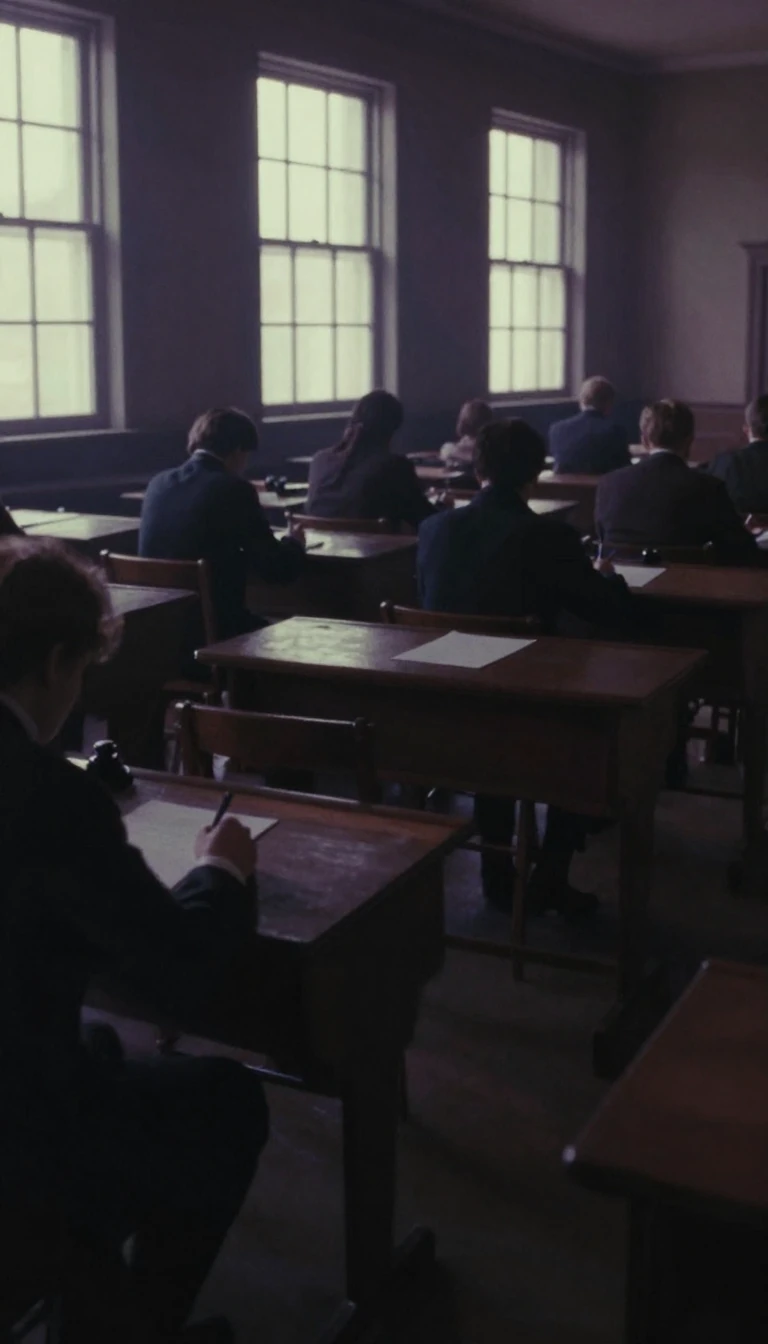
In short: Henry Dudeney transformed recreational mathematics from simple parlor games into rigorous intellectual challenges. A self-taught enthusiast who never attended college, he spent his career in the Civil Service while secretly crafting complex problems that continue to baffle and inspire mathematicians over a century after their initial publication.
Born in Mayfield, Sussex, in 1857, Henry Dudeney inherited a family tradition of teaching and mathematical interest. Despite lacking formal higher education, he began composing puzzles at age nine. By his teenage years, he was working as a clerk, yet he dedicated his spare time to chess and mathematics, eventually publishing his work under the pseudonym 'Sphinx'. His career flourished through contributions to magazines like The Strand, where he maintained a popular column for decades.
Dudeney’s work often bridged the gap between entertainment and serious inquiry. His most famous creation, the 'haberdasher's problem,' involves cutting an equilateral triangle into four pieces that perfectly reassemble into a square. He famously demonstrated this geometrical feat before the Royal Society in 1905. His collections, such as 'The Canterbury Puzzles' (1907) and 'Amusements in Mathematics' (1917), remain essential resources for educators, covering everything from algebraic problems to complex chessboard maneuvers.
His legacy is marked by a bitter rivalry with the American puzzle creator Sam Loyd. While the two initially exchanged ideas, Dudeney eventually severed ties, accusing Loyd of plagiarizing his inventions. Beyond his puzzles, Dudeney was a key figure in the chess community, helping establish the British Chess Problem Society in 1918. He viewed puzzle-solving as the fundamental exercise of human reasoning, a belief that defined his life until his death in 1930.
Today, Dudeney’s influence persists in modern mathematics. Researchers still analyze his work, including his 1905 round-table seating challenge, which remains an open problem for odd numbers of participants. His ability to turn simple questions into deep, perplexing inquiries ensures that his 'treasure trove' of puzzles continues to challenge the minds of both amateurs and professional mathematicians.
Opens the Intellect+ feed with this card first. Swipe up for the next one.
Sources
- Summary by Intellect · source: Henry Ernest Dudeney - Biography
- Also: Henry Dudeney
To cite this card, link to https://intellectplus.co.uk/app/science-henry-dudeney.
How we source, check and correct cards: Editorial standards.
General information, not professional advice. Spotted an error? Flag the card or see corrections and complaints.
Intellect Plus is a visual educational discovery platform for exploring fascinating facts and ideas. Brain Food, Not Brain Rot. What is Intellect Plus?
Related
More in Mathematicians · More in Science · Latest · A–Z · All topics
