How physicists recreate the conditions of the universe microseconds after the Big Bang
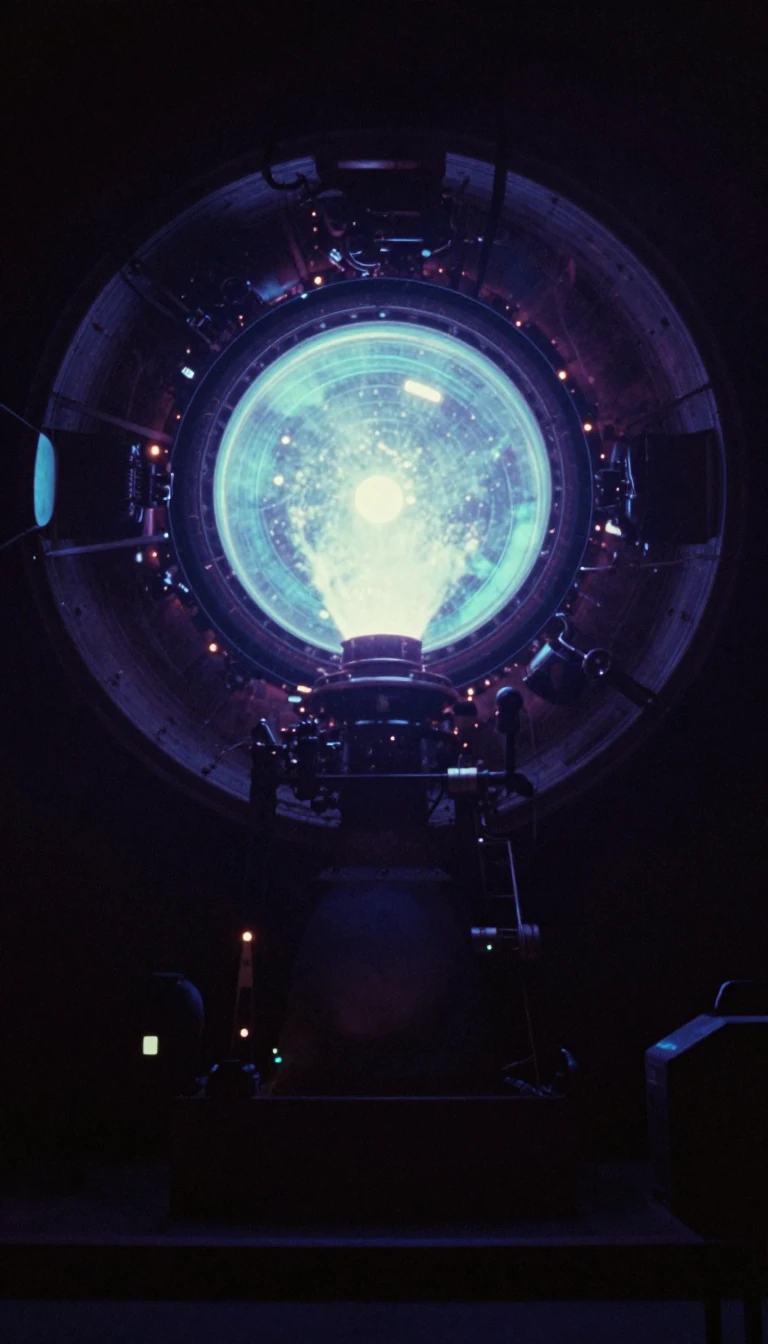
In short: By smashing heavy ions together at near-light speeds, scientists are creating a primordial soup of quarks and gluons. This state of matter, which existed in the earliest moments of the universe, reaches temperatures trillions of degrees high, offering a window into the fundamental origins of mass and atomic structure.
High-energy nuclear physics investigates the behavior of matter under extreme conditions, primarily through heavy-ion collisions. Unlike standard particle accelerators that use lighter atoms, this field focuses on stripping heavy atomic nuclei of their electron clouds and accelerating them to speeds approaching 0.999c. Early research at facilities like the Lawrence Berkeley National Laboratory and the Joint Institute for Nuclear Research demonstrated that these collisions could compress nuclear matter to several times its normal density, paving the way for more ambitious experiments at Brookhaven National Laboratory and CERN.
The primary objective of these experiments is the creation of quark–gluon plasma (QGP), a state of matter that existed in the first 30 microseconds of the universe. In this plasma, the color-confining vacuum state is transformed into a perturbative vacuum, allowing quarks and gluons to roam freely. By studying this transition, which occurs at the Hagedorn temperature, researchers aim to understand the origins of hadron mass and the fundamental structure of the vacuum. The conditions required to reach the QGP phase are immense, with energy densities reaching 10 GeV/fm³ and temperatures exceeding 5 trillion kelvins.
Experimental techniques have evolved from fixed-target setups, where ion bunches strike stationary targets, to collider experiments. At the Relativistic Heavy Ion Collider (RHIC), two beams are steered toward each other, achieving center-of-mass collision energies of up to 200 GeV/nucleon for gold. The Large Hadron Collider (LHC) pushes this further, with the ALICE detector specializing in Pb–Pb collisions at 2.76 TeV per nucleon pair. These experiments have successfully confirmed that the extreme conditions necessary for QGP formation are achievable, providing a unique laboratory for testing the physics of the early universe before matter coalesced into atoms.
Opens the Intellect+ feed with this card first. Swipe up for the next one.
Sources
- Summary by Intellect · source: High-energy nuclear physics
- Also: www.ucl.ac.uk — High Energy Physics
To cite this card, link to https://intellectplus.co.uk/app/science-high-energy-nuclear-physics.
How we source, check and correct cards: Editorial standards.
General information, not professional advice. Spotted an error? Flag the card or see corrections and complaints.
Intellect Plus is a visual educational discovery platform for exploring fascinating facts and ideas. Brain Food, Not Brain Rot. What is Intellect Plus?
Related
More in Nuclear physics · More in Science · Latest · A–Z · All topics
