Why ancient cities and modern engineering often rely on highly composite numbers
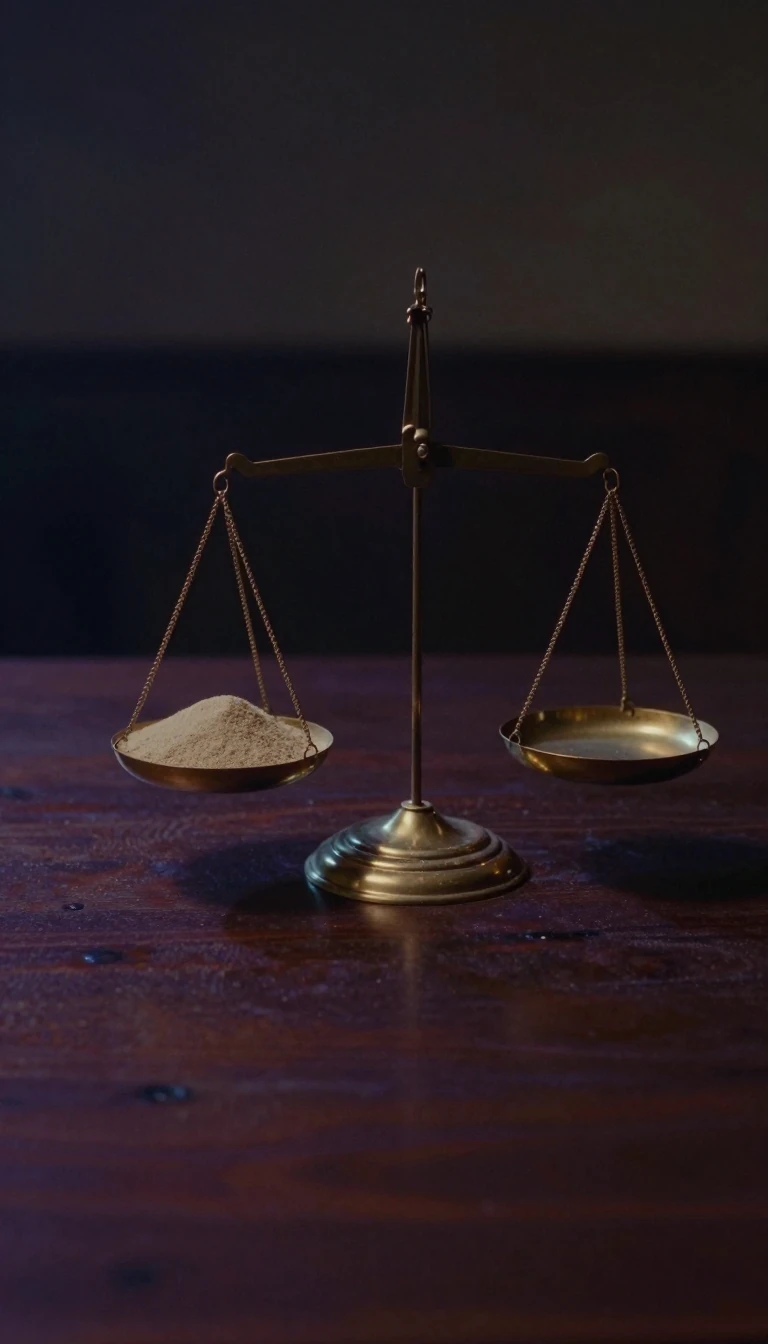
In short: A highly composite number is a positive integer with more divisors than any smaller positive integer. These numbers are not just mathematical curiosities; their unique structure makes them exceptionally useful for dividing quantities into equal parts, explaining why they appear in everything from ancient city planning to modern measurement systems.
To be highly composite, a number must be built from the smallest possible prime factors, arranged in a non-increasing sequence of exponents. For instance, 6 is highly composite because it has four divisors, more than any integer smaller than it. While these conditions are necessary, they are not sufficient; a number like 96 satisfies the structural rules but fails the test because a smaller number, 60, shares the same number of divisors.
The study of these numbers has deep historical and mathematical roots. Ramanujan published a seminal paper on the subject in 1915, and scholars like Jean-Pierre Kahane have suggested that Plato intentionally chose 5040 as the ideal number of citizens for a city because of its high divisibility. Today, we know that these numbers are a subset of practical numbers, which explains their enduring utility in engineering and traditional measurement systems where fractions must be handled with ease.
As we look at larger values, the distribution of these numbers becomes a subject of complex analysis. Paul Erdős proved a lower bound for the counting function of highly composite numbers in 1944, with Jean-Louis Nicolas providing the upper bound in 1988. While they share properties with abundant numbers, they are not always Harshad numbers; for example, 245,044,800 is the first highly composite number that cannot be divided by the sum of its own digits.
The complexity of these numbers scales rapidly. The 15,000th highly composite number is a massive product of 230 primes. Despite their size, they remain governed by strict, elegant rules of prime factorization. Whether they are superior highly composite numbers or simply highly composite, they represent a unique intersection where abstract number theory meets the practical necessity of dividing the world into manageable pieces.
Opens the Intellect+ feed with this card first. Swipe up for the next one.
Sources
- Summary by Intellect · source: Highly composite number
To cite this card, link to https://intellectplus.co.uk/app/science-highly-composite-number.
How we source, check and correct cards: Editorial standards.
General information, not professional advice. Spotted an error? Flag the card or see corrections and complaints.
Intellect Plus is a visual educational discovery platform for exploring fascinating facts and ideas. Brain Food, Not Brain Rot. What is Intellect Plus?
Related
More in Number theory · More in Science · Latest · A–Z · All topics
