Can every network be mapped as a collection of overlapping sets?
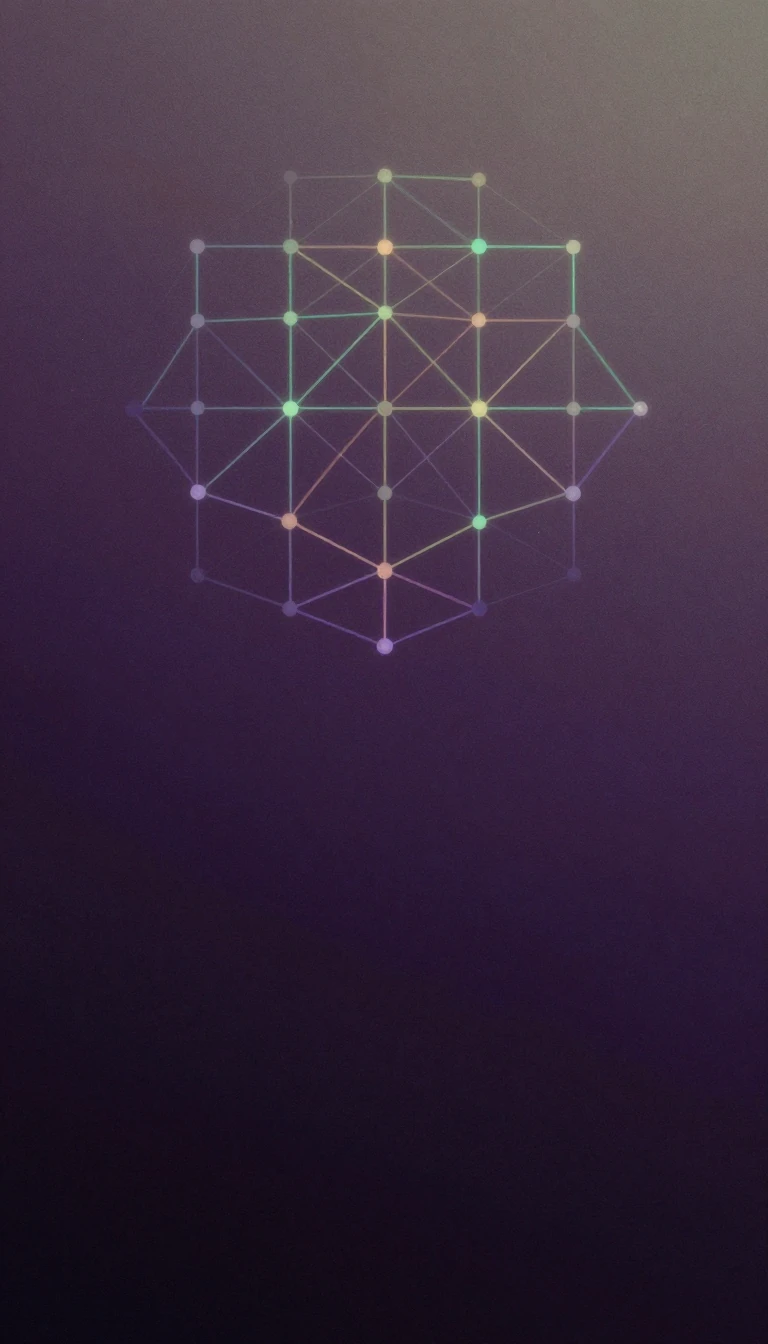
In short: In graph theory, an intersection graph translates complex relationships into a simple visual language. By representing each node as a set, you can map connections based on whether those sets overlap. This elegant framework reveals hidden structures in everything from geometric configurations to abstract logical systems.
At its core, an intersection graph is a mathematical representation where vertices correspond to sets, and an edge exists between two vertices if their respective sets share at least one common element. Remarkably, any undirected graph can be expressed this way. One standard method involves assigning each vertex a set containing its incident edges; two vertices are then connected if they share an edge, confirming their sets intersect.
While this universal property was noted by Szpilrajn-Marczewski in 1945, researchers have since sought more efficient constructions. In 1966, Erdős, Goodman, and Pósa demonstrated that any graph with n vertices can be represented using a total number of set elements no greater than n squared divided by four. This efficiency is measured by the intersection number, which is the minimum count of elements required to build a specific graph's representation.
The true power of this concept lies in restricting the types of sets used. By limiting the geometry—such as using intervals on a line, disks in a plane, or chords on a circle—mathematicians define specialized graph families. For instance, planar graphs are exactly those that can be represented as intersection graphs of non-crossing disks, a result known as the circle packing theorem. Other variations include interval graphs, unit disk graphs, and even boxicity, which measures the minimum dimensions required for a box-based representation.
Characterizing these classes requires specific properties, such as being closed under induced subgraphs. Some problems in this field are computationally demanding; for example, identifying whether a graph is an intersection graph of line segments is a problem whose complexity is tied to the existential theory of the reals, as established by Schaefer in 2010. These structures provide a bridge between discrete mathematics and the physical geometry of the world.
Opens the Intellect+ feed with this card first. Swipe up for the next one.
Sources
- Summary by Intellect · source: Intersection graph
To cite this card, link to https://intellectplus.co.uk/app/science-intersection-graph.
How we source, check and correct cards: Editorial standards.
General information, not professional advice. Spotted an error? Flag the card or see corrections and complaints.
Intellect Plus is a visual educational discovery platform for exploring fascinating facts and ideas. Brain Food, Not Brain Rot. What is Intellect Plus?
Related
More in Discrete mathematics · More in Science · Latest · A–Z · All topics
