How a Polish scientist mastered the deep freeze to unlock the secrets of gases.
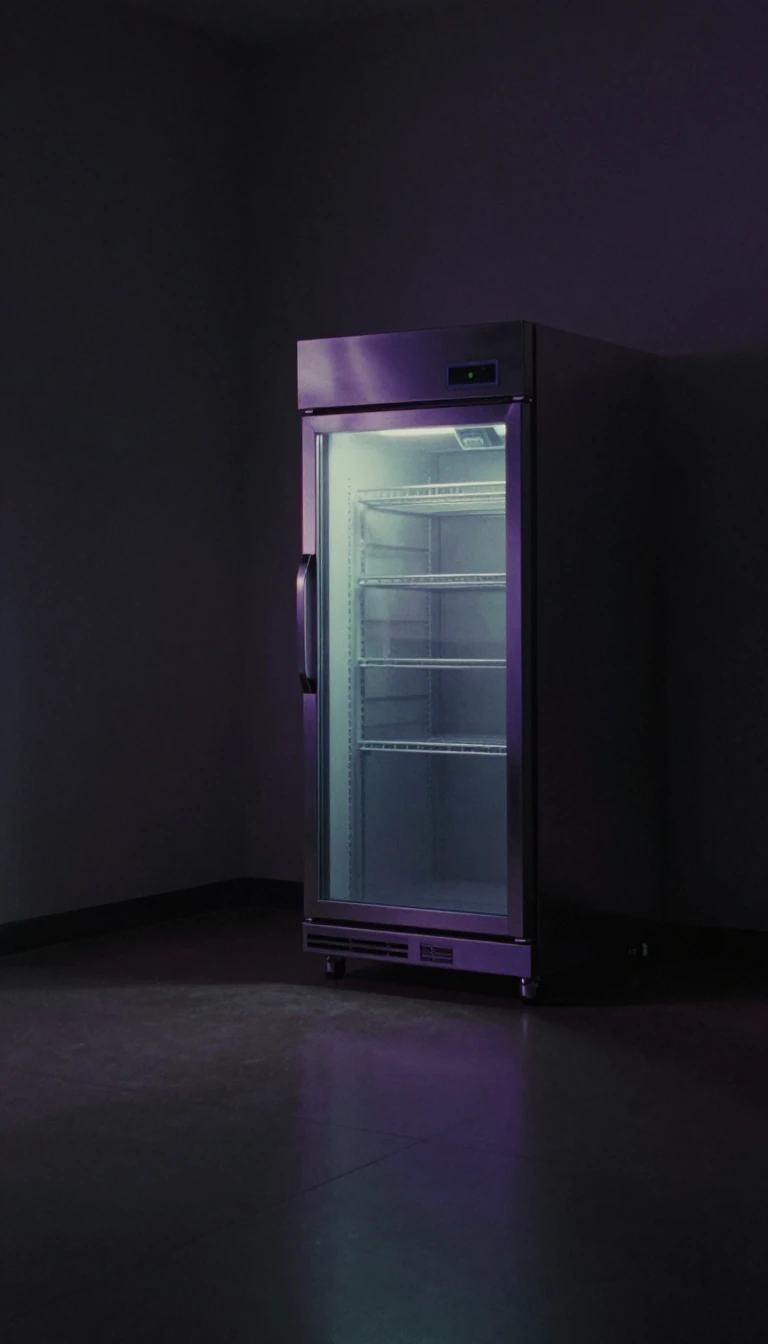
In short: In 1883, Karol Olszewski achieved a scientific milestone that had long eluded researchers: the stable liquefaction of oxygen and nitrogen. By refining compression techniques in his Kraków laboratory, he pushed the boundaries of low-temperature physics, eventually reaching temperatures cold enough to liquefy hydrogen and paving the way for modern radiology.
Born in 1846, Karol Stanisław Olszewski was a polymath whose work spanned chemistry, mathematics, and physics. After completing his doctoral studies at Heidelberg University, he returned to Jagiellonian University in Kraków. His experimental prowess was defined by his ability to improve existing compression technology, which allowed him to condense gases that had previously only existed in fleeting, dynamic states.
The year 1883 marked a turning point in cryogenics when Olszewski and his colleague Zygmunt Wróblewski successfully liquefied oxygen, nitrogen, and carbon dioxide in a stable form. This was a significant departure from earlier attempts that only achieved these states as transient vapors. Building on this success, Olszewski continued to push toward absolute zero. By 1884, he reached a record-breaking temperature of −225 °C, or 48 K, while liquefying hydrogen. His expertise in gas properties remained unmatched for years, culminating in the liquefaction of argon in 1895, though he narrowly missed the chance to liquefy helium.
Olszewski’s scientific curiosity was not limited to cryogenics. When news of Wilhelm Röntgen’s X-ray research reached him in January 1896, Olszewski replicated the findings within days. By early February, he had produced an X-ray image of a luxated elbow, effectively launching the university’s department of radiology. His contributions were so profound that he is ranked by experts like Andrzej Kajetan Wróblewski among the most influential Polish physicists of the twentieth century, alongside figures such as Marie Curie and Marian Smoluchowski.
Following his death in 1915, Olszewski was initially laid to rest at the Rakowicki Cemetery. His legacy was further honored in 2018 when his remains were moved to the National Pantheon at the Church of Saints Peter and Paul in Kraków. His life’s work remains a testament to the power of precise instrumentation and the relentless pursuit of understanding the fundamental states of matter.
Opens the Intellect+ feed with this card first. Swipe up for the next one.
Sources
- Summary by Intellect · source: Karol Olszewski
To cite this card, link to https://intellectplus.co.uk/app/science-karol-olszewski.
How we source, check and correct cards: Editorial standards.
General information, not professional advice. Spotted an error? Flag the card or see corrections and complaints.
Intellect Plus is a visual educational discovery platform for exploring fascinating facts and ideas. Brain Food, Not Brain Rot. What is Intellect Plus?
Related
More in Mathematicians · More in Science · Latest · A–Z · All topics
