Why do planets move in ellipses? The elegant math behind the Kepler problem.
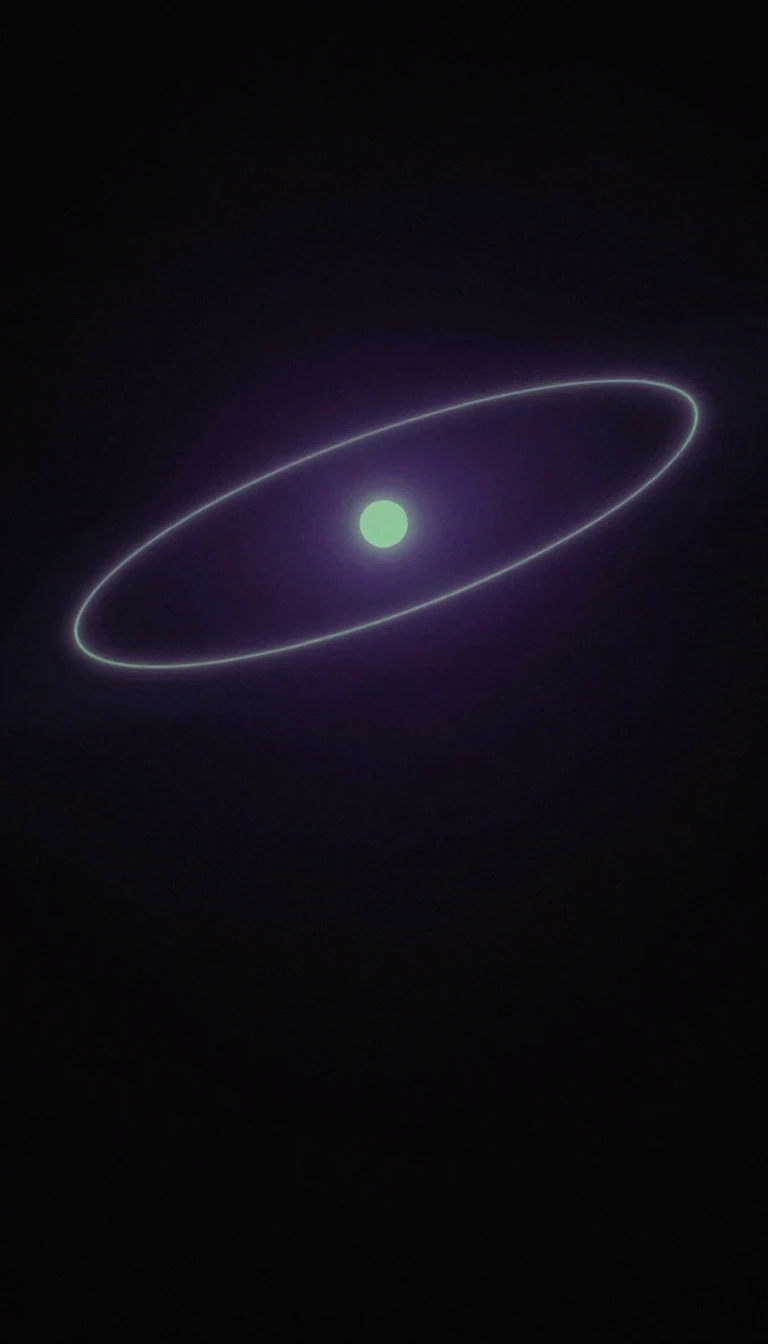
In short: The Kepler problem is a cornerstone of classical mechanics, describing how two bodies interact through an inverse-square force. By solving for their positions and velocities over time, scientists unlocked the secrets of planetary motion, proving that gravity follows a predictable, mathematical path that helped usher in the Enlightenment.
At its core, the Kepler problem asks us to determine the motion of two bodies interacting via a central force that weakens with the square of their distance. Named after Johannes Kepler, who derived his three laws of planetary motion from the astronomical observations of Tycho Brahe, the problem was later formalized by Isaac Newton. Newton’s Principia demonstrated that these orbital characteristics necessitate an inverse-square force law, a discovery that fundamentally changed our understanding of the universe.
The mechanism relies on the conservation of angular momentum and the Laplace–Runge–Lenz vector. By transforming the equations of motion into a time-independent form, physicists can show that the trajectory of such a body is always a conic section—an ellipse, parabola, or hyperbola—with the center of force at one focus. This elegance is rare; according to Bertrand’s theorem, the Kepler problem and the simple harmonic oscillator are the only two fundamental problems in classical mechanics where every possible set of initial conditions results in a closed orbit.
While Newtonian gravity provides a robust framework for satellites, planets, and binary stars, it is not the final word. General relativity offers more precise solutions, particularly in strong gravitational fields where the inverse-square approximation begins to falter. Beyond gravity, the same mathematical structure explains the motion of charged particles under Coulomb’s law of electrostatics, proving that the principles governing the heavens are identical to those governing the microscopic world.
Opens the Intellect+ feed with this card first. Swipe up for the next one.
Sources
- Summary by Intellect · source: Kepler problem
To cite this card, link to https://intellectplus.co.uk/app/science-kepler-problem.
How we source, check and correct cards: Editorial standards.
General information, not professional advice. Spotted an error? Flag the card or see corrections and complaints.
Intellect Plus is a visual educational discovery platform for exploring fascinating facts and ideas. Brain Food, Not Brain Rot. What is Intellect Plus?
Related
More in Mechanics · More in Science · Latest · A–Z · All topics
