Did a Jesuit priest invent the reflecting telescope decades before Isaac Newton?
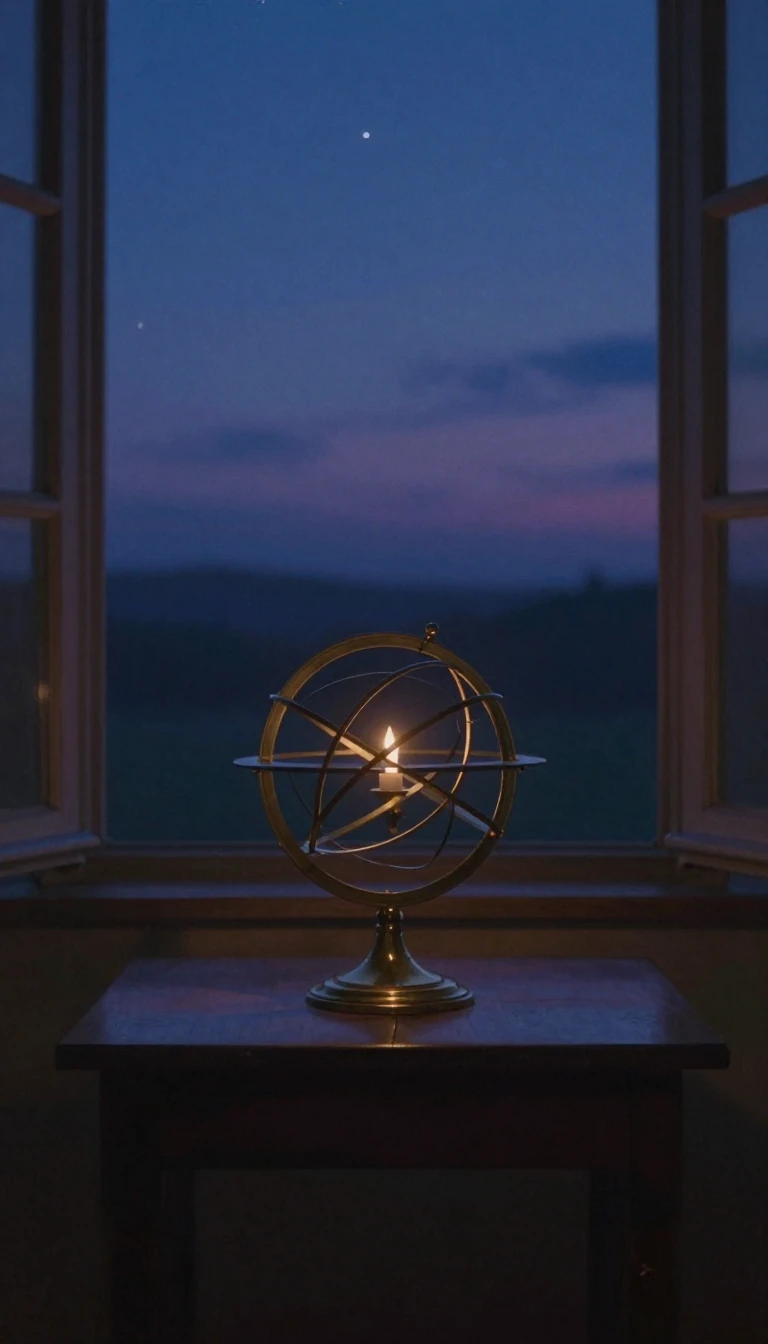
In short: Niccolò Zucchi, a 17th-century Italian Jesuit, claimed he experimented with a concave mirror as a telescope objective as early as 1616. While some historical accounts credit him with this pioneering design, modern scholars remain deeply skeptical, suggesting his early attempts were likely unsuccessful and his later observations relied on standard refracting instruments.
Born in 1586, Niccolò Zucchi was a polymath who taught mathematics and theology at the Collegio Romano. His scientific curiosity was famously stoked by a 1623 meeting with Johannes Kepler, with whom he maintained a correspondence. Zucchi even gifted a telescope of his own design to the struggling astronomer, a gesture Kepler acknowledged in his work, 'The Dream'. Zucchi’s own output was prolific, covering magnetism, barometers, and the nature of light; he notably demonstrated that phosphors generate light rather than merely storing it.
The core of Zucchi’s legacy rests on his 1652 publication, 'Optica philosophia', where he described a 1616 experiment using a bronze parabolic mirror and a concave lens. If accurate, this would predate the reflecting telescopes of James Gregory and Isaac Newton by decades. However, Zucchi himself noted that his initial setup failed to produce a satisfactory image, likely due to the mirror's quality or the observer's head obstructing the view. He abandoned the design, and there is no contemporary evidence he successfully used it for astronomy.
Later claims, such as those by Bernard le Bovier de Fontenelle in 1700, suggested Zucchi used this device to observe the belts of Jupiter in 1630 and spots on Mars in 1640. These assertions have been widely challenged. Historians like Al Van Helden describe such claims as 'wildly improbable,' noting that Zucchi’s actual astronomical work utilized standard refracting telescopes, including those crafted by makers like Eustachio Divini and Giuseppe Campani. The 1858 Encyclopædia Britannica even dismissed Fontenelle’s account as a reckless attribution.
Ultimately, Zucchi remains a figure of historical debate. While his 1652 text may have influenced later thinkers like Gregory and Newton, the reality of his own 'reflecting telescope' remains elusive. Whether he was a visionary inventor or simply an early experimenter who hit a dead end, his contributions to Jesuit science and his interactions with the era's greatest minds ensure his place in the history of optics.
Opens the Intellect+ feed with this card first. Swipe up for the next one.
Sources
- Summary by Intellect · source: Niccolò Zucchi
- Also: www.britannica.com — Niccolò Zucchi | Scientist, Optics, Telescope | Britannica
To cite this card, link to https://intellectplus.co.uk/app/science-niccol-zucchi.
How we source, check and correct cards: Editorial standards.
General information, not professional advice. Spotted an error? Flag the card or see corrections and complaints.
Intellect Plus is a visual educational discovery platform for exploring fascinating facts and ideas. Brain Food, Not Brain Rot. What is Intellect Plus?
Related
More in Mathematicians · More in Science · Latest · A–Z · All topics
