Why your eyes see through glass but not through a solid brick wall
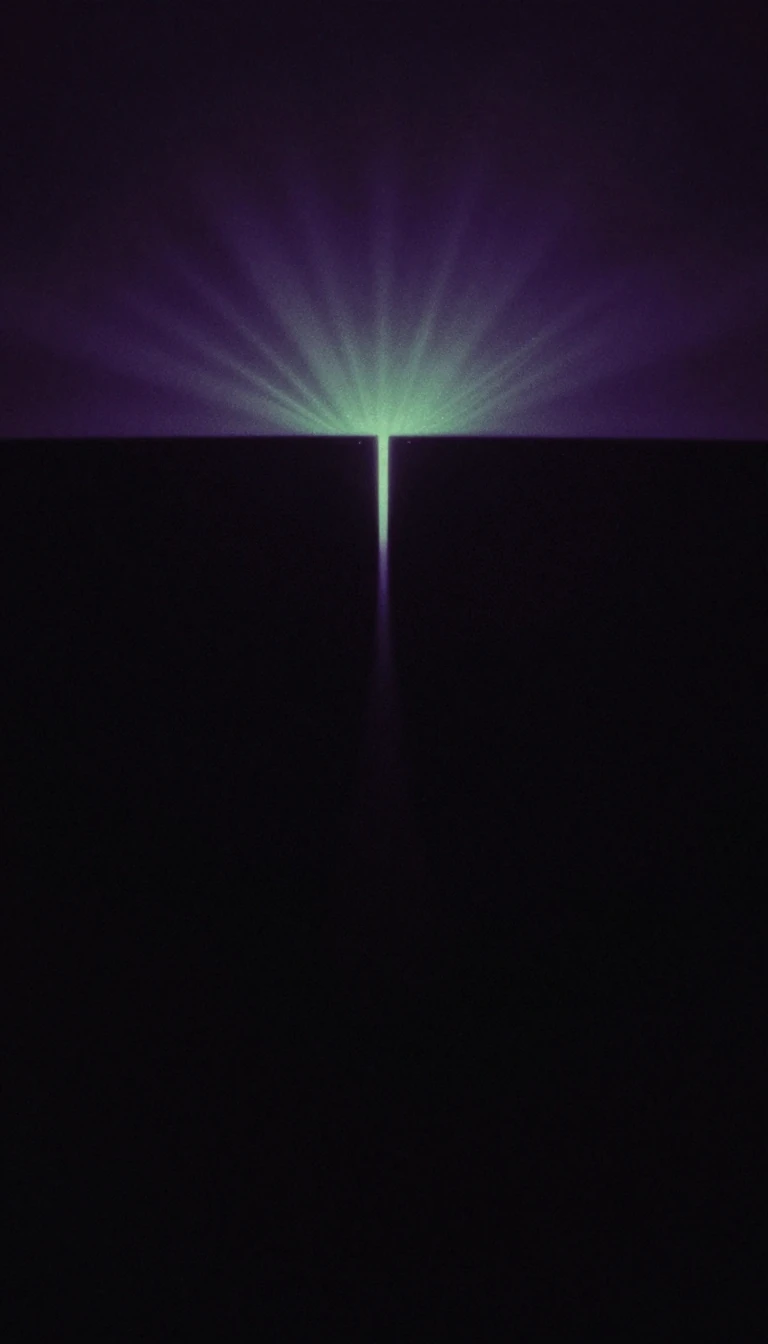
In short: Opacity is not just a simple state of being opaque; it is a complex measure of how radiation interacts with matter. Whether light is absorbed, scattered, or reflected depends entirely on the frequency of the radiation and the medium it encounters, revealing a hidden world of physical resistance.
At its simplest, opacity describes an object's inability to transmit electromagnetic radiation. When light hits a surface, it is either reflected, absorbed, or scattered. An opaque substance, such as carbon black or a mirror, transmits no light at all. However, this property is highly dependent on frequency. Glass, for example, is transparent to visible light but acts as an opaque barrier to ultraviolet radiation. This frequency dependence becomes even more extreme when observing the absorption lines of cold gases.
Beyond colloquial use, scientists rely on a quantitative definition known as the mass attenuation coefficient. This measures how a beam of light loses intensity as it travels through a medium. In fields like astrophysics and plasma physics, this is calculated using specific weighting schemes. The Planck opacity averages the absorption coefficient using the Planck black-body radiation distribution, while the Rosseland opacity—named after Svein Rosseland—uses a temperature derivative of that distribution. The latter is particularly useful in the diffusion approximation, assuming the radiation field is isotropic.
In practical applications, opacity is vital for modern medicine. Radiopacity refers to how well a substance blocks X-rays. Radiodense contrast media are used to highlight internal structures during CT scans, and medical devices like stents are designed with specific radiopacity so they can be tracked during interventional procedures. Meanwhile, in air pollution monitoring, opacity is measured as a percentage of light blocked, providing a direct way to quantify the density of emissions in the atmosphere.
The physical mechanisms behind these interactions are diverse. Whether through Thomson electron scattering or free-free transitions, the way matter resists radiation is a fundamental aspect of radiative transfer. By understanding these coefficients, researchers can model everything from the behavior of stars to the clarity of the air we breathe, proving that opacity is a cornerstone of how we measure the physical universe.
Opens the Intellect+ feed with this card first. Swipe up for the next one.
Sources
- Summary by Intellect · source: Opacity
To cite this card, link to https://intellectplus.co.uk/app/science-opacity.
How we source, check and correct cards: Editorial standards.
General information, not professional advice. Spotted an error? Flag the card or see corrections and complaints.
Intellect Plus is a visual educational discovery platform for exploring fascinating facts and ideas. Brain Food, Not Brain Rot. What is Intellect Plus?
Related
More in Waves · More in Science · Latest · A–Z · All topics
