Cooling buildings by beaming heat directly into the cold vacuum of outer space
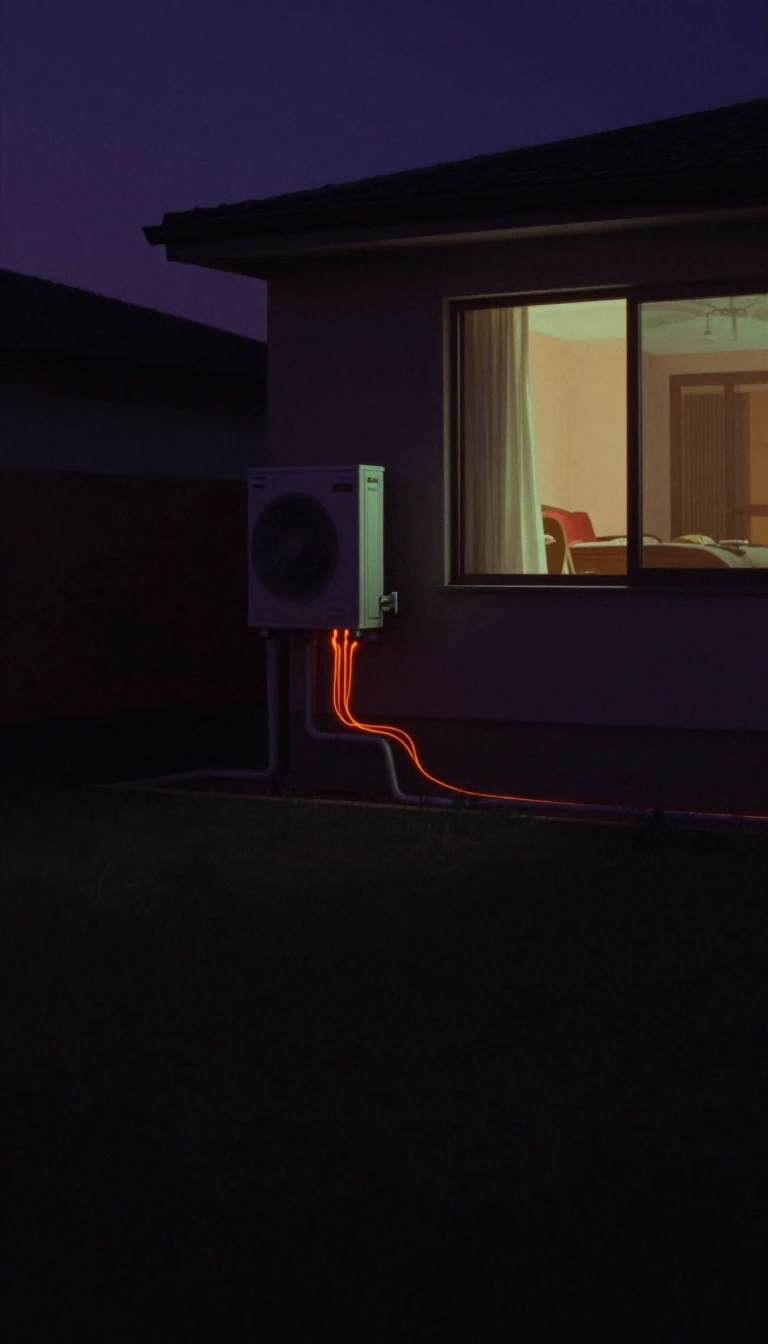
In short: Passive daytime radiative cooling exploits a unique atmospheric window to dump heat into space without electricity. While traditional methods rely on complex, expensive nanophotonic structures to reflect sunlight, a new directional approach uses simple materials to block solar radiation, achieving sub-ambient temperatures even under the intense midday sun.
Passive radiative cooling works by leveraging the Earth's atmosphere, which is remarkably transparent to infrared radiation in the 8 to 13 micrometre wavelength range. Terrestrial objects near ambient temperature naturally emit heat in this mid-infrared band. By designing surfaces that maximize emission within this specific window, heat can escape directly through the atmosphere and into the cold sink of outer space. This process has been used since ancient times for nighttime cooling, but daytime operation is significantly more difficult due to intense solar irradiation.
During the day, solar flux can reach 1000 watts per square metre, which is roughly ten times the potential radiative cooling power of about 100 watts per square metre. To prevent this solar energy from overwhelming the cooling effect, researchers have traditionally focused on spectrally selective surfaces that reflect nearly all sunlight while emitting strongly in the mid-infrared. However, achieving such near-perfect spectral selectivity often requires specialized, costly photonic materials. This constraint has limited the accessibility of passive cooling technologies for widespread thermal management.
A recent directional approach by Bhatia et al. offers a simpler alternative by exploiting the angular confinement of solar radiation. Because direct sunlight comes from a specific, narrow direction in the sky, it is possible to block this flux while allowing radiative heat transfer to occur in other directions. Using common materials like polished aluminum and white polyethylene, researchers demonstrated sub-ambient cooling of up to 6 degrees Celsius below ambient temperature. Theoretical models suggest that with further refinement, this method could reach 20 degrees Celsius below ambient, providing a low-cost, scalable path toward reducing global reliance on energy-intensive air conditioning.
Opens the Intellect+ feed with this card first. Swipe up for the next one.
Sources
- Summary by Intellect · source: Passive directional sub-ambient daytime radiative cooling - Nature Communications
- Also: Passive daytime radiative cooling
To cite this card, link to https://intellectplus.co.uk/app/science-passive-daytime-radiative-cooling.
How we source, check and correct cards: Editorial standards.
General information, not professional advice. Spotted an error? Flag the card or see corrections and complaints.
Intellect Plus is a visual educational discovery platform for exploring fascinating facts and ideas. Brain Food, Not Brain Rot. What is Intellect Plus?
Related
More in Mathematicians · More in Science · Latest · A–Z · All topics
