Why the dream of a machine that runs forever remains a scientific impossibility
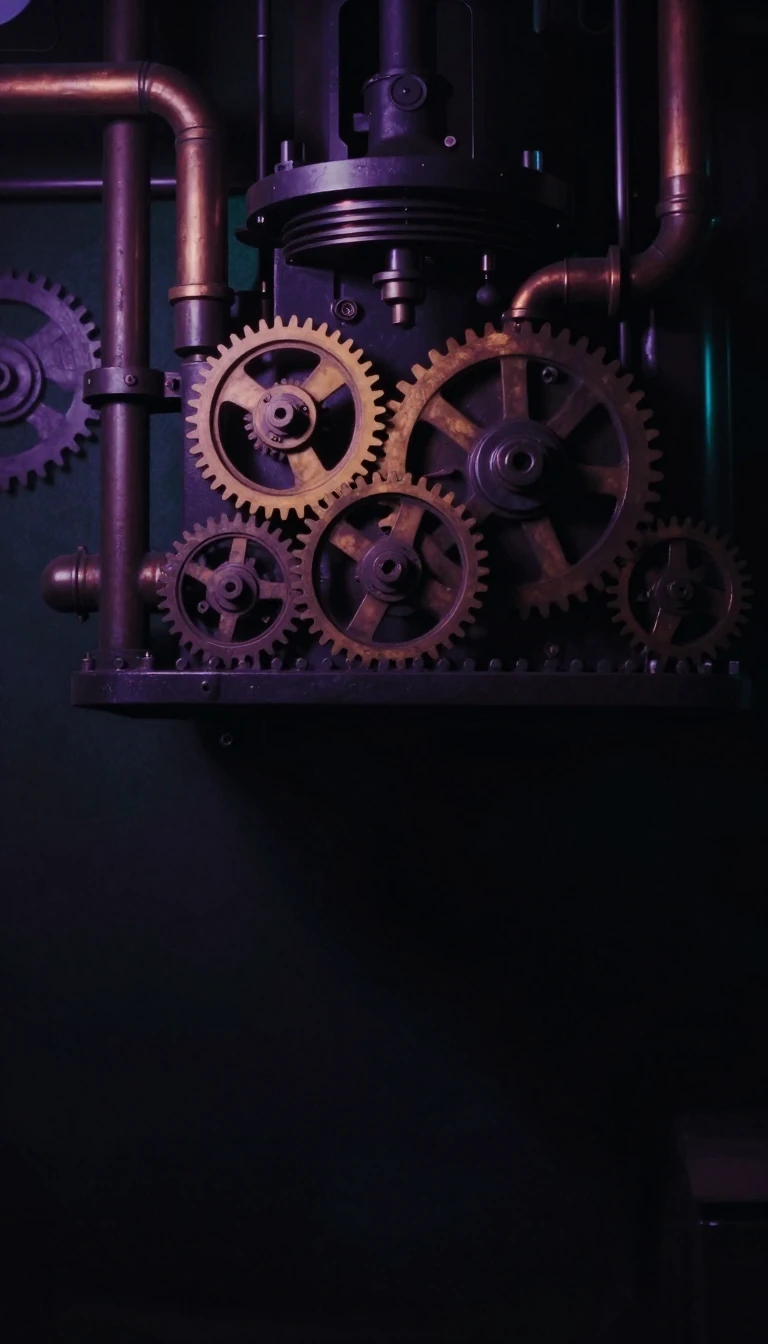
In short: A device that operates indefinitely without external energy is the ultimate fantasy of inventors. Despite centuries of attempts to build one, these machines consistently fail because they violate the fundamental laws of thermodynamics. While they remain physically impossible, the pursuit of perpetual motion continues to fascinate the public imagination.
Perpetual motion machines are categorized by how they attempt to bypass the laws of physics. The first kind seeks to create energy from nothing, violating the law of conservation of energy. Historically, this often involved overbalanced wheels, where weights were shifted to create a perceived mechanical advantage. Notable early attempts included designs by the 13th-century architect Vilard de Honnecourt and later machines built by Edward Somerset and Johann Bessler. These devices often ran for impressive durations, leading observers to mistake them for genuine perpetual motion, though they eventually ground to a halt.
The second kind of machine attempts to violate the second law of thermodynamics by converting heat into work with perfect efficiency, ignoring the reality that some energy is always lost to the environment. A famous failure here was John Gamgee’s ammonia-powered zeromotor from the 1880s. The third kind aims to eliminate all friction and resistance to maintain motion through inertia. While scientists can reduce these dissipative forces—such as using superconductive metals at temperatures near 20 K—they cannot be entirely removed without expending more energy than the system produces.
Because these machines are impossible, scientific bodies have long been skeptical. Since 1775, the French Academy of Science has declined to review any claims of perpetual motion, and patent offices in the UK and US have similarly stopped entertaining such proposals. Even so, the allure persists. Some inventors, like David Jones, have created mock machines to engage the public, using them as clever tools to demonstrate the boundaries of science. Others have been misled by devices that draw energy from subtle, external sources like atmospheric pressure or temperature changes, which are not truly perpetual but merely powered by the environment.
Ultimately, the search for perpetual motion is a testament to human curiosity. Whether driven by the hope for free energy or a misunderstanding of physical laws, the pursuit has persisted from the 12th-century Indian engineers to modern-day tinkerers. While the Royal Society archives are filled with these failed designs, they serve as a historical record of our evolving understanding of the universe and the persistent, if misguided, human desire to defy its constraints.
Opens the Intellect+ feed with this card first. Swipe up for the next one.
Sources
- Summary by Intellect · source: Perpetual motion | Royal Society
- Also: Perpetual motion | Definition & Facts | Britannica
- Also: Perpetual motion
To cite this card, link to https://intellectplus.co.uk/app/science-perpetual-motion.
How we source, check and correct cards: Editorial standards.
General information, not professional advice. Spotted an error? Flag the card or see corrections and complaints.
Intellect Plus is a visual educational discovery platform for exploring fascinating facts and ideas. Brain Food, Not Brain Rot. What is Intellect Plus?
Related
More in Mechanics · More in Science · Latest · A–Z · All topics
