The engineer who turned automobile design into the language of modern digital graphics
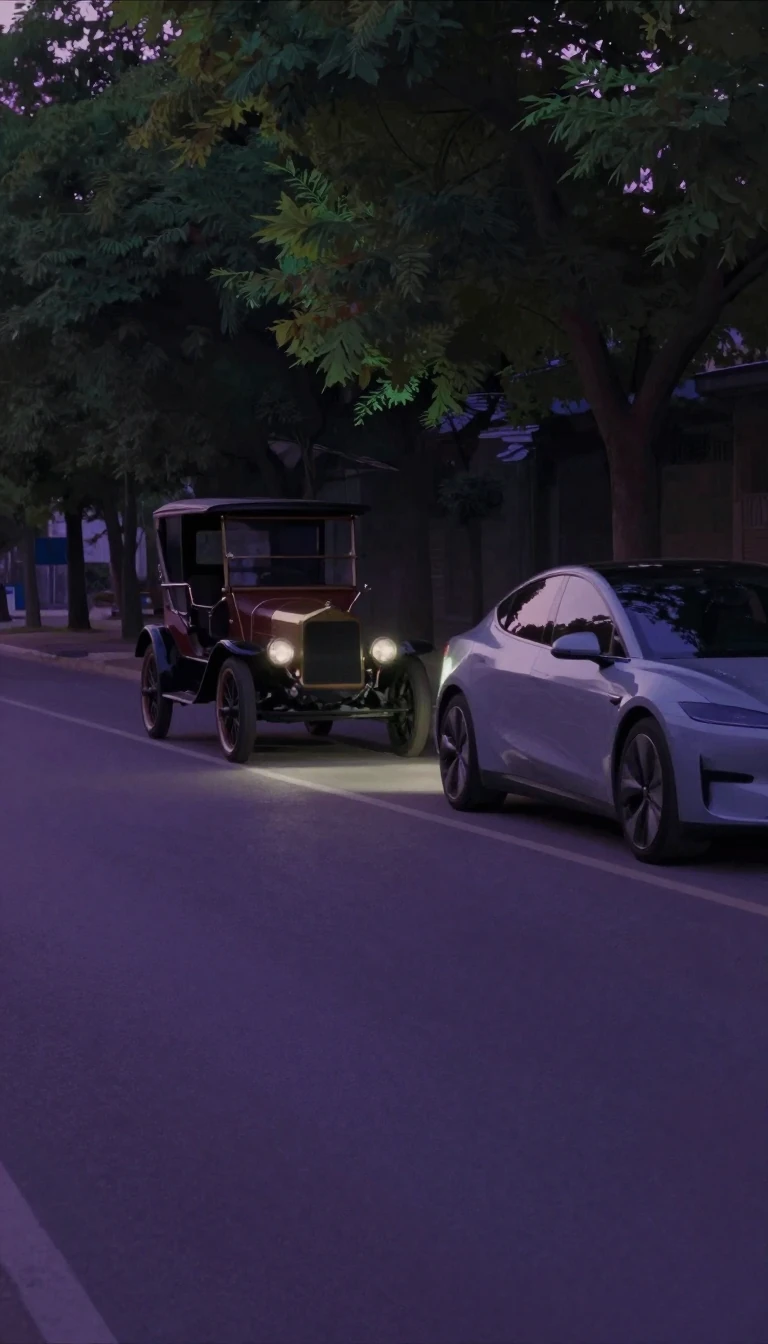
In short: Pierre Bézier did not invent the curves that bear his name, but he transformed them into the bedrock of modern design. By developing the intuitive control handles used in software today, he bridged the gap between mechanical engineering and computer graphics, forever changing how we draw, model, and manufacture.
Born in Paris in 1910, Pierre Bézier was a lifelong engineer who spent 42 years at Renault. His career began in 1933 as a tool setter, but he soon rose to lead production engineering. During World War II, while imprisoned, he refined the automatic machine principle, creating transfer stations with electromagnetic heads that allowed for complex, consecutive machining of engine parts. This background in high-performance manufacturing set the stage for his later contributions to computer-aided design.
In 1960, Bézier began researching CAD/CAM, eventually developing the UNISURF system. While he is famous for the curves that define modern vector graphics, he did not create them; Paul de Casteljau first developed the underlying mathematics in 1959. Bézier’s genius lay in popularizing these curves and, crucially, inventing the user interface—the nodes and control handles—that allows humans to manipulate shapes in software. This system debuted in 1968 and became the standard for industrial design.
Bézier’s influence extends far beyond the automotive industry. His work became the foundation for the PostScript language, Adobe Illustrator, and the outline fonts used in digital typography. He earned a doctorate in mathematics in 1977, focusing on parametric polynomial curves, and received the Steven Anson Coons Award in 1985 for his lifetime achievements. Today, his legacy persists in every vector program and 3D modeling tool, proving that the most enduring innovations are often those that make complex mathematics feel like second nature to the user.
The significance of his work is underscored by the continued reliance on his methods in computer graphics. Whether designing a car body or a typeface, the ability to define smooth, free-form curves through simple, interactive manipulation remains a cornerstone of digital creativity. Bézier’s transition from mechanical tool design to the abstract world of computer-aided modeling highlights a rare ability to synthesize rigorous mathematical theory with the practical demands of industrial production.
Opens the Intellect+ feed with this card first. Swipe up for the next one.
Sources
- Summary by Intellect · source: Pierre Bézier
To cite this card, link to https://intellectplus.co.uk/app/science-pierre-b-zier.
How we source, check and correct cards: Editorial standards.
General information, not professional advice. Spotted an error? Flag the card or see corrections and complaints.
Intellect Plus is a visual educational discovery platform for exploring fascinating facts and ideas. Brain Food, Not Brain Rot. What is Intellect Plus?
Related
More in Mathematicians · More in Science · Latest · A–Z · All topics
