How a 1980 accidental discovery redefined the global standard for electrical resistance
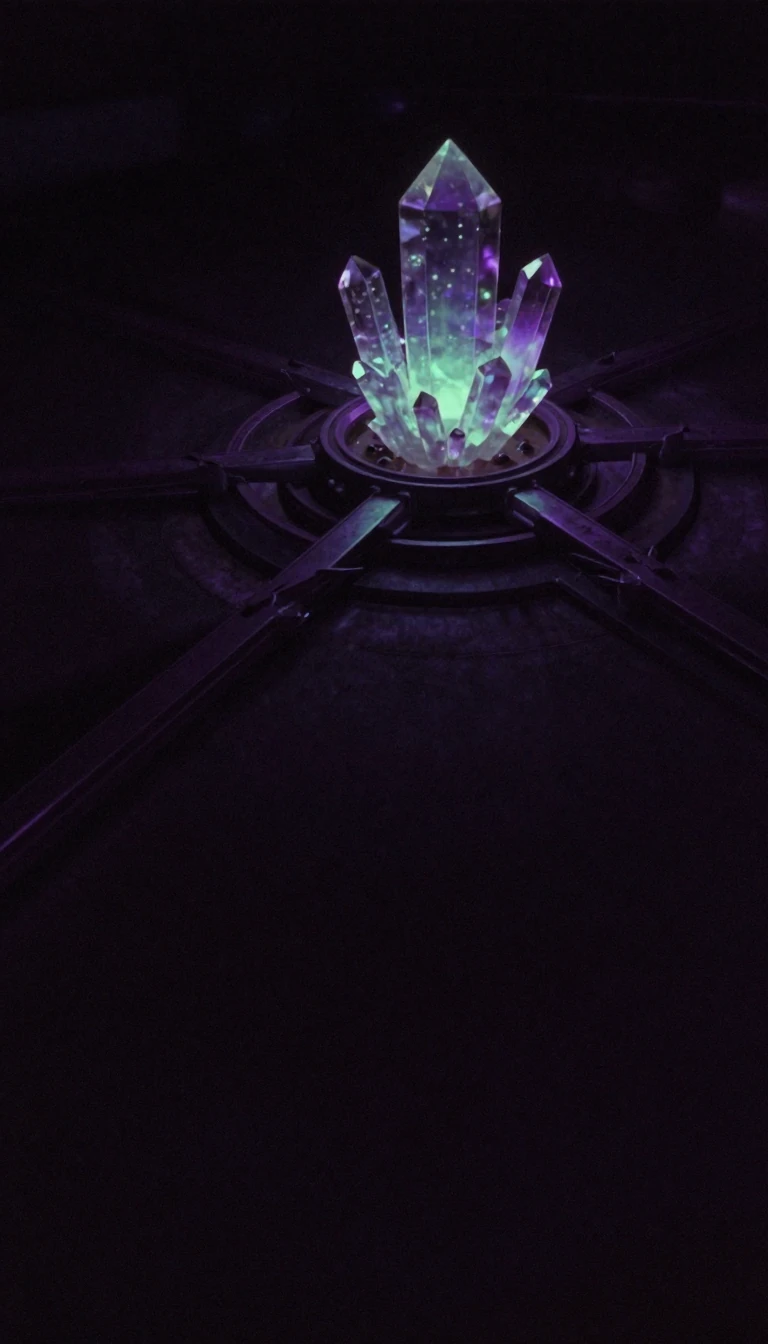
In short: In 1980, Klaus von Klitzing observed that electrical resistance in certain materials behaves in precise, quantized steps. This unexpected finding, which earned him a Nobel Prize, transformed our understanding of two-dimensional electron systems and provided a new, rock-solid foundation for defining electrical units across the entire world.
The quantum Hall effect occurs in two-dimensional electron systems subjected to intense magnetic fields and extreme cold. When classical electrons move in a magnetic field, they follow circular paths; however, quantum mechanics dictates that these orbits must be quantized. This leads to the formation of discrete energy levels, known as Landau levels, which govern the material's electrical behavior.
Klaus von Klitzing’s 1980 discovery at the Grenoble High Magnetic Field Laboratory revealed that Hall resistance does not change smoothly but instead jumps in exact, quantized steps. This precision is so remarkable that measurements are accurate to better than one part in a billion. Because of this stability, the effect now defines the von Klitzing constant, a fundamental standard for electrical resistance calibration used globally.
Beyond the integer version, the fractional quantum Hall effect emerges from complex electron-electron interactions. While the integer effect is well-understood through theoretical frameworks like the Chern-Simons Lagrangian, the fractional state involves composite fermions—particles that effectively experience a reduced magnetic field. These phenomena have expanded far beyond basic solid-state electronics, influencing modern research in quantum entanglement, topological photonics, and the development of quantum simulators.
The field continues to evolve rapidly. In 2005, researchers at Harvard and Manchester University observed a half-integer shift in graphene, confirming linear Dirac dispersion. Today, scientists explore diverse materials, including topological insulators and optically driven quantum states, to push the boundaries of condensed-matter physics. This ongoing work bridges the gap between fundamental quantum theory and the practical engineering of next-generation electronic devices.
Opens the Intellect+ feed with this card first. Swipe up for the next one.
Sources
- Summary by Intellect · source: 40 years of the quantum Hall effect - Nature Reviews Physics
- Also: Quantum Hall effect
To cite this card, link to https://intellectplus.co.uk/app/science-quantum-hall-effect.
How we source, check and correct cards: Editorial standards.
General information, not professional advice. Spotted an error? Flag the card or see corrections and complaints.
Intellect Plus is a visual educational discovery platform for exploring fascinating facts and ideas. Brain Food, Not Brain Rot. What is Intellect Plus?
Related
More in Electromagnetism · More in Science · Latest · A–Z · All topics
