How a single protein turns a flicker of light into a neural signal
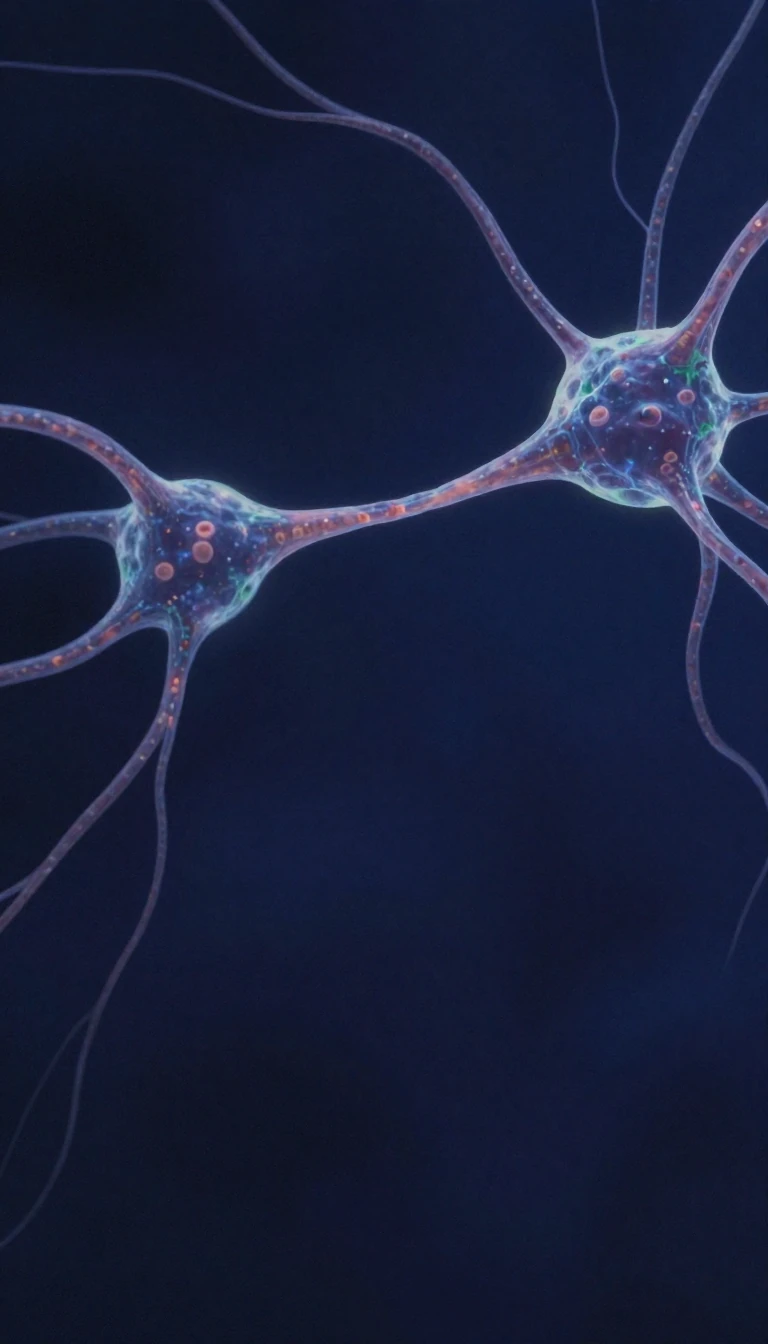
In short: Rhodopsin is the biological switch that makes vision possible in dim light. By combining a protein with a vitamin A derivative, it creates a light-sensitive sensor that triggers an electrical cascade in the brain. When this molecular machinery fails, the result is often profound, hereditary night blindness.
Rhodopsin is a G-protein-coupled receptor (GPCR) found in the rod cells of the retina. It is a chromoprotein composed of a colorless protein called opsin and a pigmented molecule known as 11-cis-retinal, which is derived from vitamin A. This structure allows the molecule to act as a sensory protein that converts light into electrical signals. When a photon strikes the 11-cis-retinal, it isomerizes into all-trans-retinal, forcing a structural change in the rhodopsin molecule that initiates a phototransduction cascade. This process transmits signals along the optic nerve to the visual cortex.
The phenomenon of bleaching occurs when the change in configuration causes opsin to dissociate from retinal. In bright light, this bleaching limits rod sensitivity, allowing cone cells to take over. In darkness, the eye undergoes dark adaptation, where rhodopsin levels increase as the pigment is recycled. This cycle is essential for vision in low-light environments. The protein was first discovered in 1876 by Franz Christian Boll, who noted that the reddish-purple retina of a frog faded when exposed to bright light, a process later understood as the destruction of the pigment.
Because rhodopsin is a GPCR, its structure has become a vital model for understanding how other receptors function. It was the first GPCR to have its three-dimensional structure solved via X-ray crystallography. However, mutations in the RHO gene can disrupt this delicate balance. Conditions such as retinitis pigmentosa and autosomal dominant congenital stationary night blindness are linked to these genetic defects, which prevent the eye from adapting to darkness. While some mutations cause the protein to become constitutively active even without light, others lead to the degeneration of photoreceptor cells, highlighting the critical role this single protein plays in human sight.
Opens the Intellect+ feed with this card first. Swipe up for the next one.
Sources
- Summary by Intellect · source: Structure and activation of rhodopsin - Acta Pharmacologica Sinica
- Also: Rhodopsin | Biochemistry, Photoreception & Vision | Britannica
- Also: Rhodopsin
To cite this card, link to https://intellectplus.co.uk/app/science-rhodopsin.
How we source, check and correct cards: Editorial standards.
General information, not professional advice. Spotted an error? Flag the card or see corrections and complaints.
Intellect Plus is a visual educational discovery platform for exploring fascinating facts and ideas. Brain Food, Not Brain Rot. What is Intellect Plus?
Related
More in Biochemistry · More in Science · Latest · A–Z · All topics
