Why Rodney Brooks believes robots should learn like toddlers instead of playing chess
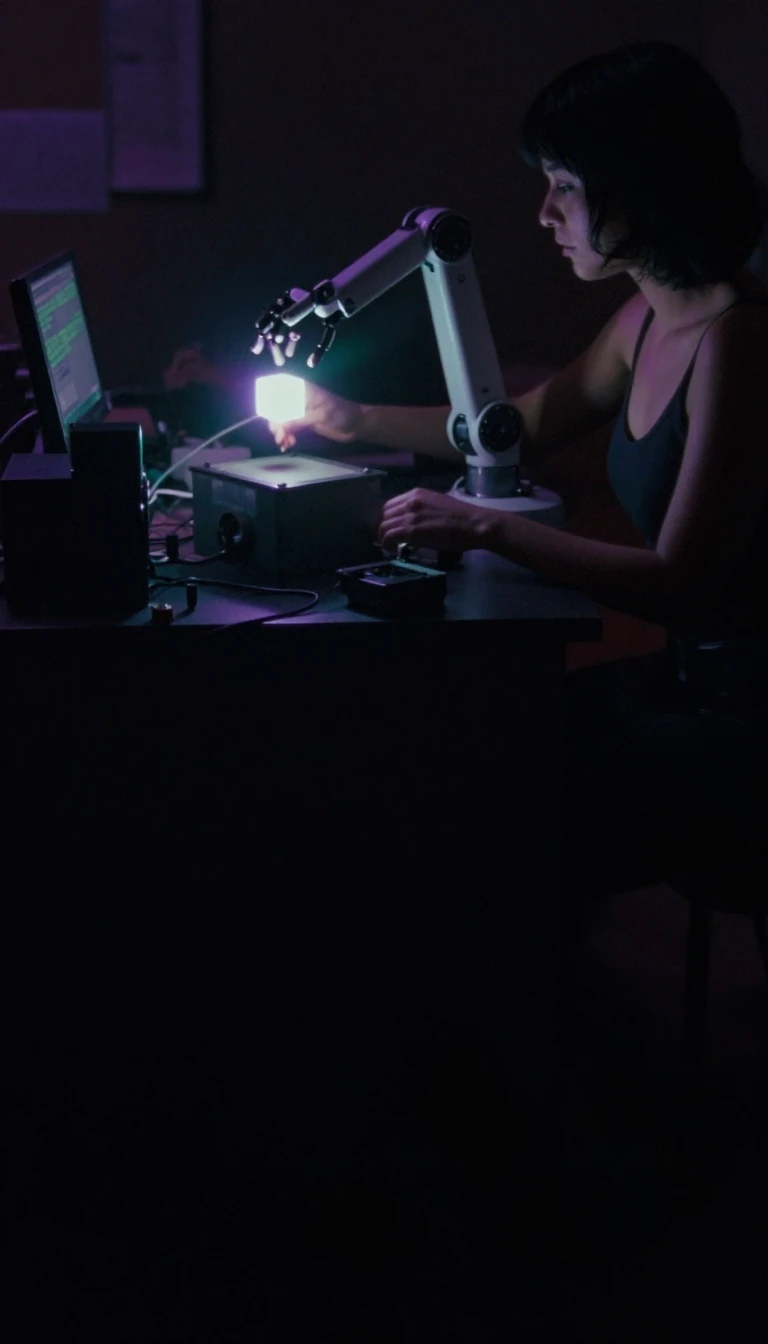
In short: For decades, artificial intelligence researchers focused on symbolic reasoning and complex computation. Rodney Brooks challenged this, arguing that true intelligence emerges from sensory-motor interaction with the physical world. By prioritizing behavior over abstract logic, he transformed robotics from rigid industrial machines into adaptive agents capable of navigating unstructured human environments.
Born in Australia in 1954, Rodney Brooks pursued pure mathematics before earning his PhD in computer science from Stanford in 1981. His career is defined by a rejection of the top-down computational metaphor that dominated early AI. Instead of attempting to build a massive, all-knowing brain, Brooks championed an action-oriented approach. In his influential 1990 paper, "Elephants Don't Play Chess," he argued that higher-level cognitive abilities must be grounded in basic sensory-motor coupling and proprioception—the internal sense of body position—to function effectively in the real world.
This philosophy led to the development of subsumption architecture, a method for building robots that react to their surroundings through layered, emergent behaviors. Rather than relying on a central processor to map out every possibility, his machines operate through simple, biological-inspired principles. This shift in perspective allowed for the creation of robots that could perform tasks in unpredictable settings, from exploring oil wells to assisting in surgical procedures and searching for survivors at Ground Zero.
Brooks has balanced his academic contributions with significant entrepreneurial ventures. After serving as the leader of the Massachusetts Institute of Technology's primary computer science and AI research center from 1997 to 2007, he co-founded iRobot and later Rethink Robotics. At Rethink, he introduced Baxter in 2012, an industrial robot designed to work safely alongside humans. With a cost equivalent to a four-dollar-an-hour worker, Baxter represented his vision of robots as accessible, collaborative tools rather than isolated, high-level processors.
Despite his long career in the field, Brooks remains a pragmatic skeptic. In 2024, he cautioned that current enthusiasm for generative AI often overestimates its actual capabilities. He maintains that understanding human intelligence requires building physical, humanoid robots that interact with the world, rather than just refining software models. His work continues to emphasize that intelligence is not just about calculation, but about the ability to act and adapt within a physical environment.
Opens the Intellect+ feed with this card first. Swipe up for the next one.
Sources
- Summary by Intellect · source: Rodney Brooks
- Also: www.ted.com — Rodney Brooks | Speaker | TED
To cite this card, link to https://intellectplus.co.uk/app/science-rodney-brooks.
How we source, check and correct cards: Editorial standards.
General information, not professional advice. Spotted an error? Flag the card or see corrections and complaints.
Intellect Plus is a visual educational discovery platform for exploring fascinating facts and ideas. Brain Food, Not Brain Rot. What is Intellect Plus?
Related
More in Mathematicians · More in Science · Latest · A–Z · All topics
