Why astronomers use our Sun as the universal yardstick for measuring stellar power
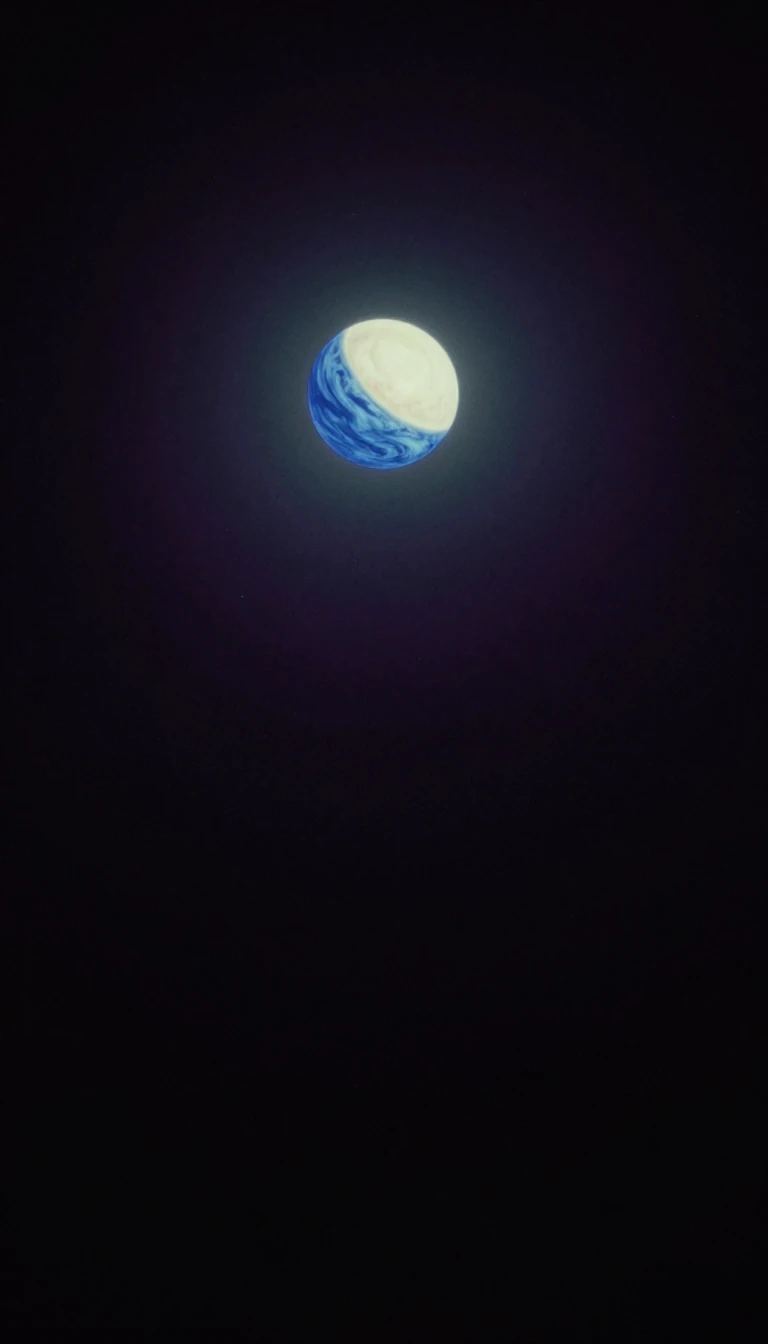
In short: The Sun is more than just our local star; it is the fundamental unit of measurement for the entire universe. By defining stellar output in terms of solar luminosity, astronomers can compare everything from dim brown dwarfs to brilliant supernovae against the radiant power of our own Sun.
Solar luminosity represents the total radiant flux—the power emitted as photons—from the Sun. While the International Astronomical Union defines one nominal solar luminosity as 3.828×10^26 watts, other sources, such as Britannica, cite a slightly different value of 3.846×10^26 watts. This measurement is an absolute value, meaning it remains independent of the observer's distance from the object, providing a consistent standard for celestial comparison.
Using this unit, astronomers can quantify the extreme diversity of the cosmos. The most luminous stars can emit several million times the power of the Sun, while the most intense supernovae shine with a staggering 10^17 solar luminosities. Conversely, dim brown dwarfs possess luminosities only a few millionths that of our star. This scale allows researchers to place any object within a clear, relative hierarchy of energy output.
However, the Sun is not a static light source. It is a weakly variable star, experiencing a quasi-periodic fluctuation of about ±0.1% driven by the eleven-year sunspot cycle. Beyond these short-term variations, the Sun's influence on Earth is further modulated by orbital mechanics. Changes in Earth's axial tilt and orbital shape create cyclical variations in solar irradiance—the power received per unit area—which trigger the Milankovitch cycles responsible for long-term glacial shifts on our planet.
Calculating total luminosity requires bridging the gap between local irradiance and total output. By multiplying the solar constant—the mean irradiance at the top of Earth's atmosphere—by the surface area of a sphere defined by the mean distance between Earth and the Sun, scientists derive the total power emitted. This calculation is essential for understanding both the fundamental nature of stars and the climate history of our own world.
Opens the Intellect+ feed with this card first. Swipe up for the next one.
Sources
- Summary by Intellect · source: Solar luminosity
- Also: Luminosity | Brightness, Magnitude & Intensity | Britannica
To cite this card, link to https://intellectplus.co.uk/app/science-solar-luminosity.
How we source, check and correct cards: Editorial standards.
General information, not professional advice. Spotted an error? Flag the card or see corrections and complaints.
Intellect Plus is a visual educational discovery platform for exploring fascinating facts and ideas. Brain Food, Not Brain Rot. What is Intellect Plus?
Related
More in Measurement · More in Science · Latest · A–Z · All topics
