Whistling was once studied as a natural radio phenomenon high above Earth
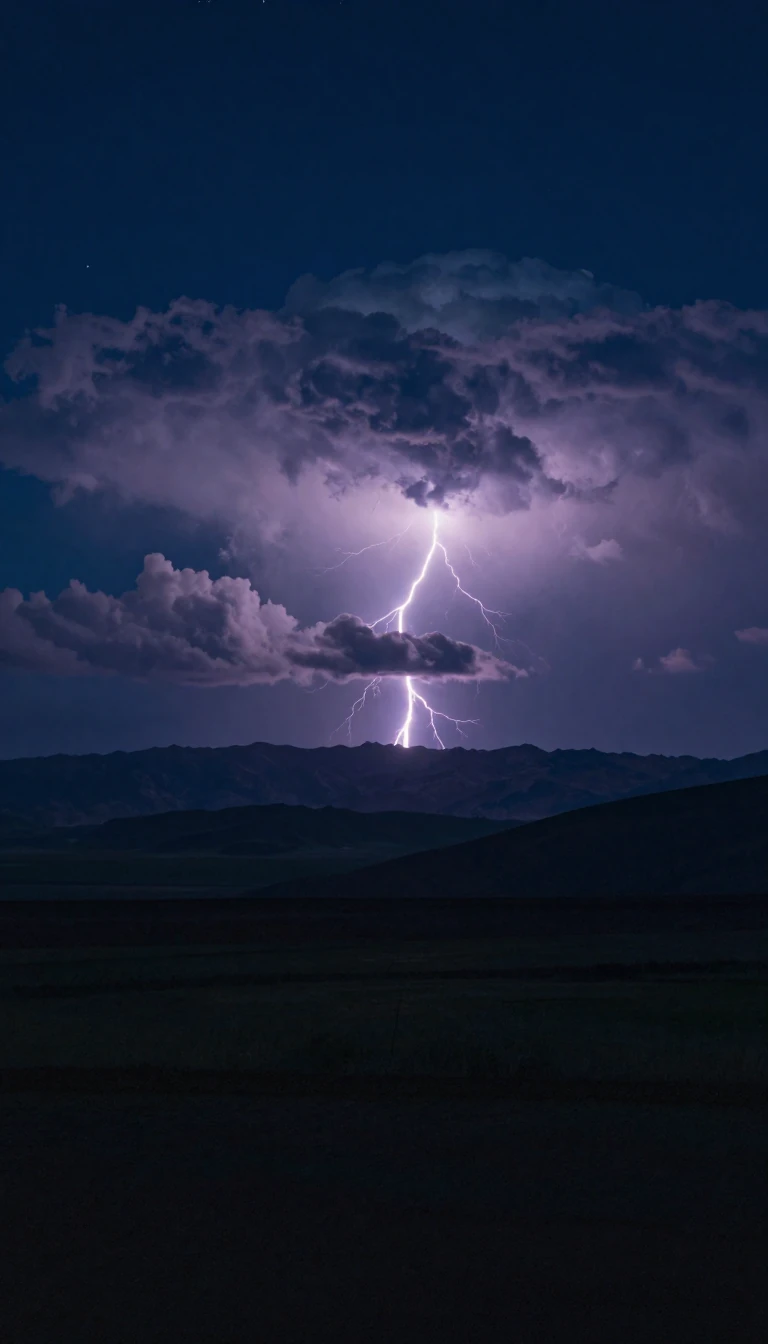
In short: Whistling is also a sound that drifts through space. Researchers in the mid-twentieth century recorded faint falling tones in radio signals, now called whistlers, and traced them to lightning far below. Their paths followed Earth's magnetic field, and the way they spread out revealed how many electrons float in the atmosphere at great heights.
Whistlers are a natural radio phenomenon, heard at frequencies below about 15 kilohertz. A study published in the Philosophical Transactions of the Royal Society recorded a considerable number of them and analysed how their frequency changes over time. Some whistlers follow ordinary impulsive atmospherics, the crackles produced by lightning strokes within roughly 2000 kilometres. Others arrive with no accompanying crackle and differ from the first kind in several further respects.
The proposed explanation, originally due to Barkhausen in 1930 and Eckersley in 1935, is that waves start from lightning and travel through the outer ionosphere along the lines of Earth's magnetic field. They cross the equator at a great height and become dispersed, so that the higher frequencies arrive before the lower ones, producing the falling tone. Some waves may be reflected from the surface and return along the same path, giving whistlers with greater dispersion. Effects that guide the waves along the field lines also focus the energy, which keeps it from spreading too far.
The degree of dispersion has been used to estimate the density of electrons at very great heights. The density implied seems considerably higher than might reasonably have been expected. The authors note that if the electrons come from ionisation of the atmosphere, its temperature in those regions would need to be at least 7200 degrees Kelvin. Another possibility is that electrons fall in from outside, which might also account for the link between whistler activity and magnetic disturbance.
The whistlers described here are a different phenomenon from the human whistle, which needs no equipment and is produced by shaping the lips and tongue. Yet both show how a faint tone can carry information across great distances, one through the air between people and the other through the magnetic environment around the planet.
Whistling
awe
science
Opens the Intellect+ feed with this card first. Swipe up for the next one.
Sources
- Summary by Intellect · source: An investigation of whistling atmospherics
- Also: Whistling
To cite this card, link to https://intellectplus.co.uk/app/science-whistling.
How we source, check and correct cards: Editorial standards.
General information, not professional advice. Spotted an error? Flag the card or see corrections and complaints.
Intellect Plus is a visual educational discovery platform for exploring fascinating facts and ideas. Brain Food, Not Brain Rot. What is Intellect Plus?
Related
More in Science · Latest · A–Z · All topics
