NASA deliberately crashed a spacecraft into an asteroid and moved it
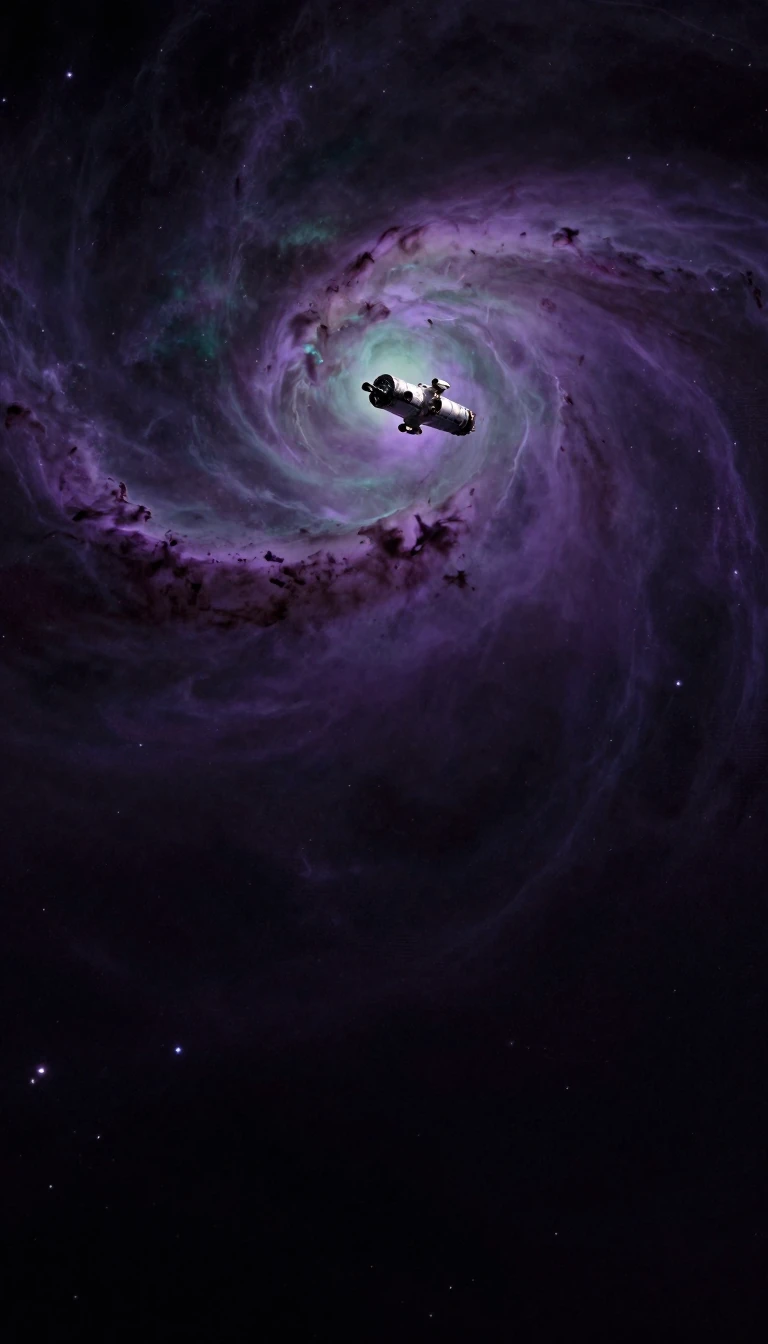
In short: In September 2022, NASA's DART spacecraft struck the small asteroid Dimorphos head-on. The impact shortened its orbit around its larger companion by 32 minutes, far beyond the 73-second success target. It was the first test of deflecting an asteroid by kinetic impact, a method that could one day matter for planetary defense.
The Double Asteroid Redirection Test, or DART, was a NASA mission built to test whether a spacecraft impact can change the path of an asteroid. The target, Dimorphos, is a moonlet about 160 metres wide that orbits a larger asteroid called Didymos. Neither object threatens Earth. Their pairing made them ideal, because the orbit of the small body can be tracked precisely from Earth as it passes in front of and behind its companion. DART hit Dimorphos on 26 September 2022 at about 14,000 miles per hour, roughly 6.8 million miles from Earth.
The collision shortened Dimorphos's orbit by 32 minutes, far more than the success threshold set before launch, which was 73 seconds. The surprise lay in the debris. Material blasted out of the crater acted like a recoil that pushed the asteroid much harder than the spacecraft alone. Early estimates put this momentum boost at three to five times the incoming momentum, and later measurements refined the figure to about 3.6.
The mission was carried out by NASA together with the Johns Hopkins University Applied Physics Laboratory, and the Italian Space Agency's LICIACube CubeSat photographed the aftermath. The spacecraft carried no science instruments, only navigation sensors, and it cost about 330 million US dollars. A Falcon 9 rocket placed it on a near-direct path, so its experimental ion engine was barely needed. The scale of the change is what makes it notable. The orbital speed of the pair around the Sun also shifted slightly, the first time human action measurably altered the orbit of a celestial body. Such a change is tiny today, but applied years in advance it accumulates into a large shift in position, which is the core logic of kinetic deflection.
Scientists are still working out how sensitive the outcome is to surface composition and porosity. The European Space Agency's Hera mission, planned to arrive at the Didymos system, is designed to study the crater and the results in detail.
Opens the Intellect+ feed with this card first. Swipe up for the next one.
Sources
- Summary by Intellect · source: Double Asteroid Redirection Test
- Also: Double Asteroid Redirection Test (DART) - NASA Science
- Also: svs.gsfc.nasa.gov — NASA Scientific Visualization Studio | DART: Double Asteroid Redirection Test
- Also: Wikidata — Double Asteroid Redirection Test (DART): Structural and Dynamic Interactions between Asteroidal Elements of Binary Asteroid (65803) Didymos · CC0
To cite this card, link to https://intellectplus.co.uk/app/space-double-asteroid-redirection-test.
How we source, check and correct cards: Editorial standards.
General information, not professional advice. Spotted an error? Flag the card or see corrections and complaints.
Intellect Plus is a visual educational discovery platform for exploring fascinating facts and ideas. Brain Food, Not Brain Rot. What is Intellect Plus?
Related
More in Asteroids · More in Space · Latest · A–Z · All topics
