How a desperate gravity-assist maneuver saved the Galileo mission from the scrap heap
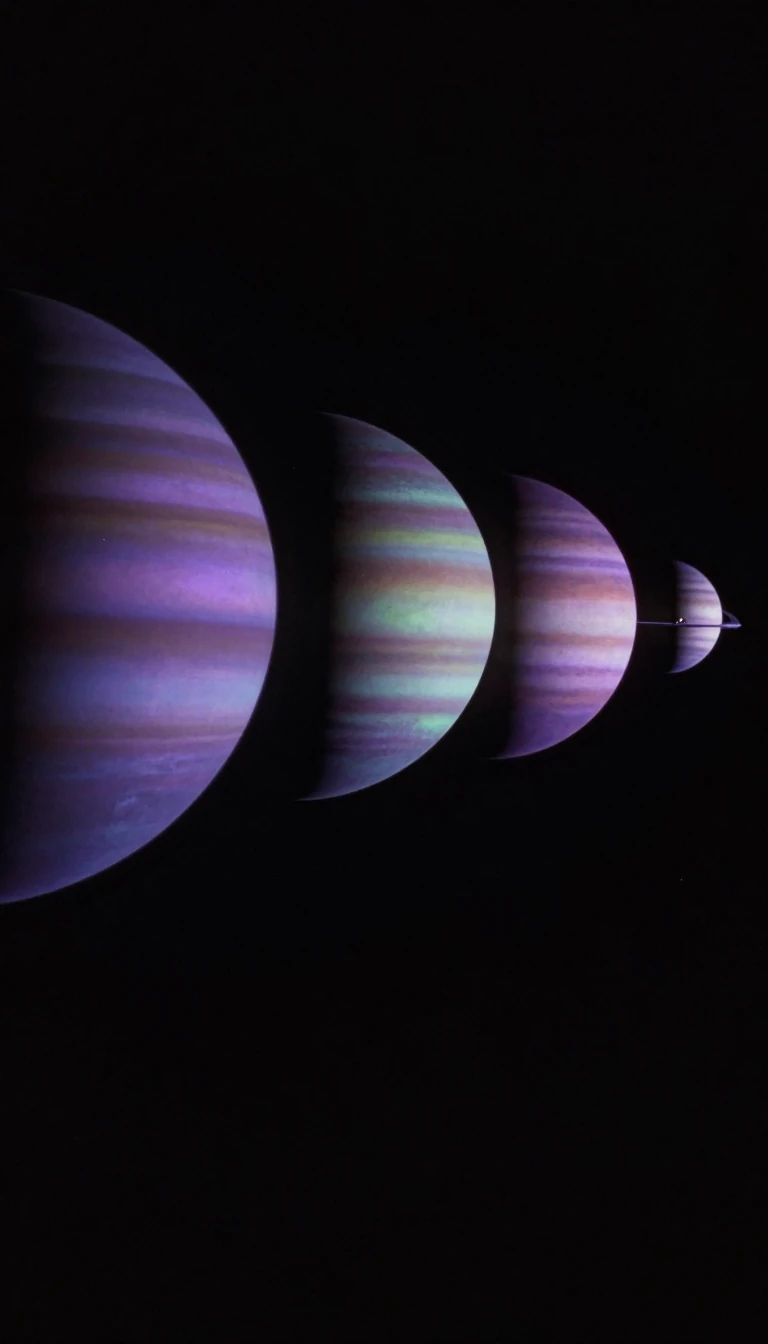
In short: After the Challenger disaster grounded the Space Shuttle, the Galileo mission to Jupiter faced cancellation. With its powerful Centaur upper stage canceled, engineers devised a radical, roundabout flight path using Venus and Earth for gravity assists. This VEEGA trajectory was the only way to reach Jupiter using a standard rocket.
The Galileo project, named for the astronomer who first observed Jupiter's moons in 1610, was designed to be the first spacecraft to orbit the gas giant. By the mid-1980s, the mission was in crisis. The original plan to launch using a high-powered Centaur upper stage was scrapped following the 1986 Challenger disaster, as NASA management grew increasingly risk-averse regarding liquid-fuel rockets. With the spacecraft too heavy for a direct flight using the available two-stage Inertial Upper Stage (IUS), it seemed destined for the Smithsonian rather than the Jovian system.
In a feat of orbital mechanics, a team at the Jet Propulsion Laboratory led by Robert Mitchell developed the Venus-Earth-Earth Gravity Assist (VEEGA) trajectory. By flying past Venus and then Earth twice, the spacecraft could gain the necessary velocity to reach Jupiter. While this route doubled the travel time to sixty months and forced the mission to rely on Australian tracking stations due to the spacecraft's southern declination upon arrival, it provided a viable path forward. The United States Air Force eventually supplied a spare IUS to facilitate the launch.
The mission faced further scrutiny due to its power source: two radioisotope thermoelectric generators fueled by plutonium-238. Anti-nuclear activists feared that the VEEGA trajectory, which required a close swing past Earth, posed a contamination risk if the spacecraft failed. Despite these concerns, the mission proceeded, launching in 1989. Galileo ultimately revolutionized our understanding of Jupiter, mapping its magnetosphere, discovering the planet's faint ring system, and providing evidence for liquid oceans beneath the icy surfaces of Europa, Ganymede, and Callisto before its final descent into Jupiter's atmosphere in 2003.
The project's legacy is defined by its resilience. Having absorbed three times the radiation it was designed to withstand, the orbiter operated well beyond its original specifications. By the time it was terminated to prevent potential contamination of the Jovian moons, it had spent 14 years in space, proving that even when initial plans fail, creative engineering can still unlock the secrets of the outer Solar System.
Opens the Intellect+ feed with this card first. Swipe up for the next one.
Sources
- Summary by Intellect · source: Galileo project
To cite this card, link to https://intellectplus.co.uk/app/space-galileo-project.
How we source, check and correct cards: Editorial standards.
General information, not professional advice. Spotted an error? Flag the card or see corrections and complaints.
Intellect Plus is a visual educational discovery platform for exploring fascinating facts and ideas. Brain Food, Not Brain Rot. What is Intellect Plus?
Related
More in Space · More in Space · Latest · A–Z · All topics
