A day on Venus lasts longer than its year
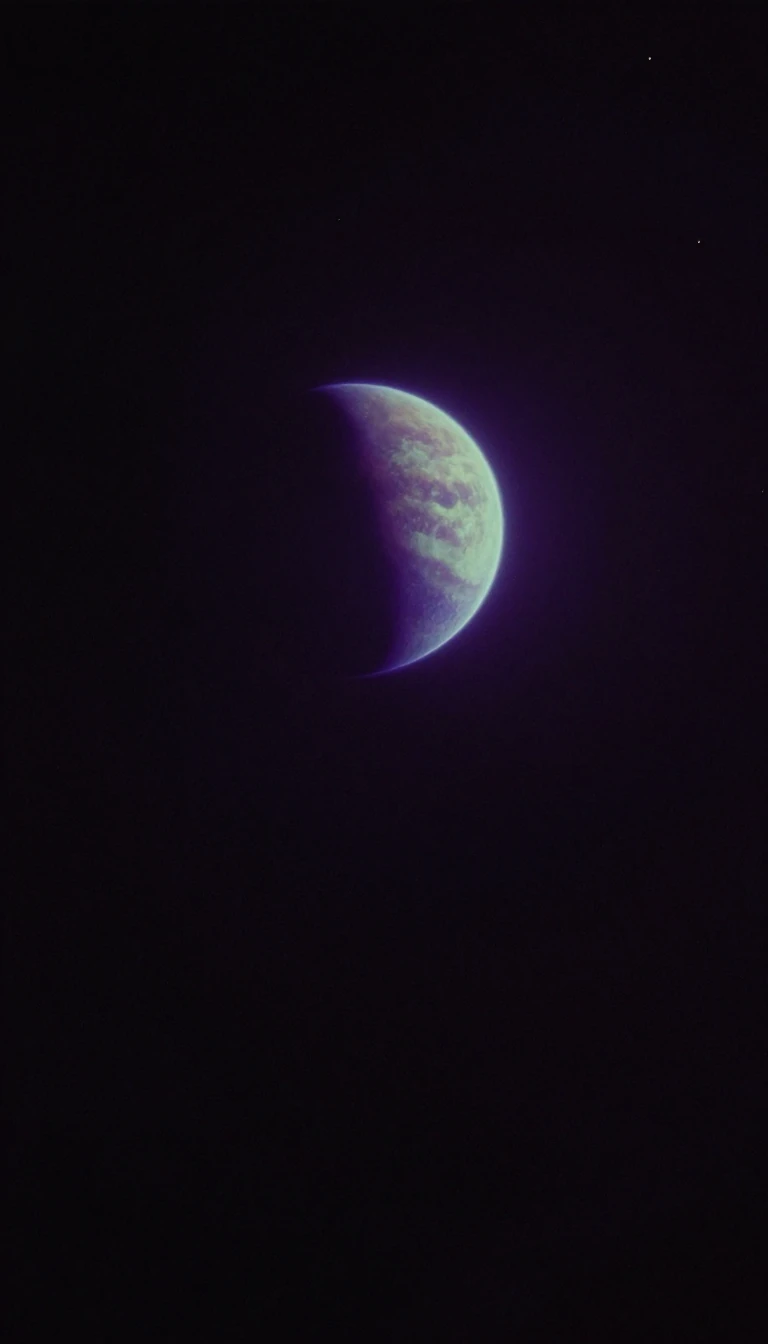
In short: Venus spins backwards compared with most planets, and it turns so slowly that one of its days is longer than its year. Measurements from Earth-based radar tracked how its rotation has behaved over fourteen years. The findings reveal a planet whose spin shifts slightly as its atmosphere moves, linking the deep solid world to the clouds above.
Venus takes about 243 Earth days to complete one rotation on its axis, a figure based on radar observations made between 2006 and 2020. Its orbit around the Sun takes about 225 Earth days, which is why a Venusian day is longer than a Venusian year. The planet also rotates in the opposite direction to most of the solar system, a property that makes its spin unusual among the planets.
Researchers measured the tilt of Venus's spin axis at about 2.64 degrees relative to its orbital plane. Its spin axis precesses, or slowly wobbles, at roughly 44.6 arcseconds per year, with an uncertainty of about 3.3. Combining these measurements gave a normalised moment of inertia of about 0.337, which in turn offers a rough estimate of how large the planet's dense core may be.
The length of a Venusian day is not perfectly constant. Over the study period the solid planet's spin varied by about 61 parts per million, roughly 20 minutes. The authors suggest this may be driven by a daily or twice-daily forcing, and they estimate that changes in atmospheric angular momentum of at least around 4 per cent are passed on to the solid planet. In other words, winds in the thick atmosphere push on the planet's rotation.
Venus's slow spin and dense atmosphere help explain how the planet became so different from Earth despite similar mass and size. Its atmosphere is mostly carbon dioxide with a strong greenhouse effect, and atmospheric circulation is shaped by its slow rotation rate. Studying the spin is therefore one way scientists test ideas about how two similar planets followed very different paths.
Opens the Intellect+ feed with this card first. Swipe up for the next one.
Sources
- Summary by Intellect · source: A warm layer in Venus' cryosphere and high-altitude measurements of HF, HCl, H2O and HDO | Nature
- Also: Spin state and moment of inertia of Venus | Nature Astronomy
- Also: Venus as a more Earth-like planet | Nature
- Also: [2103.01504] Spin state and moment of inertia of Venus
- Also: Venus as a more Earth-like planet
To cite this card, link to https://intellectplus.co.uk/app/space-how-does-venus-rotate.
How we source, check and correct cards: Editorial standards.
General information, not professional advice. Spotted an error? Flag the card or see corrections and complaints.
Intellect Plus is a visual educational discovery platform for exploring fascinating facts and ideas. Brain Food, Not Brain Rot. What is Intellect Plus?
Related
More in Planetary science · More in Space · Latest · A–Z · All topics
