Hyperion is a tumbling, sponge-like moon that refuses to lock its gaze on Saturn.
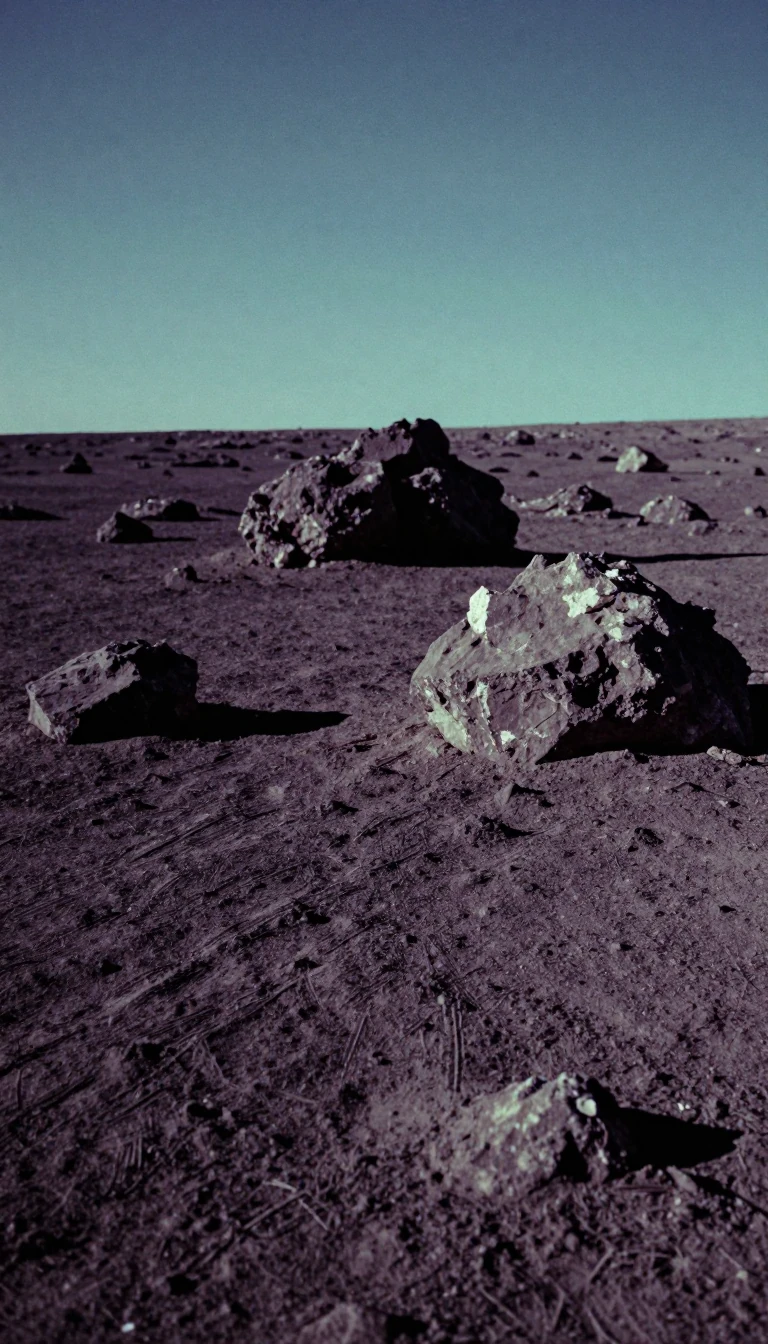
In short: Most moons in our solar system are tidally locked, showing only one face to their parent planet. Hyperion, a jagged, potato-shaped moon of Saturn, defies this norm. It tumbles through space in a chaotic, unpredictable dance, its rotation constantly shifting as it orbits in a strange, resonant rhythm with Titan.
Discovered in 1848 by William Bond, George Bond, and William Lassell, Hyperion is one of the most unusual bodies in the Saturnian system. Unlike the spherical moons that dominate our neighborhood, Hyperion is highly irregular, measuring roughly 410 by 260 by 220 kilometers. Its low density—about half that of water—suggests it is not a solid, monolithic object, but rather a loosely packed rubble pile with a porosity exceeding 40 percent. This porous structure is likely the result of its formation; it may be the fragmented remnant of a much larger body, perhaps 350 to 1,000 kilometers in diameter, shattered by a massive impact in the distant past.
The moon's most striking feature is its surface, which resembles a giant sponge. Unlike other moons where impacts excavate material, Hyperion’s high porosity causes impactors to compress the surface, creating deep, sharp-edged craters. These craters are often filled with dark, reddish material, likely hydrocarbons, which may have accumulated as volatile substances sublimated at temperatures near -180 degrees Celsius. This unique look is preserved over eons because the moon's weak gravity and porous nature prevent the typical ejecta rays seen on more compact, solid moons.
Hyperion's chaotic rotation is driven by its eccentric orbit and its complex relationship with Titan. The two moons are locked in a 3:4 orbital resonance, meaning for every four orbits Titan completes, Hyperion completes three. This gravitational tug-of-war, combined with Hyperion's irregular shape, prevents it from settling into a stable, tidally locked state. While its rotation is predictable over short timescales, its long-term orientation is impossible to forecast, making it a rare example of chaotic motion among planetary satellites. This instability ensures that, unlike its neighbors, Hyperion presents a relatively uniform face to the cosmos, never settling into a permanent gaze toward Saturn.
Opens the Intellect+ feed with this card first. Swipe up for the next one.
Sources
- Summary by Intellect · source: Hyperion | Saturn’s Moon, Irregular Shape & Orbit | Britannica
- Also: Hyperion - NASA Science
- Also: Hyperion (moon)
To cite this card, link to https://intellectplus.co.uk/app/space-hyperion-moon.
How we source, check and correct cards: Editorial standards.
General information, not professional advice. Spotted an error? Flag the card or see corrections and complaints.
Intellect Plus is a visual educational discovery platform for exploring fascinating facts and ideas. Brain Food, Not Brain Rot. What is Intellect Plus?
Related
More in Astronomy · More in Space · Latest · A–Z · All topics
