From solid ground to bottomless clouds: the evolution of Jupiter in fiction
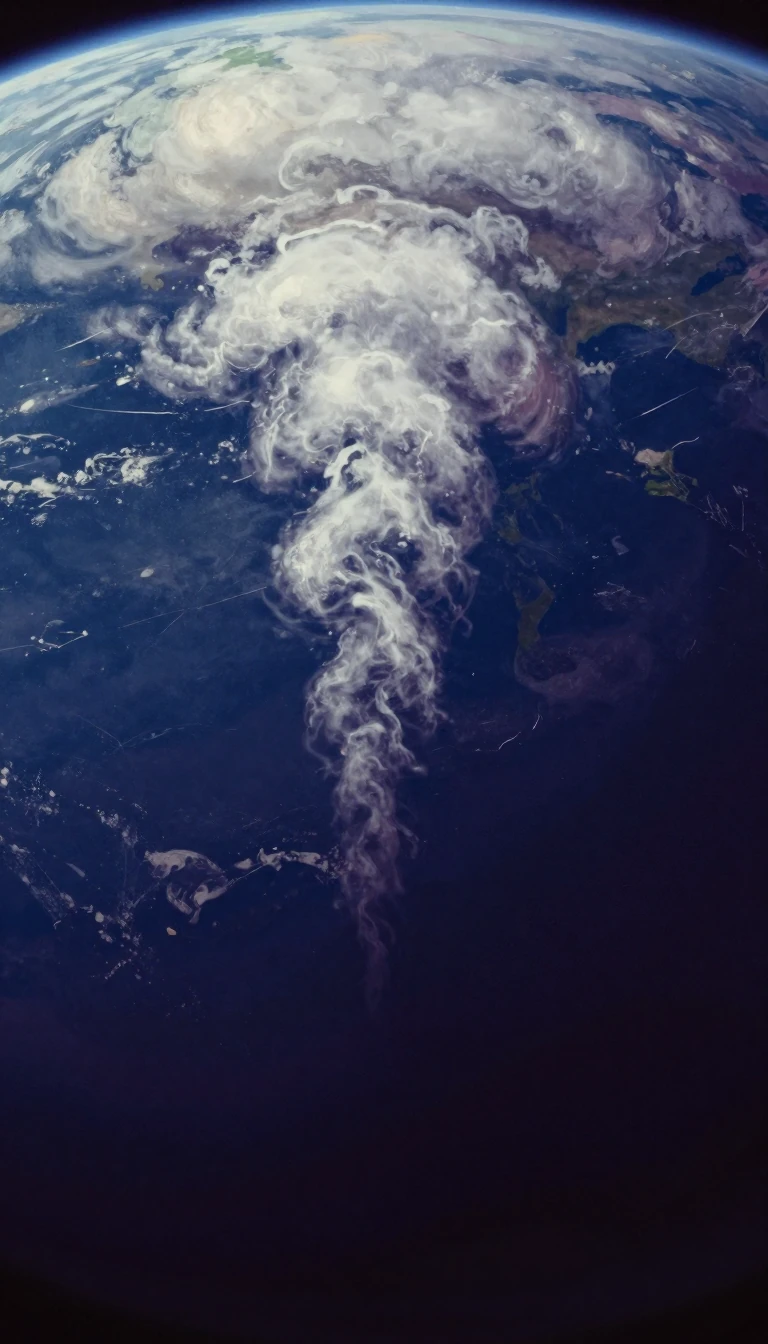
In short: For centuries, writers imagined Jupiter as a solid world where humans could walk. As our scientific understanding shifted from solid landmasses to a gas giant, science fiction had to reinvent the planet, transforming it from a prehistoric Earth-like paradise into a high-pressure atmospheric frontier.
Early literary depictions of Jupiter were shaped by the incorrect belief that it possessed a solid surface. In the 18th and 19th centuries, authors often portrayed it as an Earth-like world. For example, the 1886 novel Aleriel depicted it as an ocean with islands and aquatic humanoids, while the 1894 novel A Journey in Other Worlds imagined it as a prehistoric landscape filled with dinosaurs and mastodons. Voltaire's 1752 novel Micromégas provides one of the earliest literary appearances of the planet. Many 19th-century authors also depicted the Jovian inhabitants as humans or giant versions of people. Some even imagined the planet as a sanctuary for the spirits of the deceased.
As the 20th century progressed, fiction began to reflect the transition toward understanding Jupiter's high-pressure atmosphere. During the pulp era, writers experimented with 'solid' surfaces beneath these clouds. Some stories proposed biological adaptations for inhabitants, such as low stature to combat high gravity or multiple legs to distribute weight. By the late 1950s, once it was accepted that Jupiter's atmosphere was effectively bottomless, fiction pivoted toward life in the clouds, floating cities, and atmospheric racing. During the 1930s, some stories imagined the Great Red Spot as a solid landmass for mining radioactive minerals. Other writers explored the idea of humans undergoing biological modifications to survive the harsh environment. Some authors even proposed using robots to explore the surface instead of people.
This shift also moved the focus toward Jupiter's moons. Because the planet itself became less hospitable to human-centric narratives, the Galilean moons—Io, Europa, Ganymede, and Callisto—became primary settings for colonization and terraforming stories. While Jupiter remains a site of spectacle, such as being transformed into a star in the 1980s, its moons now serve as the primary canvas for exploring human survival and extraterrestrial biology in modern science fiction. The moon Io has been depicted as a sentient entity or a tropical paradise. Europa is often explored as a world with subsurface oceans that might harbor life. Meanwhile, Ganymede and Callisto have appeared in stories featuring domed cities and planetary romance.
Opens the Intellect+ feed with this card first. Swipe up for the next one.
Sources
- Summary by Intellect · source: Jupiter in fiction
To cite this card, link to https://intellectplus.co.uk/app/space-jupiter-in-fiction.
How we source, check and correct cards: Editorial standards.
General information, not professional advice. Spotted an error? Flag the card or see corrections and complaints.
Intellect Plus is a visual educational discovery platform for exploring fascinating facts and ideas. Brain Food, Not Brain Rot. What is Intellect Plus?
Related
More in Jupiter · More in Space · Latest · A–Z · All topics
