The Moon's many months: why one orbit is never just one cycle
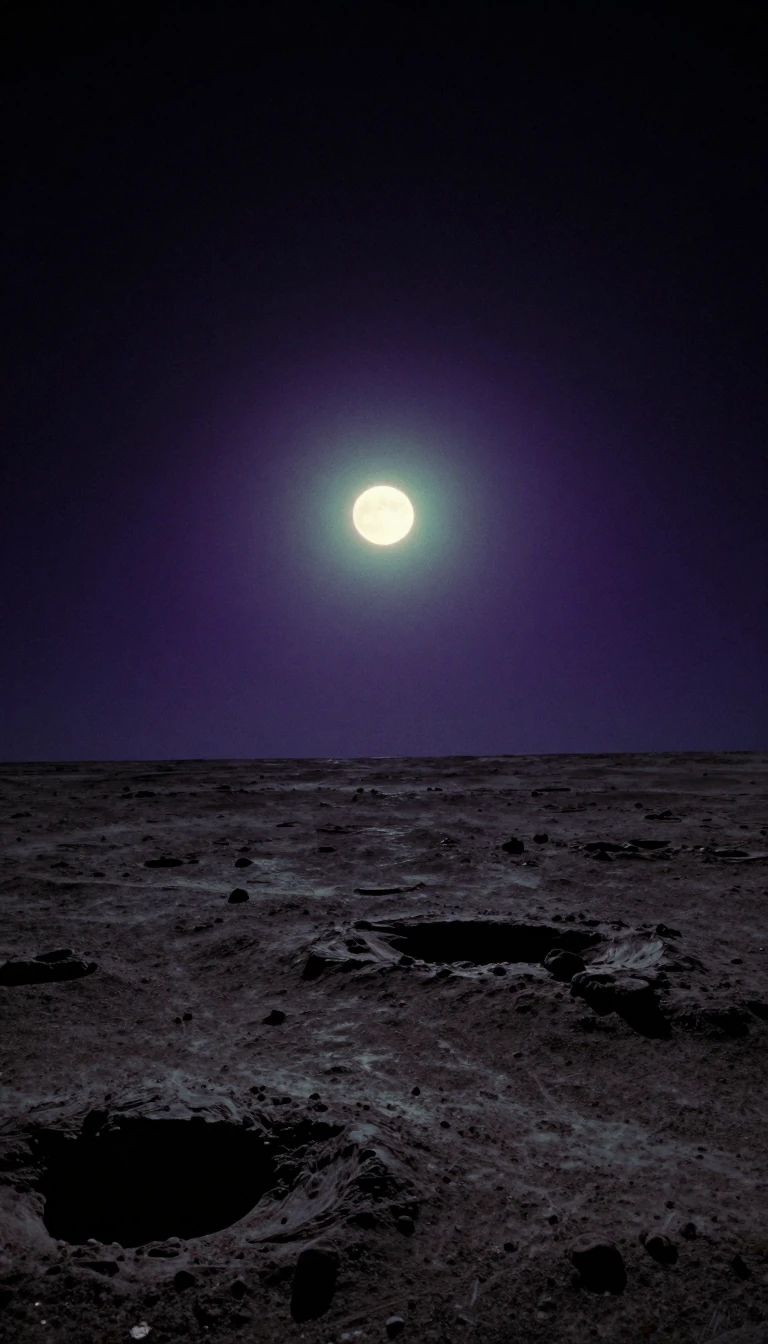
In short: When we speak of a lunar month, we usually mean the 29.5-day cycle of phases. But the Moon's complex dance with Earth and the Sun creates several distinct 'months,' each governed by different orbital mechanics and varying in length.
The most familiar cycle is the synodic month, or lunation. This is the period between successive new moons, lasting approximately 2'29 days, 12 hours, 44 minutes, and 2.9 seconds. It is driven by the Moon's position relative to the Sun as seen from Earth. Because Earth is also moving around the Sun, the Moon must travel slightly further in its orbit to return to the same phase, making the synodic month about 2.2 days longer than the sidereal month.
The sidereal month tracks the Moon's position against the fixed stars, lasting about 27.32 days. Other cycles emerge from more subtle orbital shifts. The anomalistic month, which measures the time between the Moon reaching its perigee, lasts roughly 27.55 days. This is longer than the sidereal month because the Moon's orbital axis rotates (precesses) in the same direction as its orbit, a process that takes about 8.85 years.
Even more complex is the draconic month, named after the mythical dragon said to inhabit lunar nodes. This period tracks the time between the Moon crossing the ecliptic plane. Due to the Sun's gravitational torque, the Moon's orbital nodes rotate westward, making the draconic month shorter than the sidereal month, at approximately 27.21 days. Understanding these overlapping cycles is essential for predicting phenomena like solar and lunar eclipses.
Historically, these cycles have shaped human timekeeping. While some traditions, like the Islamic calendar, begin the month with the first visible crescent, others use mathematical calculations. In ancient India, the Hindu Panchangam calendar achieved great precision, and in Indonesia, the month is divided into thirty 'tithi' parts, which can vary in length between 19 and 26 hours.
Opens the Intellect+ feed with this card first. Swipe up for the next one.
Sources
- Summary by Intellect · source: Lunar month
To cite this card, link to https://intellectplus.co.uk/app/space-lunar-month.
How we source, check and correct cards: Editorial standards.
General information, not professional advice. Spotted an error? Flag the card or see corrections and complaints.
Intellect Plus is a visual educational discovery platform for exploring fascinating facts and ideas. Brain Food, Not Brain Rot. What is Intellect Plus?
Related
More in Astronomy · More in Space · Latest · A–Z · All topics
