Light can twist into a corkscrew shape, carrying hidden momentum
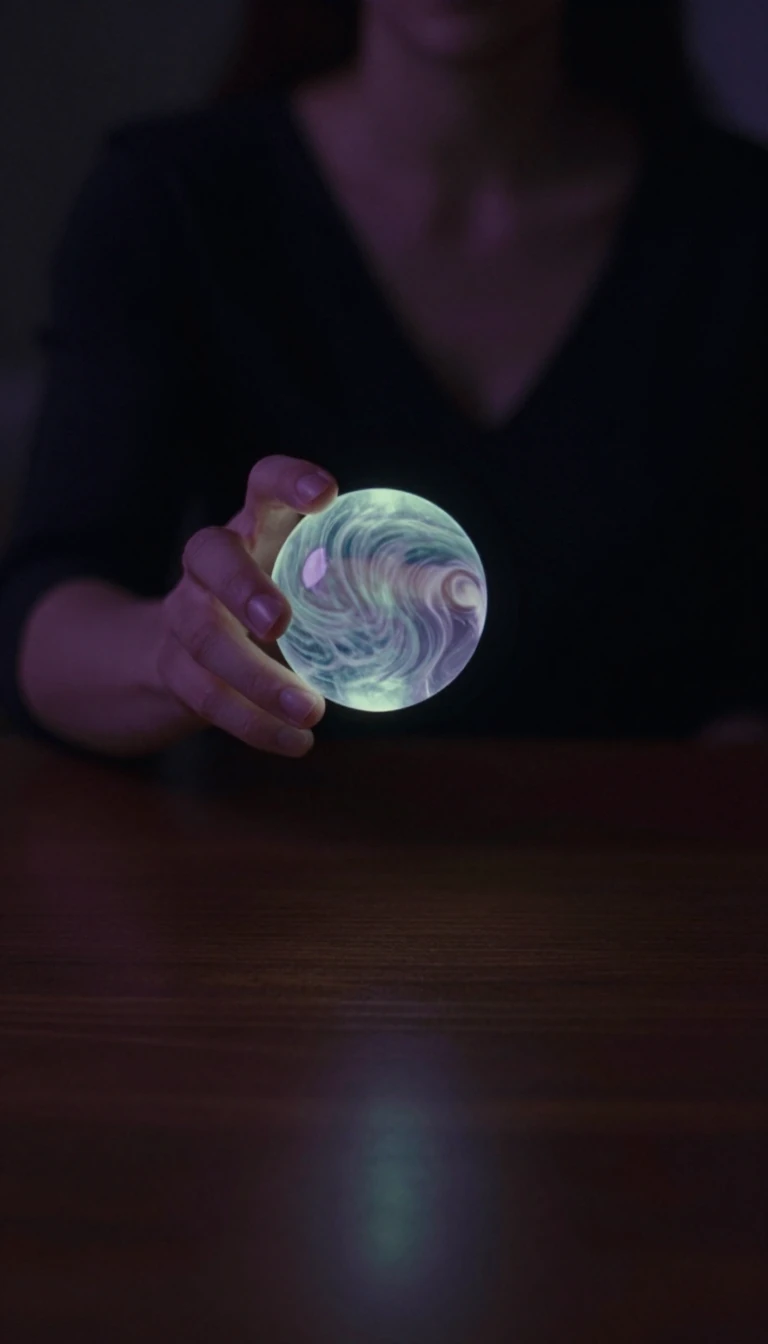
In short: While most people recognize that light possesses spin, it also carries orbital angular momentum. This property allows specific beams to spiral through space with twisted phasefronts rather than moving in straight lines. By manipulating these complex helical structures, scientists can physically exert mechanical forces on microscopic particles and atoms.
While the spin of light—associated with circular polarization—has been recognized for about 200 years, orbital angular momentum (OAM) is a distinct property tied to its spatial distribution. The fascination with OAM began in earnest around 1992 when researchers in Han Woerdman's quantum optics lab demonstrated that Gaussian laser modes could be transformed into OAM-carrying beams using simple cylindrical lenses. These resulting Laguerre–Gaussian modes feature spiraling Poynting vectors, which allow the light to physically impart angular momentum onto objects like microscopic particles or atomic vortices. OAM is generally categorized into two types: internal and external. Internal OAM is origin-independent and arises from "helical" modes where the wavefront is shaped like a helix with an optical vortex at its center. In these beams, the phase varies around the axis, creating a dark core where intensity must be zero for any non-zero integer m. External OAM, conversely, is origin-dependent; it is calculated as the cross product of the beam's position and its total linear momentum. If you place the coordinate origin at the beam axis of a cylindrically symmetric beam, this external component vanishes. An integer m, frequently termed 'topological charge', dictates the geometry of these twisted beams. When m equals 1, a single helical surface forms the wavefront, possessing a step length matching the wavelength. As m increases, the wavefront splits into |m| distinct but intertwined helices rotated around the axis. This mathematical topology isn't just theoretical; it provides a mechanism for light to interact with matter in complex ways, moving beyond simple illumination into the realm of precise mechanical and quantum manipulation.
theme_kebab_case-theme
mood difficulty
topics claims canvas
Opens the Intellect+ feed with this card first. Swipe up for the next one.
Sources
- Summary by Intellect · source: 30 years of orbital angular momentum of light - Nature Reviews Physics
- Also: Orbital angular momentum of light
- Also: Orbital angular momentum of light | Physics
To cite this card, link to https://intellectplus.co.uk/app/space-orbital-angular-momentum-of-light.
How we source, check and correct cards: Editorial standards.
General information, not professional advice. Spotted an error? Flag the card or see corrections and complaints.
Intellect Plus is a visual educational discovery platform for exploring fascinating facts and ideas. Brain Food, Not Brain Rot. What is Intellect Plus?
Related
More in Light · More in Space · Latest · A–Z · All topics
