Voyager 2 is a lone traveler, still sending data from the edge of space.
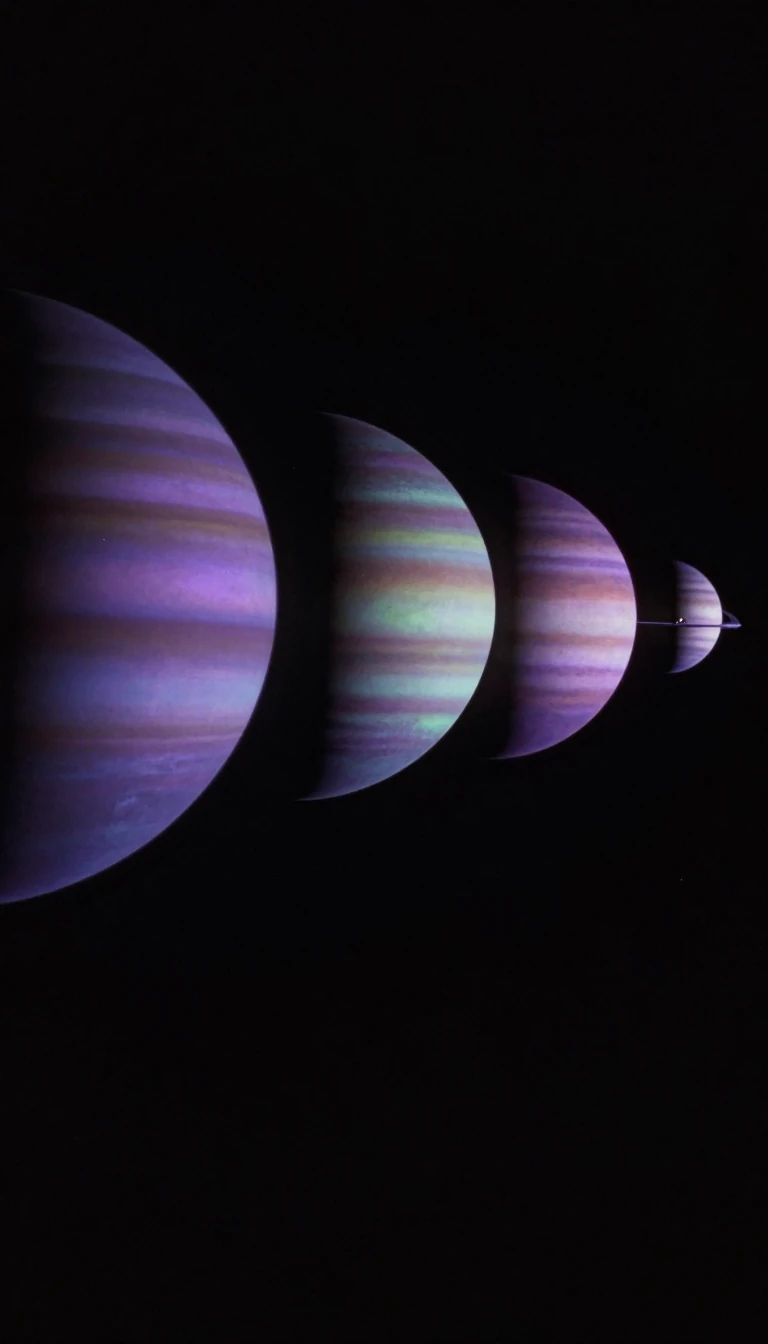
In short: Launched in 1977, Voyager 2 remains our only visitor to the ice giants, Uranus and Neptune. Now drifting through the interstellar medium, this resilient probe continues to transmit findings from beyond our heliosphere, managed by ingenious remote repairs that keep its aging systems alive in the deep freeze of space.
Originally conceived as part of a grand tour of the outer planets, Voyager 2 was launched by NASA on August 20, 1977. While its twin, Voyager 1, focused on Jupiter, Saturn, and the moon Titan, Voyager 2 followed a trajectory that allowed for potential visits to Uranus and Neptune. This path proved successful, with the probe reaching the Jovian system in 1979, Saturn in 1981, Uranus in 1986, and Neptune in 1989. Along the way, it discovered numerous moons and rings, and provided the first close-up look at the unique magnetic environments and atmospheric phenomena of the ice giants.
The spacecraft is powered by three radioisotope thermoelectric generators that have steadily lost output over the decades. To extend the mission, engineers have performed complex power-saving maneuvers, including the 2026 'Big Bang' procedure, which involved swapping active systems for lower-power alternatives. These efforts have allowed the probe to continue its study of the interstellar medium, which it entered in 2018. It now provides researchers with original data regarding the conditions of interstellar plasma, including its temperature and density, as it travels further into the void.
Communication with the probe is maintained via the Deep Space Network, specifically through the DSS 43 antenna in Australia, as the craft's southern trajectory limits access from other sites. Despite facing significant technical hurdles—such as a failed primary radio receiver in 1978, a seized scan platform in 1981, and various computer errors—Voyager 2 remains operational. As of February 2026, it is positioned over 143 astronomical units from Earth, continuing its journey as a pioneer of deep space exploration.
Opens the Intellect+ feed with this card first. Swipe up for the next one.
Sources
- Summary by Intellect · source: Voyager 2
To cite this card, link to https://intellectplus.co.uk/app/space-voyager-2.
How we source, check and correct cards: Editorial standards.
General information, not professional advice. Spotted an error? Flag the card or see corrections and complaints.
Intellect Plus is a visual educational discovery platform for exploring fascinating facts and ideas. Brain Food, Not Brain Rot. What is Intellect Plus?
Related
More in Astronomy · More in Space · Latest · A–Z · All topics
