A white dwarf packs the mass of our Sun into the volume of Earth.
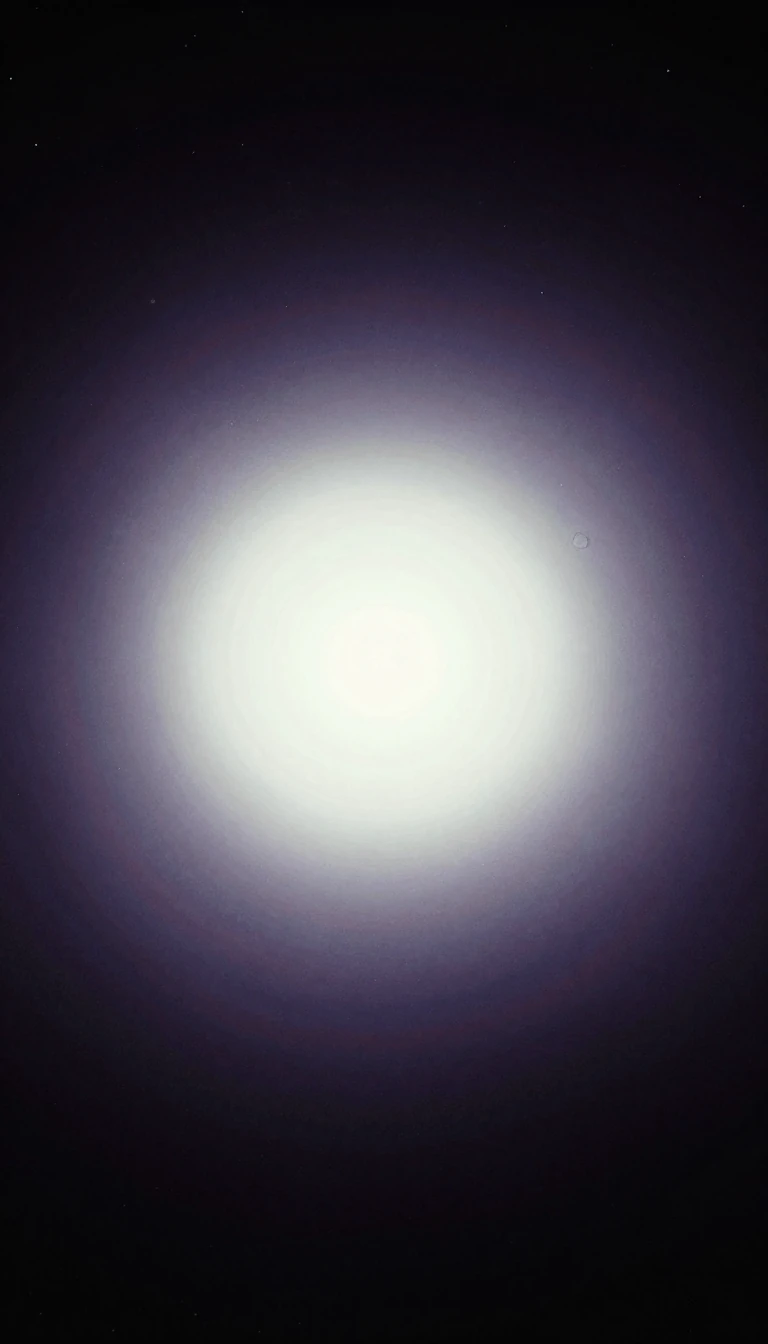
In short: Imagine a star so dense that a single ton of its material would fit inside a matchbox. These stellar remnants are not powered by nuclear fusion, but by the strange laws of quantum mechanics, holding themselves against total gravitational collapse through the sheer pressure of their own crowded, degenerate electrons.
White dwarfs are the final evolutionary stage for stars like our Sun. Unlike main-sequence stars that burn fuel to generate outward thermal pressure, a white dwarf is a cold, compact corpse. It consists of a plasma of unbound nuclei and electrons, where matter is so tightly packed that the distance between nuclei is significantly smaller than the size of a standard hydrogen atom. Because these stars lack a heat source, they are supported entirely by electron degeneracy pressure—a phenomenon rooted in the Pauli exclusion principle, which prevents electrons from occupying the same quantum state.
The physics of this state imposes a strict upper bound on how massive a white dwarf can be. Known as the Chandrasekhar limit, this threshold is approximately 1.44 times the mass of the Sun. If a white dwarf exceeds this limit, electron degeneracy pressure can no longer counteract gravity, leading to a catastrophic collapse. While most observed white dwarfs have masses between 0.5 and 0.7 solar masses, their radii are typically only 0.8 to 2 percent of the Sun’s, resulting in densities reaching up to 10 million grams per cubic centimetre.
The discovery of these objects was initially met with disbelief. In 1914, astronomers were so baffled by the density of Sirius B that they dismissed the data as nonsense. It was not until the 1920s, with the development of quantum mechanics and Fermi-Dirac statistics, that researchers like R. H. Fowler and Subrahmanyan Chandrasekhar could explain how such high-density matter could remain stable. Today, we know these stars are common, with an estimated ten billion existing in the Milky Way, slowly cooling over eons as they radiate their residual energy into the void.
Opens the Intellect+ feed with this card first. Swipe up for the next one.
Sources
- Summary by Intellect · source: White dwarf
To cite this card, link to https://intellectplus.co.uk/app/space-white-dwarf.
How we source, check and correct cards: Editorial standards.
General information, not professional advice. Spotted an error? Flag the card or see corrections and complaints.
Intellect Plus is a visual educational discovery platform for exploring fascinating facts and ideas. Brain Food, Not Brain Rot. What is Intellect Plus?
Related
More in Astronomy · More in Space · Latest · A–Z · All topics
