Berlin's U-Bahn was once a divided network of ghost stations and severed lines.
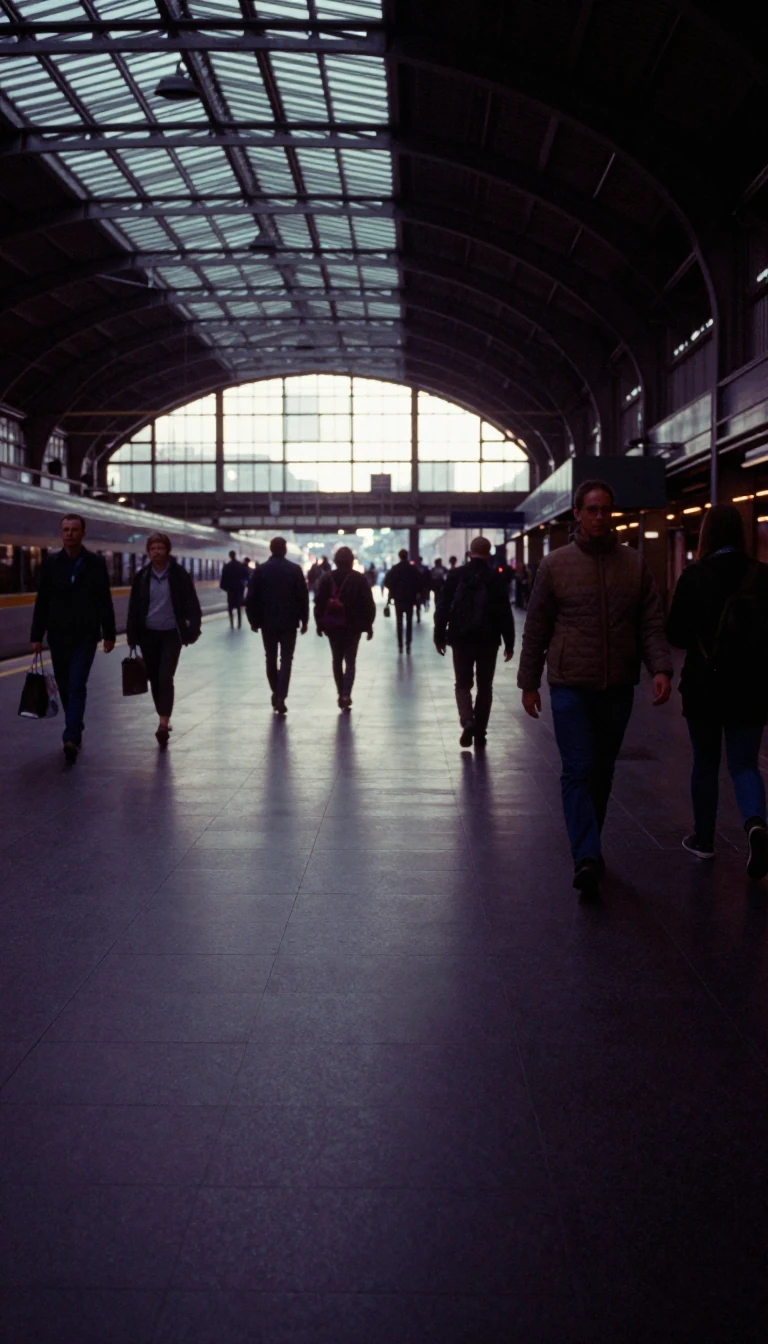
In short: Opened in 1902, the Berlin U-Bahn is a sprawling underground network that survived world wars, hyperinflation, and the city's Cold War partition. Today, it serves over 500 million passengers annually, operating on an honor system that relies on random inspections rather than turnstiles to keep the city moving.
The Berlin U-Bahn, operated by the Berliner Verkehrsbetriebe (BVG), is Germany's most extensive underground network. Spanning 155.64 kilometres across 175 stations, the system evolved through three major phases: the initial Kleinprofil (small profile) network up to 1913, the introduction of the Großprofil (large profile) lines by 1930 to increase capacity, and post-World War II development starting in 1953. The system was designed to alleviate central traffic, but its expansion was repeatedly interrupted by global conflict and economic instability, including the hyperinflation of the 1920s.
The city's division after World War II profoundly altered the U-Bahn's operation. When the Berlin Wall was constructed in 1961, the network was severed. West Berlin lines passing through East Berlin became 'ghost stations'—dark, patrolled by armed guards, and closed to the public—with the notable exception of Friedrichstraße, which served as a border crossing. It was not until the fall of the Berlin Wall and subsequent reunification that the system was fully restored, with the last bullet-riddled tiles from the war finally removed in 2004.
Beyond its history, the U-Bahn is notable for its unique operational culture. It functions on an honor system, eschewing turnstiles for random spot checks by plain-clothed inspectors. Passengers caught without a valid ticket face a €60 fine. The system also integrates modern convenience, having been one of the first metro networks globally to support mobile phone connectivity, with 3G, 4G, and 5G coverage now available throughout the tunnels.
Architecturally, the system features striking stations like Hermannplatz, which resembles a cathedral and was the first to feature escalators. Today, the U-Bahn remains the backbone of Berlin's public transit, seamlessly connecting the city's three fare zones (A, B, and C) and serving as a vital link for both residents and tourists navigating the capital.
Opens the Intellect+ feed with this card first. Swipe up for the next one.
Sources
- Summary by Intellect · source: Berlin U-Bahn
- Also: Wikidata — Berlin U-Bahn · CC0
To cite this card, link to https://intellectplus.co.uk/app/sport-berlin-u-bahn.
How we source, check and correct cards: Editorial standards.
General information, not professional advice. Spotted an error? Flag the card or see corrections and complaints.
Intellect Plus is a visual educational discovery platform for exploring fascinating facts and ideas. Brain Food, Not Brain Rot. What is Intellect Plus?
Related
More in Specific transportation systems · More in Sport & Games · Latest · A–Z · All topics
