From Roman cucumber carts to industrial powerhouses, the greenhouse has evolved for millennia.
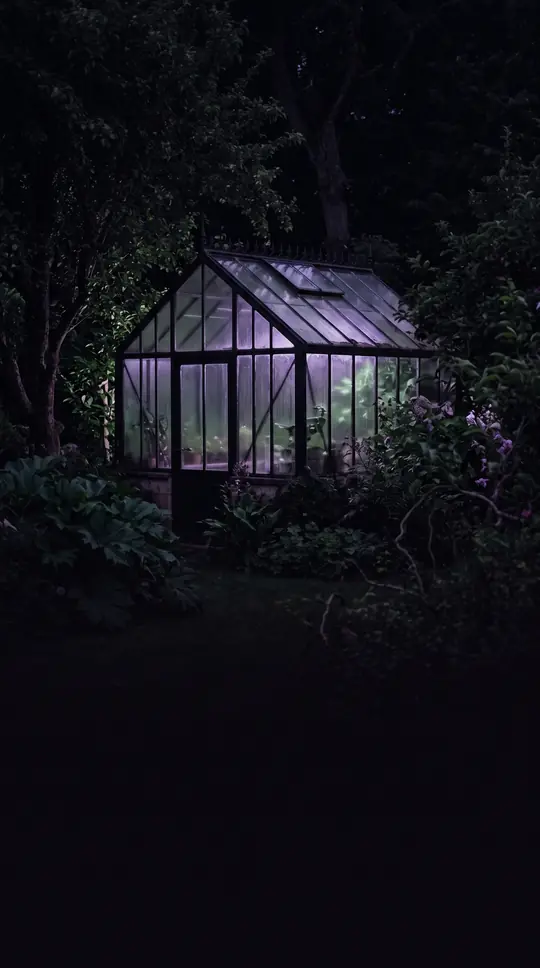
In short: The greenhouse is more than just a glass box for plants. It is a sophisticated climate-control machine that has been refined since the Roman Empire. By manipulating light, heat, and carbon dioxide, these structures allow us to defy nature and cultivate crops in environments where they would otherwise perish.
The origins of the greenhouse trace back to 30 CE, when Roman physicians prescribed a daily cucumber for Emperor Tiberius. To ensure a year-round supply of these tender plants, Romans developed portable frames glazed with selenite or oiled cloth, moving them into the sun by day and indoors by night. Centuries later, in the 1450s, the Joseon dynasty in Korea introduced the first active heating system. By utilizing an 'ondol'—a flue pipe running beneath the floor—and steam from heated water, they achieved precise control over temperature and humidity, a significant leap beyond simple passive solar collection.
Modern greenhouses have transformed into high-tech production facilities. Today, commercial operations often use computer-controlled systems to manage air temperature, relative humidity, and vapour-pressure deficit. Innovations like carbon dioxide enrichment, practiced for nearly a century, can significantly boost yields and reduce water usage. Some facilities even partner with industrial neighbors; for instance, a UK nursery captures waste heat and CO2 from a nearby sugar refinery, turning industrial byproducts into agricultural fuel.
Despite these advancements, the fundamental challenge remains: balancing light transmission with thermal insulation. Because transparent materials like glass or polycarbonate are poor insulators, heating remains a major operational cost. Engineers now employ strategies such as gutter-connected bays to improve the floor-to-wall ratio, infrared-reflective screens to cut heat demand by about 8%, and specialized coatings that convert ultraviolet light into red light to improve photosynthetic efficiency. These structures are no longer just shelters; they are optimized, data-driven environments designed to maximize biological output.
Opens the Intellect+ feed with this card first. Swipe up for the next one.
Sources
- Summary by Intellect · source: Greenhouse
- Also: Wikidata — Greenhouse · CC0
- Also: Wikidata — greenhouse · CC0
To cite this card, link to https://intellectplus.co.uk/app/sport-greenhouse.
How we source, check and correct cards: Editorial standards.
General information, not professional advice. Spotted an error? Flag the card or see corrections and complaints.
Intellect Plus is a visual educational discovery platform for exploring fascinating facts and ideas. Brain Food, Not Brain Rot. What is Intellect Plus?
Related
More in Sports and recreation · More in Sport & Games · Latest · A–Z · All topics
