The jungle gym was originally designed to teach children complex three-dimensional mathematics
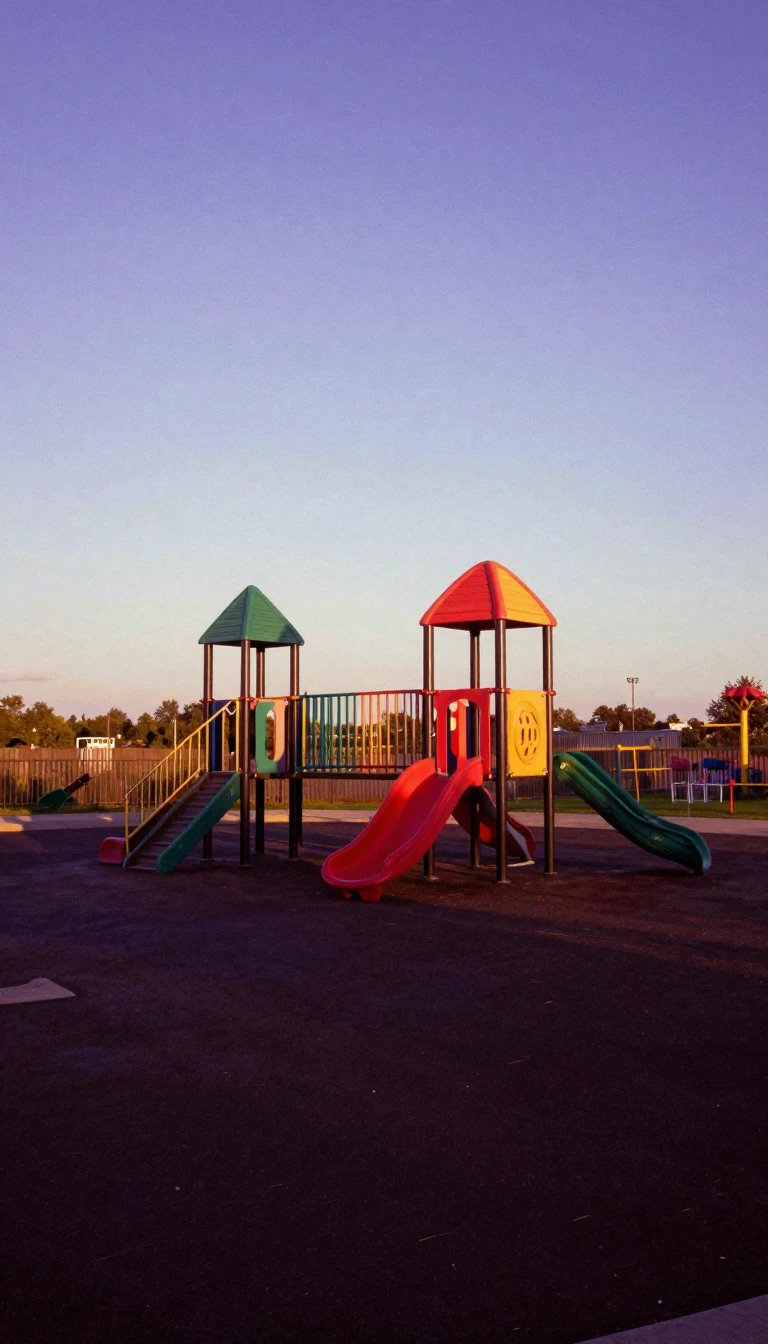
In short: Before it became a staple of school playgrounds, the jungle gym was a pedagogical tool. Invented by a lawyer in 1920, the structure was inspired by his father’s bamboo prototypes, which were built to help children intuitively grasp Cartesian coordinates by navigating a physical grid of x, y, and z axes.
In 1920, Chicago lawyer Sebastian Hinton patented the first jungle gym, trademarking the name Junglegym. While the structure is now synonymous with casual play, its origins were deeply rooted in intellectual development. Hinton’s father, the mathematician Charles Hinton, had previously constructed bamboo versions of the frame to teach children how to visualize three-dimensional space. By calling out specific numerical values for the x, y, and z axes, the elder Hinton challenged children to race to the corresponding junction, effectively turning abstract geometry into a tangible, physical game.
Hinton’s patent filings reveal a fascination with the primate-like agility of children. He explicitly referenced the 'monkey instinct' to justify the exercise benefits of climbing, and his subsequent improvement patents used terms like 'monkey runway' and 'monkey tag' to describe the intended use of the equipment. Although the term 'monkey bars' is now often used to describe the entire apparatus, it specifically refers to the horizontal bars where users swing while suspended in the air. This terminology has been in use since at least the 1930s, cementing the connection between the structure and its simian-inspired moniker.
As these structures became common in public spaces, safety concerns regarding falls necessitated new design standards. To mitigate injury, the American National Safety Council now recommends that playgrounds maintain a minimum 12-inch, or 30-centimeter, layer of impact-absorbing material, such as woodchips or sand, beneath the equipment. Today, the legacy of the original invention persists; one of Hinton’s early prototypes remains preserved at the Winnetka Historical Society, having been moved there from its original location at the Crow Island School in Winnetka, Illinois. It serves as a physical reminder that what we perceive as simple playground equipment was once a sophisticated experiment in spatial education.
Opens the Intellect+ feed with this card first. Swipe up for the next one.
Sources
- Summary by Intellect · source: Jungle gym
- Also: Wikidata — jungle gym · CC0
- Also: Wikidata — Jungle Gym · CC0
To cite this card, link to https://intellectplus.co.uk/app/sport-jungle-gym.
How we source, check and correct cards: Editorial standards.
General information, not professional advice. Spotted an error? Flag the card or see corrections and complaints.
Intellect Plus is a visual educational discovery platform for exploring fascinating facts and ideas. Brain Food, Not Brain Rot. What is Intellect Plus?
Related
More in Entertainment · More in Sport & Games · Latest · A–Z · All topics
