How to change your orbit without using a single drop of fuel
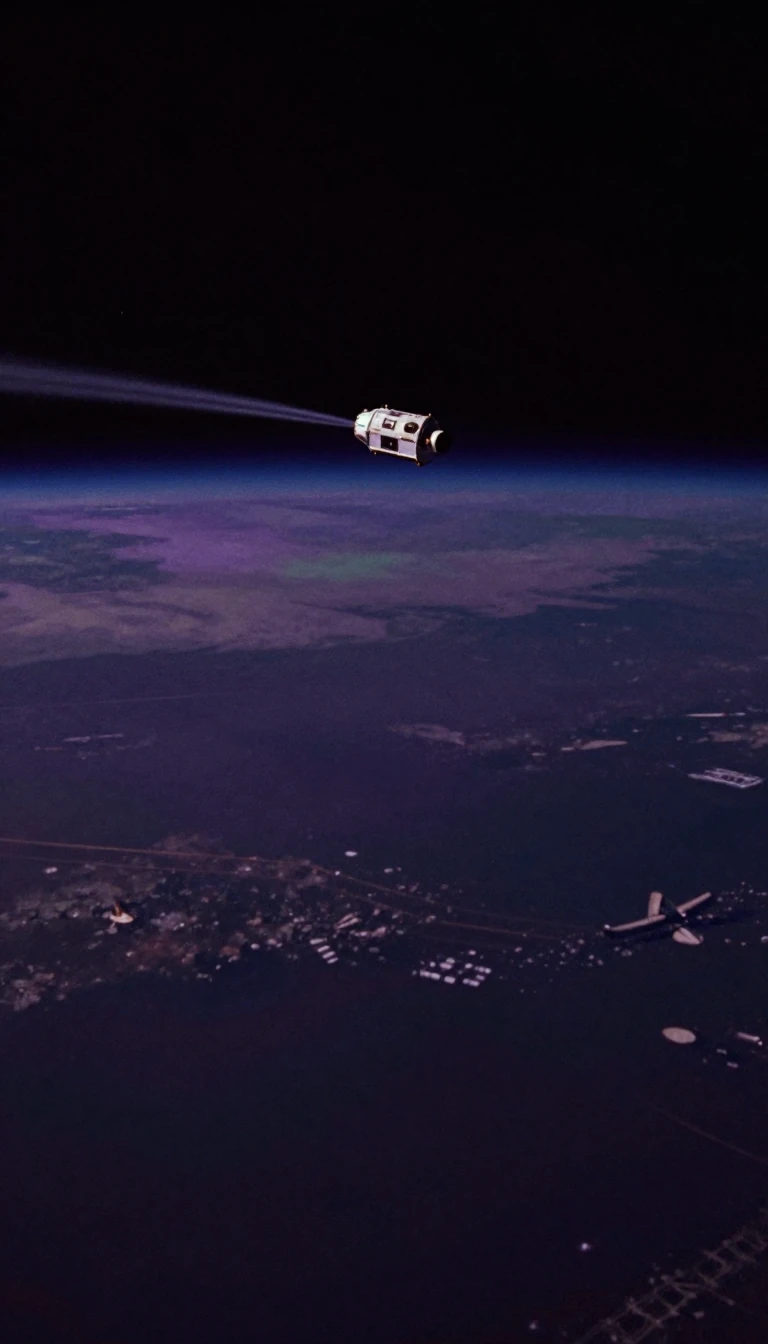
In short: Spacecraft usually rely on heavy, expensive propellant to shift their paths. But a technique called aerobraking uses a different engine: the friction of a planet's atmosphere. By strategically dipping into the upper atmosphere, missions can save massive amounts of weight, allowing for larger scientific payloads and longer-lasting journeys.
Aerobraking works by utilizing atmospheric drag—the friction caused by molecules in a planet's atmosphere—to gradually reduce a spacecraft's velocity. The process begins by placing a vehicle into a highly elliptical orbit. As the craft reaches its perigee, or the lowest point of its orbit, it dips into the upper layers of the atmosphere. Each pass through these layers dissipates kinetic energy as heat, effectively 'stepping down' the apogee, which is the farthest point from the planet, until a lower, more circular orbit is achieved.
This method offers significant economic and engineering advantages. Because the spacecraft does not need to carry the massive amounts of fuel required for propulsion-based deceleration, the total mass of the vehicle is reduced. This allows agencies like NASA to use smaller, less expensive launch vehicles or to carry much larger scientific payloads. The technique was first successfully tested in 1993 during the Magellan mission at Venus and later became standard practice for Mars missions, such as the Mars Global Surveyor, which used the process to transition into a polar orbit.
However, the maneuver requires extreme precision and structural resilience. The kinetic energy converted to heat must be dissipated to prevent damage, though temperatures during aerobraking are generally less severe than during full atmospheric reentry. Engineers can even manipulate drag by adjusting the orientation of solar panels. For the X-37B Orbital Test Vehicle, the U.S. Space Force recently revealed it is using this technique to change its orbital path, a rare disclosure for the highly classified, Boeing-made spaceplane.
Opens the Intellect+ feed with this card first. Swipe up for the next one.
Sources
- Summary by Intellect · source: The Secretive Spaceplane of the U.S. Space Force Conducts First-of-Its-Kind Maneuvers
- Also: MGS Aerobraking
- Also: Aerobraking | space exploration | Britannica
- Also: Aerobraking
To cite this card, link to https://intellectplus.co.uk/app/technology-aerobraking.
How we source, check and correct cards: Editorial standards.
General information, not professional advice. Spotted an error? Flag the card or see corrections and complaints.
Intellect Plus is a visual educational discovery platform for exploring fascinating facts and ideas. Brain Food, Not Brain Rot. What is Intellect Plus?
Related
More in Spaceflight · More in Technology · Latest · A–Z · All topics
