From mechanical gears to billions of transistors: how digital logic changed everything
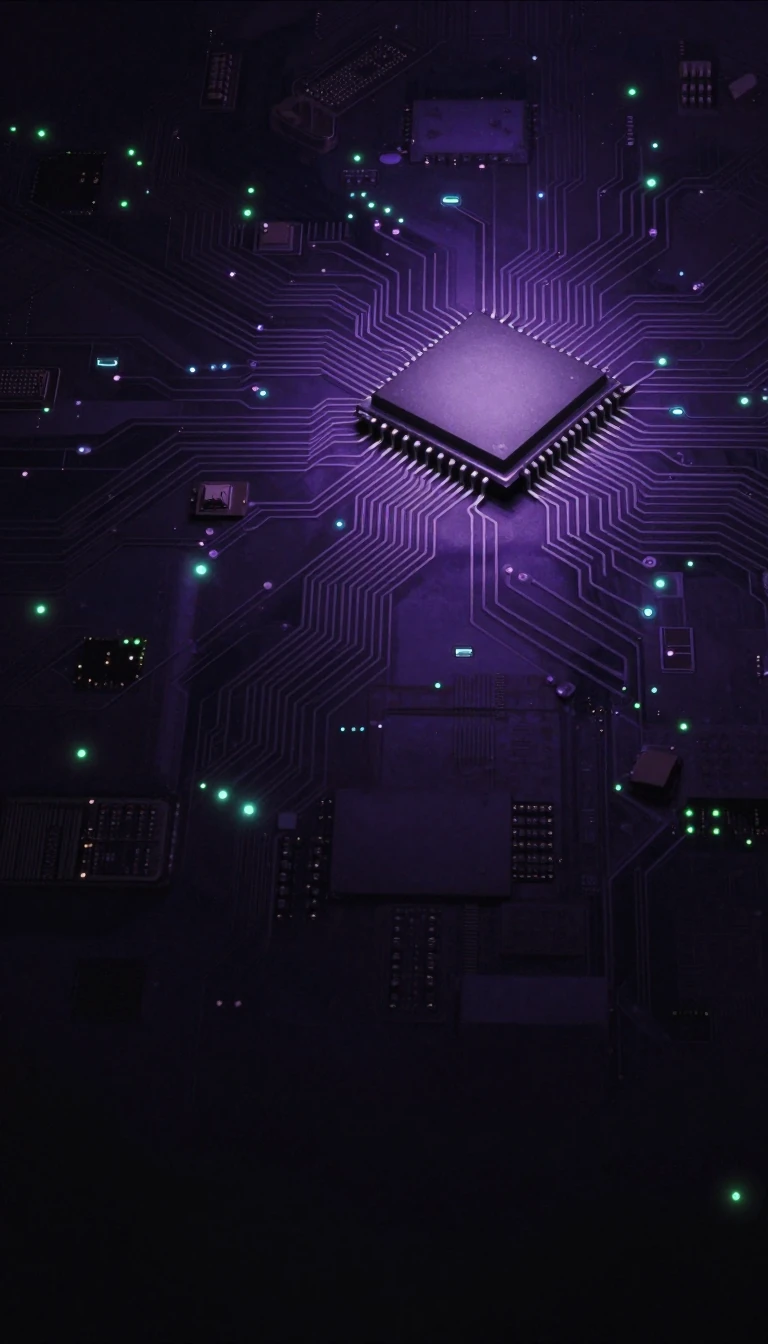
In short: Before the smartphone, computers were room-sized machines consuming massive amounts of power. Today, we rely on a binary world of on-off signals, a revolution built on the marriage of mathematics and electricity that allows us to transmit perfect data without degradation.
The foundation of digital electronics lies in the convergence of Boolean logic and binary mathematics. While Gottfried Wilhelm Leibniz refined the binary system in 1705, it was George Boole in the mid-19th century who established digital logic. This mathematical framework allowed engineers to represent complex ideas through simple logical gates, a concept later realized through electrical switching circuits described by Charles Sanders Peirce in 1886.
The evolution of hardware has seen a dramatic shift from mechanical and electromechanical systems to solid-state electronics. Early digital computers, like Konrad Zuse's Z3 (completed in 1941), relied on electromechanical components. The invention of the vacuum tube by John Ambrose Fleming in 1904 provided a new way to create logic gates, such as the AND gate enabled by Lee De Forest's 1907 modification. However, the true revolution arrived with the transistor. Invented at Bell Labs in 1947 by John Bardeen and Walter Brattain, and followed by William Shockley's bipolar junction transistor in 1948, transistors offered a more reliable, smaller, and more efficient alternative to vacuum tubes.
This efficiency enabled the rise of the integrated circuit (IC). Jack Kilby demonstrated the first working germanium IC on September 12, 1958, while Robert Noyce later developed the silicon version using Jean Hoerni's planar process. The subsequent development of the MOSFET (Metal-Oxide-Semiconductor Field-Effect Transistor) revolutionized the industry due to its high scalability and low power consumption. By the 1980s, the adoption of CMOS technology allowed for billions of MOSFETs on a single chip, a scale of integration that has seen the total number of transistors produced reach an estimated 1.3 sextillion by 2018.
Opens the Intellect+ feed with this card first. Swipe up for the next one.
Sources
- Summary by Intellect · source: Digital electronics
To cite this card, link to https://intellectplus.co.uk/app/technology-digital-electronics.
How we source, check and correct cards: Editorial standards.
General information, not professional advice. Spotted an error? Flag the card or see corrections and complaints.
Intellect Plus is a visual educational discovery platform for exploring fascinating facts and ideas. Brain Food, Not Brain Rot. What is Intellect Plus?
Related
More in Electronics · More in Technology · Latest · A–Z · All topics
