How a slice of quartz keeps the modern world running on time
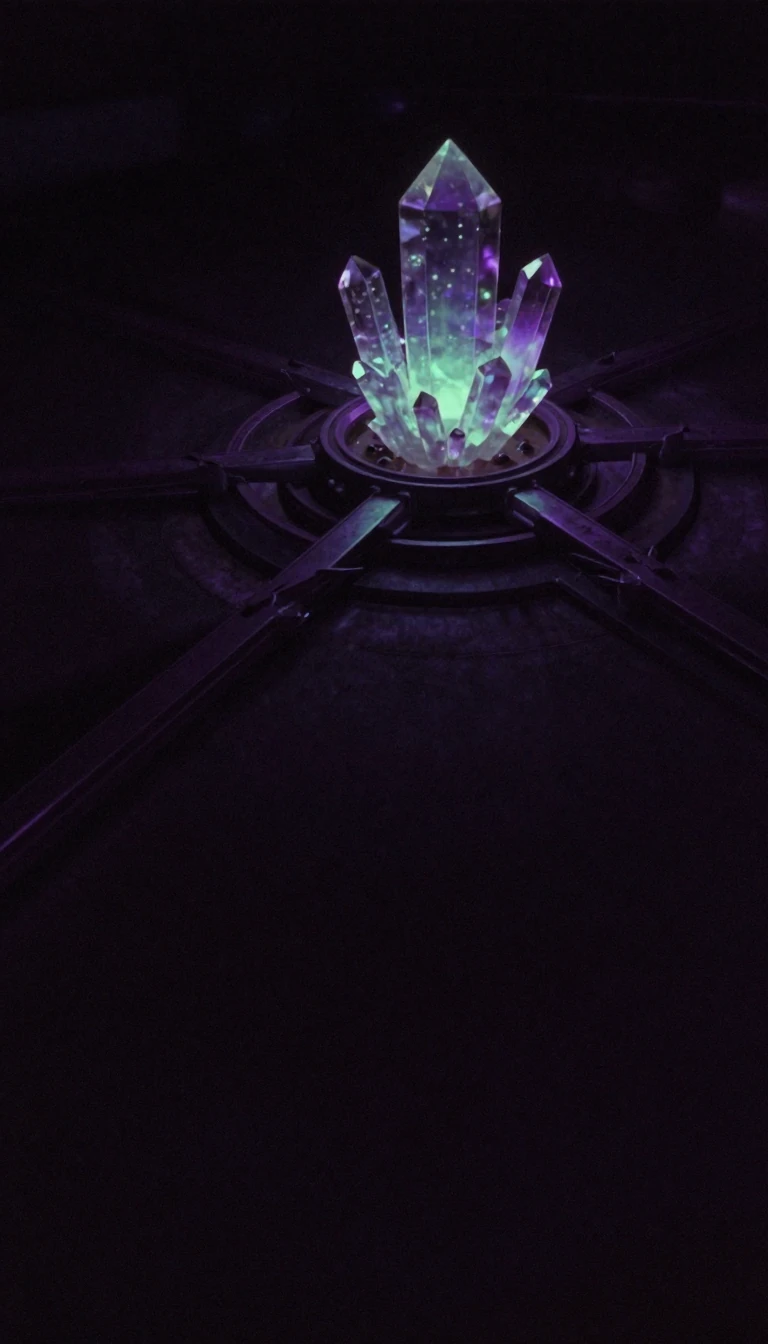
In short: Your phone, computer, and radio all rely on a tiny, vibrating piece of quartz to stay synchronized. By exploiting the inverse piezoelectric effect, these oscillators turn electrical signals into incredibly stable, precise frequencies. It is a mechanical marvel that transformed timekeeping and telecommunications, replacing pendulum clocks with near-perfect accuracy.
At the heart of a crystal oscillator lies a quartz wafer that acts as a highly selective frequency filter. When an electric field is applied, the crystal physically distorts—a phenomenon called inverse piezoelectricity. When the field is removed, the crystal elastically returns to its original shape, generating a voltage in the process. This cycle creates a stable oscillation, behaving like an RLC circuit but with a significantly higher Q factor, meaning it loses far less energy per cycle than discrete capacitors or inductors.
The precision of these devices depends heavily on the crystal's physical 'cut' and size. In the 1920s and 1930s, innovators like Warren Marrison developed quartz-crystal clocks that achieved accuracy within one second over 30 years, far surpassing the pendulum clocks of the era. Later, in 1933, Issac Koga introduced the R1-cut, a temperature-insensitive orientation that minimized frequency drift. Today, manufacturers use synthetic quartz, a process perfected at Bell Laboratories by 1950 to meet the massive demand for military and consumer electronics.
Operating these crystals requires precision. Below 30 MHz, they typically function between series and parallel resonance, where the circuit must be tuned to the manufacturer's specified load capacitance to hit the target frequency. For higher frequencies, engineers use 'overtone' modes, exciting the crystal at odd multiples of its fundamental frequency because manufacturing extremely thin fundamental crystals is physically difficult. This stability and low phase noise make them indispensable for everything from wristwatches to the complex timing required in modern telecommunications.
Opens the Intellect+ feed with this card first. Swipe up for the next one.
Sources
- Summary by Intellect · source: Crystal oscillator
To cite this card, link to https://intellectplus.co.uk/app/technology-crystal-oscillator.
How we source, check and correct cards: Editorial standards.
General information, not professional advice. Spotted an error? Flag the card or see corrections and complaints.
Intellect Plus is a visual educational discovery platform for exploring fascinating facts and ideas. Brain Food, Not Brain Rot. What is Intellect Plus?
Related
More in Electronics · More in Technology · Latest · A–Z · All topics
