Logic gates are the microscopic switches that power every digital device you own today.
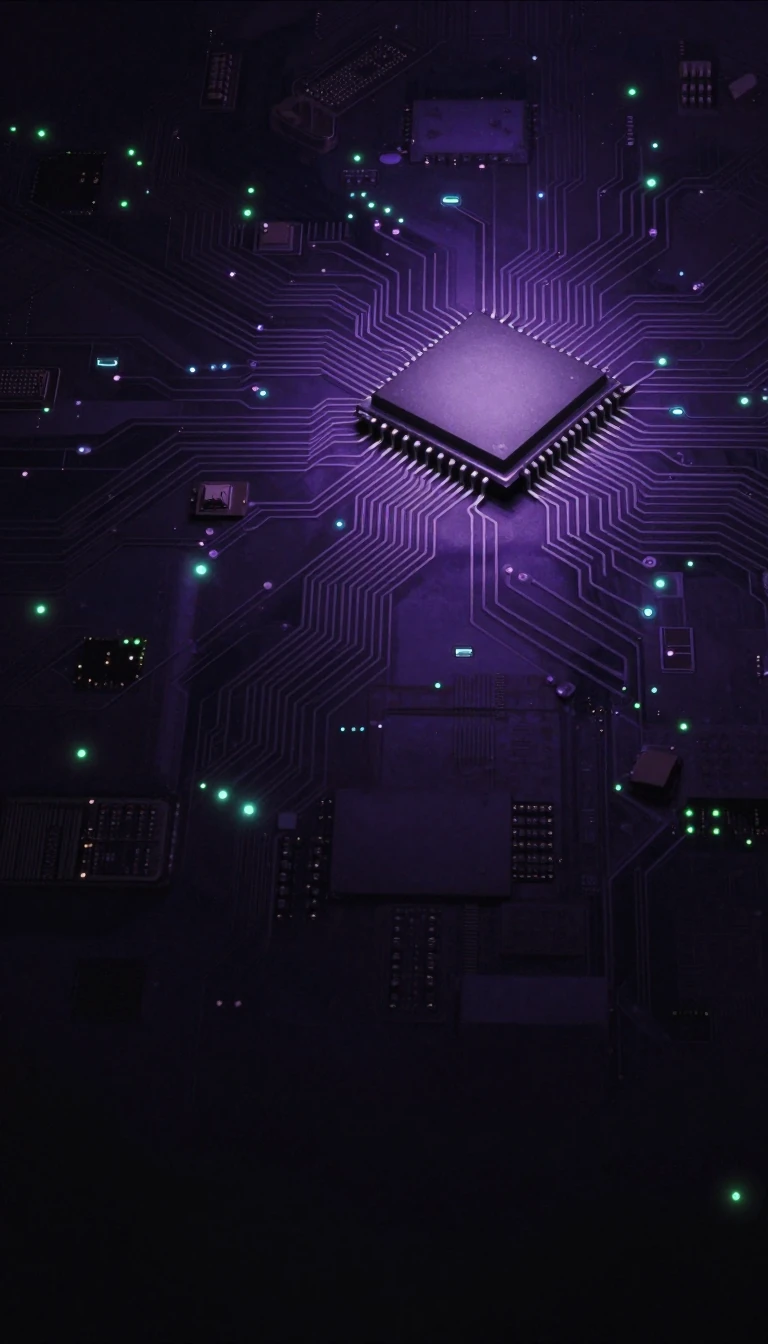
In short: At the heart of every microprocessor, from your smartphone to supercomputers, lie millions of tiny logic gates. These fundamental building blocks process binary inputs to produce precise outputs, forming the physical foundation of all modern computing, algorithms, and digital memory. Discover how simple switches evolved into complex, programmable silicon brains.
A logic gate is a physical device that performs a Boolean function, transforming binary inputs into a single binary output. While we now primarily use MOSFETs—metal–oxide–semiconductor field-effect transistors—to build these gates, the concept is universal. Logic gates can be constructed from diverse materials, including vacuum tubes, fluidic systems, optics, and even DNA. Regardless of the medium, the ability to cascade these gates allows for the construction of complex circuits like arithmetic logic units and microprocessors, which can contain over 100 million individual gates.
The evolution of logic design moved from ad hoc methods to rigorous theory in the 1930s, when Akira Nakashima, Claude Shannon, and Victor Shestakov independently demonstrated that Boolean algebra could describe switching circuits. This discovery turned electrical engineering into a systematic discipline. Early computers relied on electromechanical relays, which were vastly slower and larger than modern electronic gates. Today, semiconductor gates act as high-gain voltage amplifiers, preventing current from flowing backward and operating with significantly higher speed and efficiency than their mechanical predecessors.
Modern circuit design often employs CMOS technology, which combines n-channel and p-channel MOSFETs to minimize power consumption. Designers no longer rely solely on static schematics; instead, they use Hardware Description Languages like Verilog to define logic. Furthermore, field-programmable gate arrays (FPGAs) have introduced a revolutionary flexibility, allowing the underlying hardware logic to be reprogrammed after manufacturing. This shift from 'hard' physical circuits to programmable logic continues to define the limits of what we can achieve with digital systems.
Opens the Intellect+ feed with this card first. Swipe up for the next one.
Sources
- Summary by Intellect · source: Logic gate
To cite this card, link to https://intellectplus.co.uk/app/technology-logic-gate.
How we source, check and correct cards: Editorial standards.
General information, not professional advice. Spotted an error? Flag the card or see corrections and complaints.
Intellect Plus is a visual educational discovery platform for exploring fascinating facts and ideas. Brain Food, Not Brain Rot. What is Intellect Plus?
Related
More in Technology today · More in Technology · Latest · A–Z · All topics
