Optical computing uses light instead of electricity to potentially revolutionize speed and efficiency
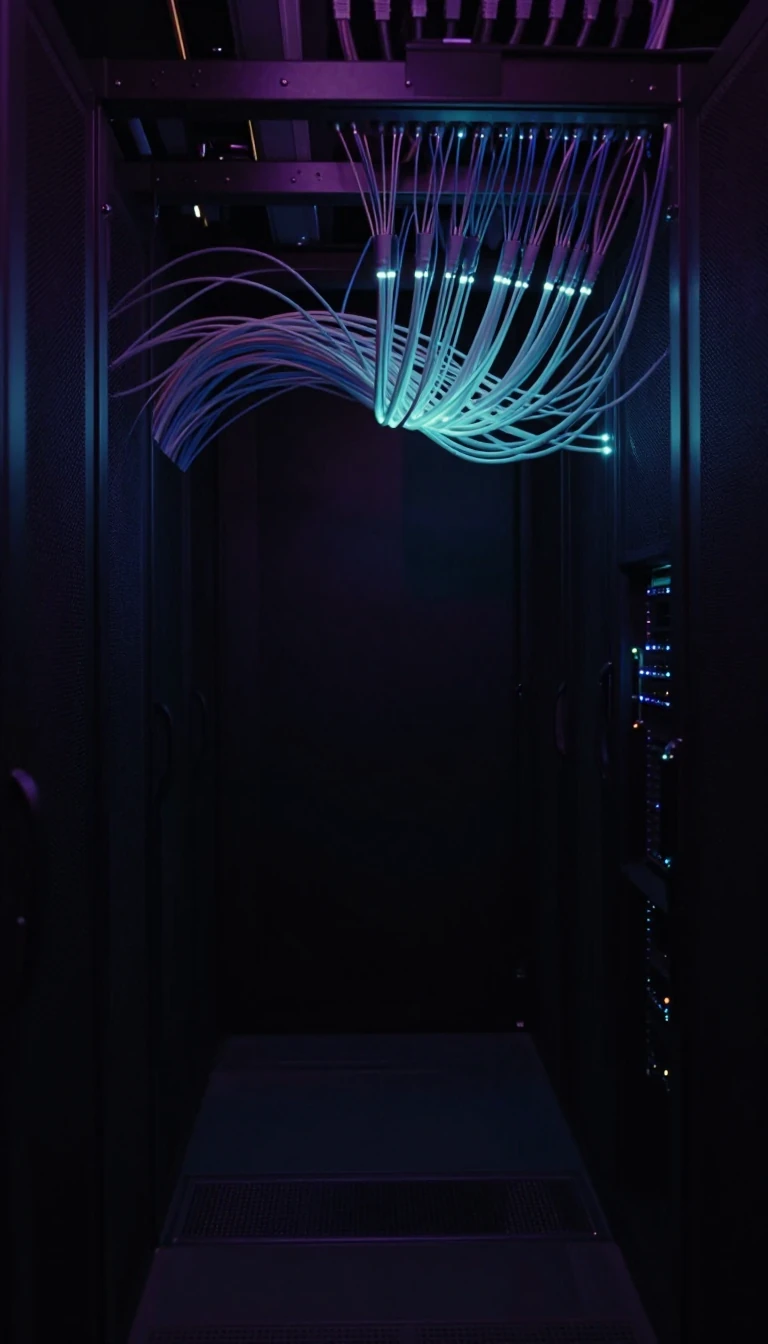
In short: By replacing electrons with photons, researchers aim to overcome the bandwidth limitations of traditional silicon chips. While current systems often rely on energy-intensive conversions between light and electricity, new breakthroughs in photonic integrated circuits and all-optical memory suggest a future where light-based hardware handles complex, high-speed computational tasks.
Optical computing leverages light waves for data processing, storage, and communication, promising higher bandwidth than the electrons used in conventional computers. The primary challenge lies in the fact that light, as an electromagnetic wave, interacts weakly with other waves. To achieve the necessary nonlinear interactions for computation, researchers must use specialized materials or resonators that enhance these effects. Currently, many systems function as hybrid devices, but these require optical-to-electrical-to-optical conversions, which consume significant energy and introduce latency.
Recent advancements are pushing the boundaries of what is possible. For instance, researchers have developed all-silicon non-volatile optical memory using photon avalanche-induced trapping, which is compatible with standard silicon photonics. Other innovations include ternary weight semiconductor laser-based neural networks that demonstrate inference stability above 99%, and diffractive neural network chips designed for extreme environments. These developments suggest that optical hardware can be tailored for specific algorithms, such as combinatorial optimization or spiking neurons, trading general-purpose flexibility for massive gains in speed and power efficiency.
Despite the promise, the field faces significant hurdles. Critics point out that electronic transistors provide essential features like logic-level restoration and fan-out at low cost and power, which optical systems struggle to replicate without major breakthroughs in nonlinear device technology. Furthermore, while light travels at high frequencies, the transform limit and signal dispersion in waveguides constrain the practical bandwidth. Nevertheless, by moving away from binary digital models toward architectures like Ising machines or temporal multiplexing, scientists are finding ways to solve complex problems that remain difficult for traditional electronic computers.
Opens the Intellect+ feed with this card first. Swipe up for the next one.
Sources
- Summary by Intellect · source: Optical computing
- Also: Optical computing
To cite this card, link to https://intellectplus.co.uk/app/technology-optical-computing.
How we source, check and correct cards: Editorial standards.
General information, not professional advice. Spotted an error? Flag the card or see corrections and complaints.
Intellect Plus is a visual educational discovery platform for exploring fascinating facts and ideas. Brain Food, Not Brain Rot. What is Intellect Plus?
Related
More in Computing and information technology · More in Technology · Latest · A–Z · All topics
