 Intellect Plus
Computing and information technology
457 cards. Each one is a 40-second story with a five-minute read behind it.
 The bridge between binary code and boardroom strategyWhile computer science focuses on the theoretical math of coding, Computer Information Systems (CIS) focuses on the practical application of that technology. It is the vital link …
 Beyond the Hype: What a Career in Information Technology Actually EntailsConsidering a move into tech? This video breaks down the reality of the industry, moving past the surface-level appeal to explore what it truly takes to succeed in various roles.
 Are you a tech builder or a tech translator?Many people assume all computer degrees lead to the same desk. They don't. While Computer Science builds the engine, Computer Information Systems (CIS) figures out how to drive th…
 Do you want to build the engine or drive the car?While both fields live in the world of bits and bytes, computer science and information technology serve different masters. One focuses on the theoretical 'how' of creation, while…
 Navigating the Ever-Changing Landscape of Modern Information TechnologyAs technology evolves at a relentless pace, understanding the core pillars of IT is essential for navigating our digital world. This video provides a foundational overview of the …
 Is a degree still necessary in the age of AI and bootcamps?With coding bootcamps offering fast-tracked entry and AI automating routine tasks, the value of a formal IT degree is being questioned. While short-term programs provide specific …
 The core evolution of information technology in four minutesThis video provides a high-level overview of how information technology has shaped our modern world. It offers a concise summary of the field's progression, making it an ideal sta…
 The hidden complexity of a simple command-line scriptBatch files are often dismissed as relics, but they represent a foundational logic for automation. Beyond just running commands line-by-line, these scripts navigate intricate rule…
 The high-tech funk of a song that sat on a shelf for two yearsDaft Punk didn't just release a hit; they engineered a landmark of French house. By treating Auto-Tune as a creative instrument rather than a corrective tool, they bridged the gap…
 Free and open source software are not the same thingWhile they often share the same codebases, the philosophies governing them can diverge significantly. One movement prioritizes the moral right of the user to modify and redistribu…
- The Midwest's retail giant built on banjo music and racing enginesMenards is more than a home improvement chain; it is a privately owned empire that grew from a 1958 college funding project into a retail powerhouse. From its distinctive banjo-ba…
- The $250 million merger that collapsed and cost a gaming giant its identityIn 1997, MicroProse stood as a titan of strategy and simulation, a household name for complex gaming. But a fundamental disagreement over how to account for research and developme…
 The smartest girl in the universe is a master of vibraniumIn a world of superheroes and gods, Shuri stands out not for her physical might, but for her cognitive dominance. As Wakanda's lead scientist, she is portrayed as more intellectua…
 The drag queen catchphrase that revolutionized how we edit documentsBefore the 1970s, computer users had to memorize complex codes to format text, like typing commands for bold or italics. WYSIWYG changed everything by letting users see the final …
 Why the world's most trusted encryption curve is built on distrustIn the world of cybersecurity, trust is a liability. After concerns emerged that government agencies might have backdoored standard encryption constants, the tech community pivote…
 Software architecture is a metaphor for the blueprints of digital systemsBuilding a software system without architecture is like constructing a skyscraper without a blueprint. This refers to core structural decisions which become expensive to alter aft…
 The hardware flaw that caused high-end graphics cards to meltModern GPUs demand so much power that traditional cables couldn't keep up. The solution, a 16-pin 12VHPWR connector, was intended to deliver 600W of energy. Instead, it sparked a …
- The microprocessor that was supposed to kill x86 but couldn'tIn 1994, Intel and HP joined forces to create a processor so advanced it was predicted to supplant every existing architecture. They aimed to replace both RISC and CISC designs wi…
 How a single developer's desire for simplicity birthed a JavaScript powerhouseIn 2013, Evan You wanted to strip away the complexity of Google's AngularJS, keeping only what worked. This pursuit of a lightweight, adaptable architecture led to the creation of…
 The controversial standard that powers your spreadsheets and documentsMost people use .docx or .xlsx files daily without realizing they are part of a complex, historically contentious international standard. While Microsoft developed the format, its…
 How a tiny transistor's rhythm keeps your computer running smoothlyModern computers rely on switched-mode power supplies that switch thousands of times per second. This high-frequency precision allows for compact, efficient energy conversion, rep…
 APL: The Mathematical Notation That Became a Powerful, Array-Centric Programming LanguageDeveloped by Kenneth E. Iverson in the 1960s, APL is a unique language built around multidimensional arrays and a distinct set of graphic symbols. Once requiring specialized typew…
 Why C data types are a flexible foundation for diverse computing hardwareIn the C programming language, data types define how memory is stored and processed. While the language provides basic arithmetic types, it intentionally leaves their exact sizes …
- Can you reclaim your digital sovereignty from the grip of big tech giants?Collabora Online offers a self-hosted, open-source alternative to cloud office suites like Microsoft 365 and Google Workspace. Designed for enterprises and public institutions, it…
 The Commodore PET: How a Calculator Company Built a 1977 Computing IconBefore the home computer boom, Commodore was a struggling calculator manufacturer. By pivoting to the MOS Technology 6502 processor, they created the PET, a rugged all-in-one mach…
 Why frequent code integration prevents the dreaded software development nightmare known as merge hellContinuous integration is the practice of merging code changes into a shared repository frequently, often daily. By automating builds and testing, teams catch errors early, avoid …
 Before Windows and DOS, one operating system unified the chaotic early microcomputer market.Created in 1974, CP/M became the de facto standard for early microcomputers. By acting as a software bus, it allowed programs to run across different hardware, fueling a massive e…
 The humble command-line tool that powers the modern internet's data exchangeBorn in 1996 to automate currency updates for an IRC bot, curl has evolved into the backbone of global data transfer. Whether you are browsing the web or running enterprise infras…
 The 1956 Dartmouth workshop was not the first conference on thinking machinesWidely hailed as the founding event of artificial intelligence, the Dartmouth Summer Research Project was actually a brainstorm among peers rather than a formal research project. …
- How doubling data signals revolutionized computer memory performance without increasing clock speedsDDR SDRAM transformed computing by capturing information during every phase of a clock cycle, rather than just one. By utilizing both the upward and downward movements of the sign…
 Why programmers are trading their general-purpose workbenches for specialized electric drillsGeneral-purpose programming languages are like complete workbenches, capable of building anything but often cumbersome for specific tasks. Domain-specific languages (DSLs) act lik…
 How the DVD-Video format revolutionized home cinema through complex data management and compressionBefore streaming dominated our screens, the DVD-Video format set the standard for home entertainment. By utilizing clever MPEG-2 compression and a rigid file structure, it brought…
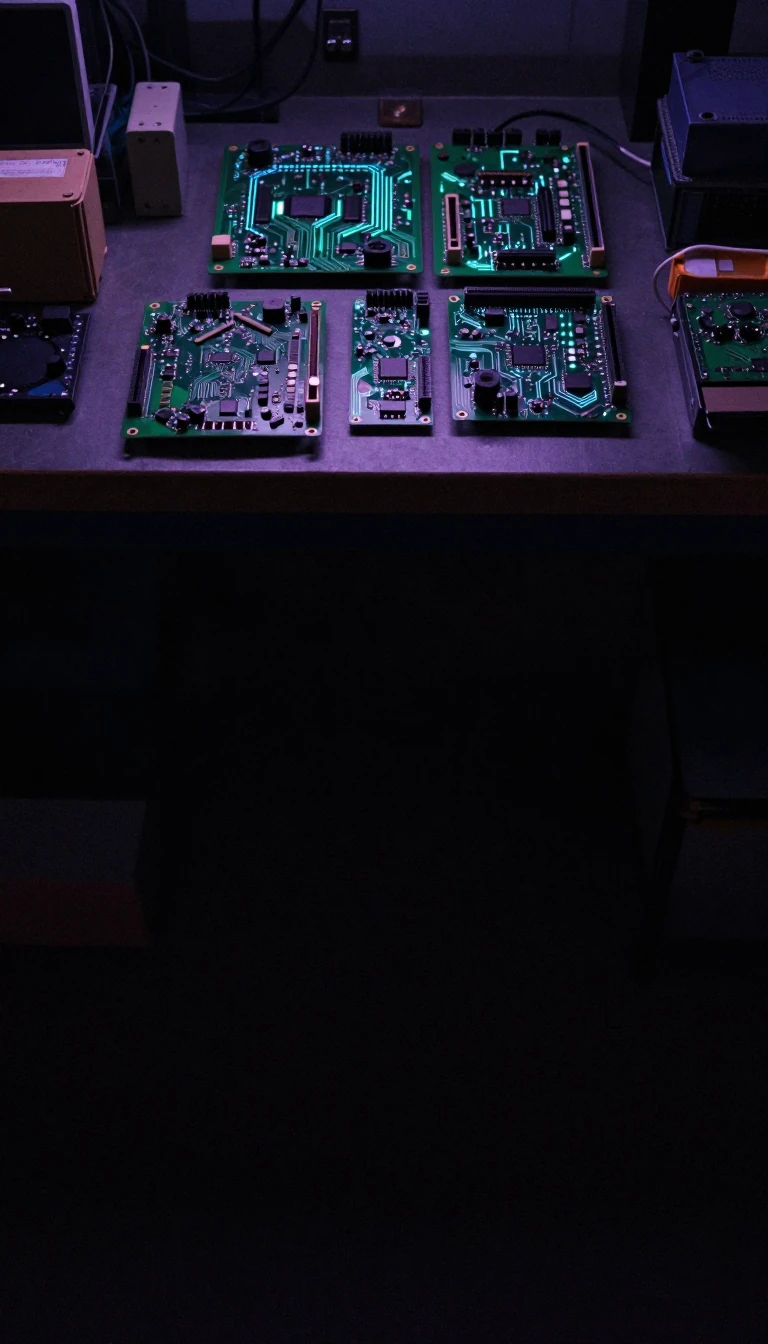 Why your smart card remembers your data even when the power goes outEEPROM is the silent workhorse of modern electronics, allowing devices to store small amounts of data that persist without power. Unlike flash memory, which erases data in large b…
- From a simple chat feature to a billion-user communication empire, Messenger's complex evolution.Born as a basic chat tool in 2008, Facebook Messenger transformed into a massive, multi-platform ecosystem. It survived corporate acquisitions, privacy controversies, and intense …
- The invisible engine powering the world's video, from YouTube to your local player.If you have ever watched a video online, you have likely relied on FFmpeg. This open-source powerhouse handles the heavy lifting of processing, converting, and streaming digital m…
- Why your new hard drive seems to have less storage than you paid forYou bought a 400 GB drive, but your computer insists it only holds 372 GB. You are not being cheated; you are witnessing a collision between two different ways of counting. One si…
- How a failing Chinese refrigerator factory became the world's largest appliance manufacturerIn 1984, a bankrupt factory in Qingdao was producing fewer than 80 refrigerators a month. Today, that company is a global titan, having spent decades acquiring iconic brands like …
 Why stacking memory chips vertically is the secret engine powering the modern AI revolution.To feed the insatiable hunger of AI processors, engineers stopped spreading memory chips across a board and started stacking them like skyscrapers. High Bandwidth Memory uses vert…
 From punched cards to modern syntax: the evolution of how we talk to computersBefore high-level languages, programmers manually tuned assembly code, a process demanding immense intellectual effort. The transition to accessible syntax began in the 1950s, evo…
- How a Chinese smartphone giant escaped US sanctions to reclaim its global independenceOnce a sub-brand of Huawei, Honor faced a total blackout from Google services following US sanctions in 2019. To survive, the company underwent a radical corporate divorce, sellin…
- How IBM solved the impossible problem of building one computer for every single customerIn 1964, IBM faced a crisis: its incompatible computer lines forced customers to choose between machines they would outgrow or systems too costly to maintain. The solution was the…
- The silent messenger keeping the internet running: meet the Internet Control Message ProtocolYou never see it, but the Internet Control Message Protocol is constantly working behind the scenes. It acts as the internet's diagnostic system, reporting errors and operational …
 How one computer scientist helped build the architecture powering almost every modern digital device.John L. Hennessy is a pioneer of RISC architecture, a design philosophy that revolutionized computing by boosting performance while slashing costs. Beyond his technical breakthrou…
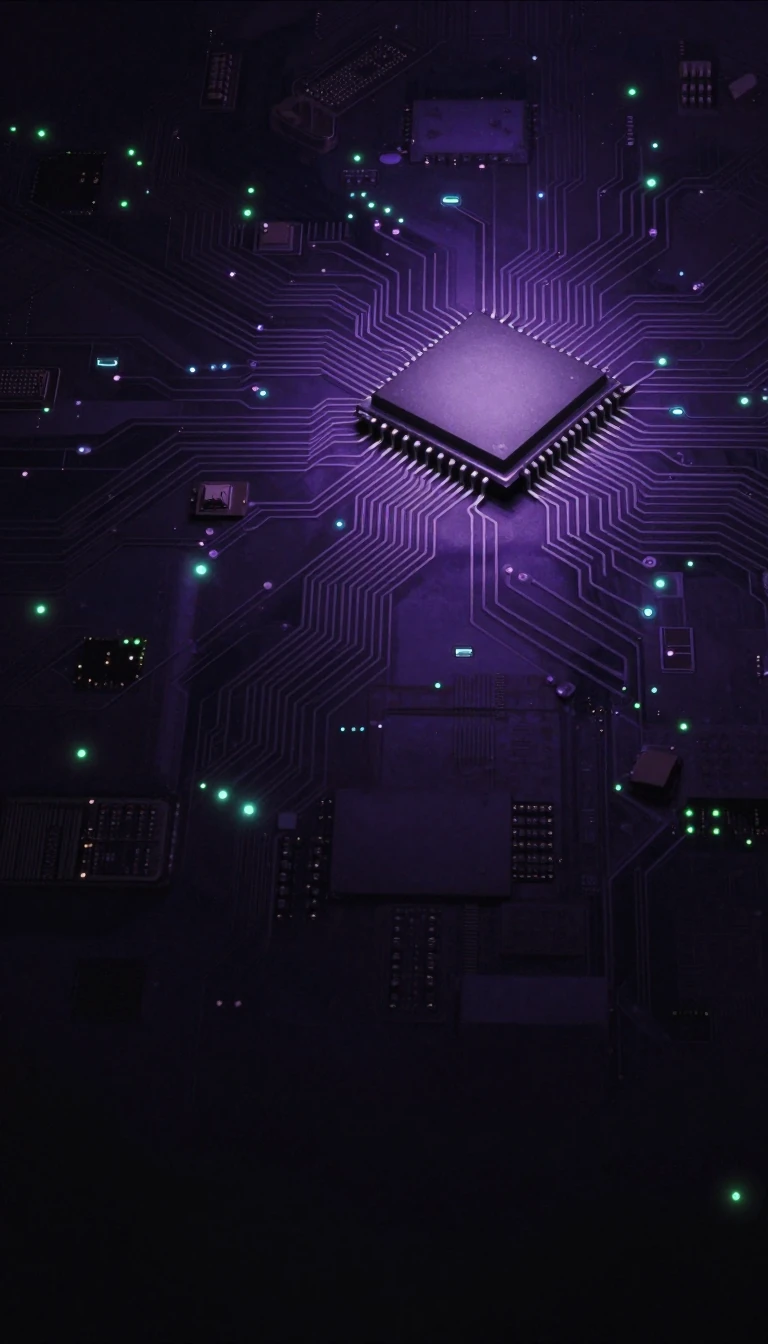 The silent, invisible computers that run your life from inside your appliancesYou likely own dozens of microcontrollers, yet you never see them. These tiny, self-contained computers power everything from your car's engine to your microwave. Unlike the gener…
- How a single wire carries a thousand conversations using the multiplexerA multiplexer is the silent traffic controller of the digital age. By rapidly switching between multiple data sources, it allows a single channel to carry information from many di…
- Why a legendary operating system once powered a functional kitchen toasterNetBSD is a Unix-like system built for extreme portability. Its architecture is so flexible that it runs on everything from vintage minicomputers to modern embedded devices. In 20…
- Why OCaml remains the gold standard for high-performance, type-safe software developmentBorn from academic research into automated theorem proving, OCaml is a multi-paradigm language that blends functional, imperative, and object-oriented programming. By using a soph…
- How a royalty-free audio format became the backbone of modern real-time internet communicationOpus is the invisible engine powering high-fidelity voice and music across platforms like WhatsApp, Discord, and YouTube. By merging two distinct mathematical approaches to sound,…
- How a grocery store inspired the encryption that baffled the FBI and US government.In 1991, Phil Zimmermann released Pretty Good Privacy to protect political activists. It became so effective at securing data that the US government launched a criminal investigat…
- How pulse-code modulation turned the world of sound into simple, noise-free digital codePulse-code modulation is the silent engine behind modern digital audio. By transforming continuous waves into a stream of constant-amplitude pulses, this technique strips away the…
- Why React only updates the parts of your website that actually changeReact is a JavaScript library that transforms how we build user interfaces by focusing on components rather than entire pages. By using a virtual DOM to calculate only the necessa…
 How computers transform abstract mathematical coordinates into the vivid images on your screenRendering is the digital alchemy of turning raw data into visual art. Whether generating a high-speed frame for a video game or a photorealistic scene for cinema, rendering engine…
- Why the most popular agile framework is named after a rugby formationScrum is an iterative management framework that replaces rigid, sequential planning with short, time-boxed sprints. By organizing teams into self-managing units that prioritize co…
- How a struggling chipmaker became the world's most valuable semiconductor powerhouseBorn from the industrial ambitions of Hyundai in 1983, SK Hynix survived near-bankruptcy, government-mandated mergers, and brutal market cycles to dominate the AI era. Today, it s…
- Why the most unpredictable events in our world are actually governed by mathStochasticity is the art of modeling randomness. While we often view the world as a series of chaotic accidents, mathematicians use probability to turn uncertainty into a formal f…
- Why Microsoft rebuilt its famous programming language compiler from JavaScript into GoTypeScript transformed web development by adding static typing to JavaScript, making large-scale applications manageable. After years of running on its own engine, the compiler re…
 Why did a six-second video app change the way we consume digital culture?Vine pioneered the short-form video format, turning six-second loops into a cultural phenomenon that birthed a new generation of influencers. Though Twitter shuttered the service …
- How a small KDE project became the engine powering the modern internet's browsers.WebKit began in 1998 as a modest layout engine for KDE. Today, it serves as the foundation for Apple's Safari and countless other platforms, from gaming consoles to e-book readers…
- After three decades of service, Microsoft is finally retiring its classic WordPad word processor.Introduced with Windows 95 to replace Microsoft Write, WordPad bridged the gap between simple text editors and complex word processors. It offered rich text formatting without the…
- How a Utah-based word processor became the dominant standard before losing to MicrosoftBefore Microsoft Office became the default, WordPerfect ruled the computing world. Built by a professor and a student in the late 1970s, it achieved massive success through superi…