How engineers create one-way streets for light to protect sensitive laser systems
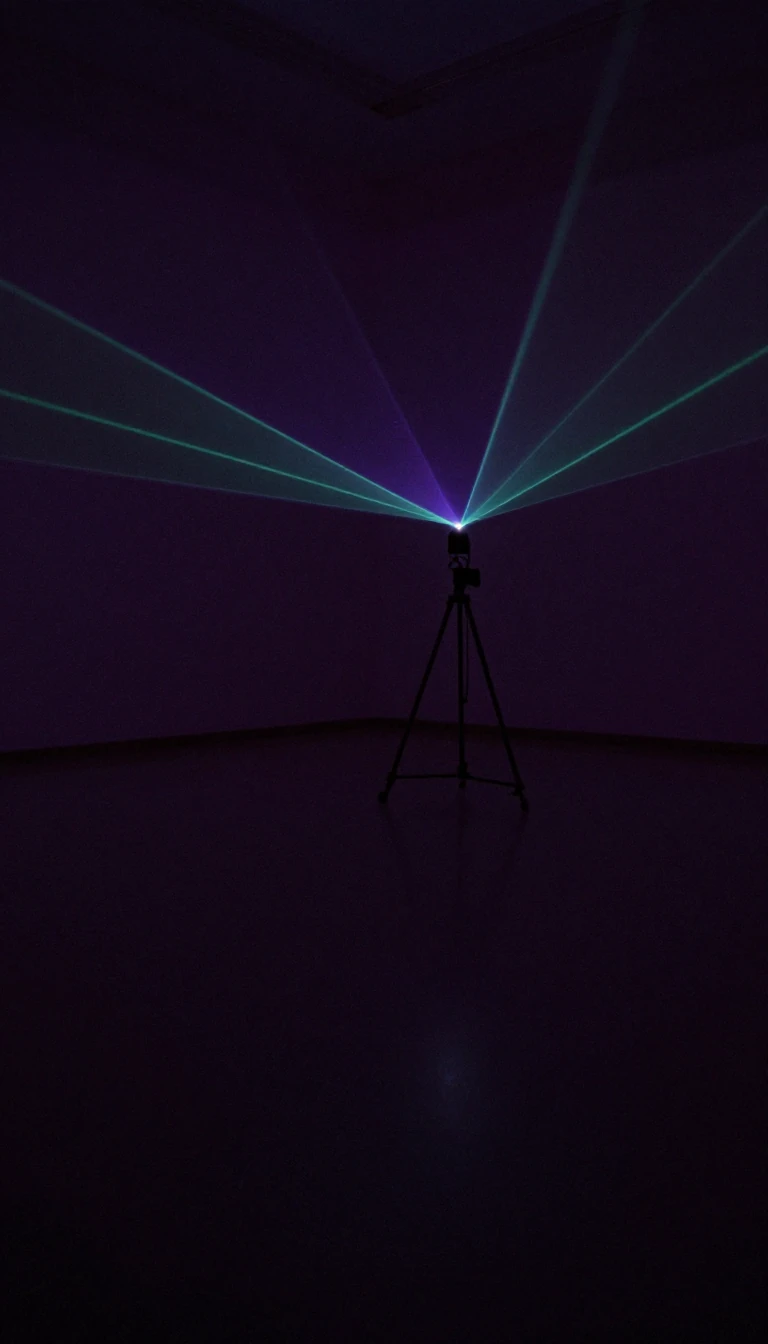
In short: An optical isolator functions like a diode for light, permitting passage in one direction while blocking it in the other. By leveraging the Faraday effect, these devices prevent unwanted feedback from destabilizing laser cavities. They appear to defy thermodynamic laws, yet they remain perfectly consistent with the rules of physics.
At the heart of an optical isolator lies the Faraday rotator, a component that rotates the polarization of light. By applying a magnetic field to a material—such as terbium gallium garnet or yttrium iron garnet—engineers induce a non-reciprocal rotation. For standard isolators, this rotation is precisely 45 degrees, a value chosen to ensure that light traveling backward is extinguished or diverted away from the source.
The mechanism differs based on the system's needs. Polarization-dependent isolators, common in free-space optics, use an input polarizer and an output analyzer to block reflected light. Conversely, polarization-independent isolators utilize birefringent wedges to split and recombine light beams. In the forward direction, these wedges focus the light, but in the reverse direction, the rays diverge, ensuring they never reach the input collimator.
A common point of confusion is whether these devices violate the second law of thermodynamics. If an isolator could perfectly block light from a hot source while allowing it to pass from a cold one, it would seemingly enable heat to flow against the temperature gradient. However, this paradox is resolved because the isolator must absorb the blocked light, eventually reradiating that energy. Any attempt to redirect those photons back to their origin inevitably creates a path for other photons to travel from the hot body to the cold one, preserving the integrity of thermodynamic principles.
Modern research continues to push the boundaries of this technology. While traditional designs rely on magnetic fields, recent developments include integrated isolators that function without magnetism. For high-performance applications like long-distance fiber communication, commercial devices using yttrium iron garnet crystals can achieve isolation levels exceeding 30 decibels, ensuring signal stability across vast networks.
Opens the Intellect+ feed with this card first. Swipe up for the next one.
Sources
- Summary by Intellect · source: Optical isolator
To cite this card, link to https://intellectplus.co.uk/app/technology-optical-isolator.
How we source, check and correct cards: Editorial standards.
General information, not professional advice. Spotted an error? Flag the card or see corrections and complaints.
Intellect Plus is a visual educational discovery platform for exploring fascinating facts and ideas. Brain Food, Not Brain Rot. What is Intellect Plus?
Related
More in Optical technology · More in Technology · Latest · A–Z · All topics
