How two simple mirrors create the world's most precise light-measuring instruments
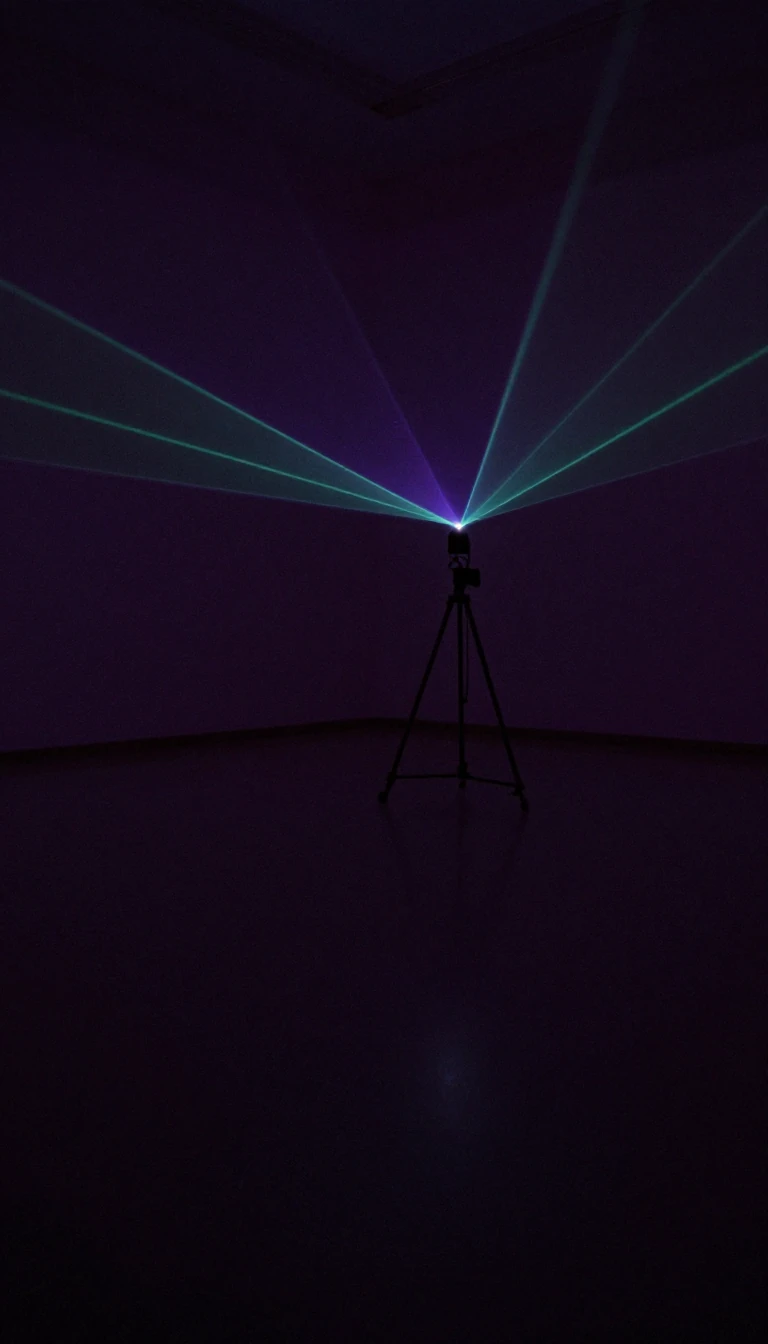
In short: Developed in 1899, the Fabry–Pérot interferometer uses two parallel reflecting surfaces to trap light in a resonant cavity. By forcing light to interfere with itself, this elegant device allows scientists to measure wavelengths with extreme precision, stabilize lasers, and even detect the faint ripples of gravitational waves.
At its core, the Fabry–Pérot interferometer—often called an etalon—is a cavity formed by two partially reflective surfaces. When light enters this space, it bounces repeatedly between the mirrors. If the light's wavelength matches the cavity's resonance, constructive interference occurs, allowing the light to pass through. If the waves are out of phase, they cancel out, effectively filtering the light. The sharpness of this filtering is determined by the device's finesse; a higher finesse, achieved through high-reflectivity mirrors, results in narrower, more precise spectral rings.
The versatility of this design is staggering. In telecommunications, miniature etalons made of fused silica or diamond manage wavelength division multiplexing, keeping signals stable even as temperatures fluctuate. In laser physics, inserting an etalon into a resonator can force a laser to operate in a single mode, suppressing unwanted frequencies. Astronomers utilize them to isolate specific atomic transitions, such as the sun's H-alpha or Ca-K lines, while space missions like India's Mangalyaan have employed them to map atmospheric gases.
Perhaps the most ambitious application lies in gravitational wave detection. Detectors like LIGO and Virgo use massive Fabry–Pérot cavities, several kilometers long, to store photons for nearly a millisecond. By forcing light to bounce back and forth, the device increases the interaction time between the light and passing gravitational waves, significantly boosting sensitivity at low frequencies. Whether shrunk to nanometer-scale thin films for spectroscopy or stretched across kilometers for astrophysics, the Fabry–Pérot cavity remains a fundamental tool for controlling the behavior of light.
Opens the Intellect+ feed with this card first. Swipe up for the next one.
Sources
- Summary by Intellect · source: Fabry–Pérot interferometer
To cite this card, link to https://intellectplus.co.uk/app/technology-fabry-p-rot-interferometer.
How we source, check and correct cards: Editorial standards.
General information, not professional advice. Spotted an error? Flag the card or see corrections and complaints.
Intellect Plus is a visual educational discovery platform for exploring fascinating facts and ideas. Brain Food, Not Brain Rot. What is Intellect Plus?
Related
More in Optical technology · More in Technology · Latest · A–Z · All topics
