Why your brain insists on seeing faces in clouds, toast, and even Mars rocks
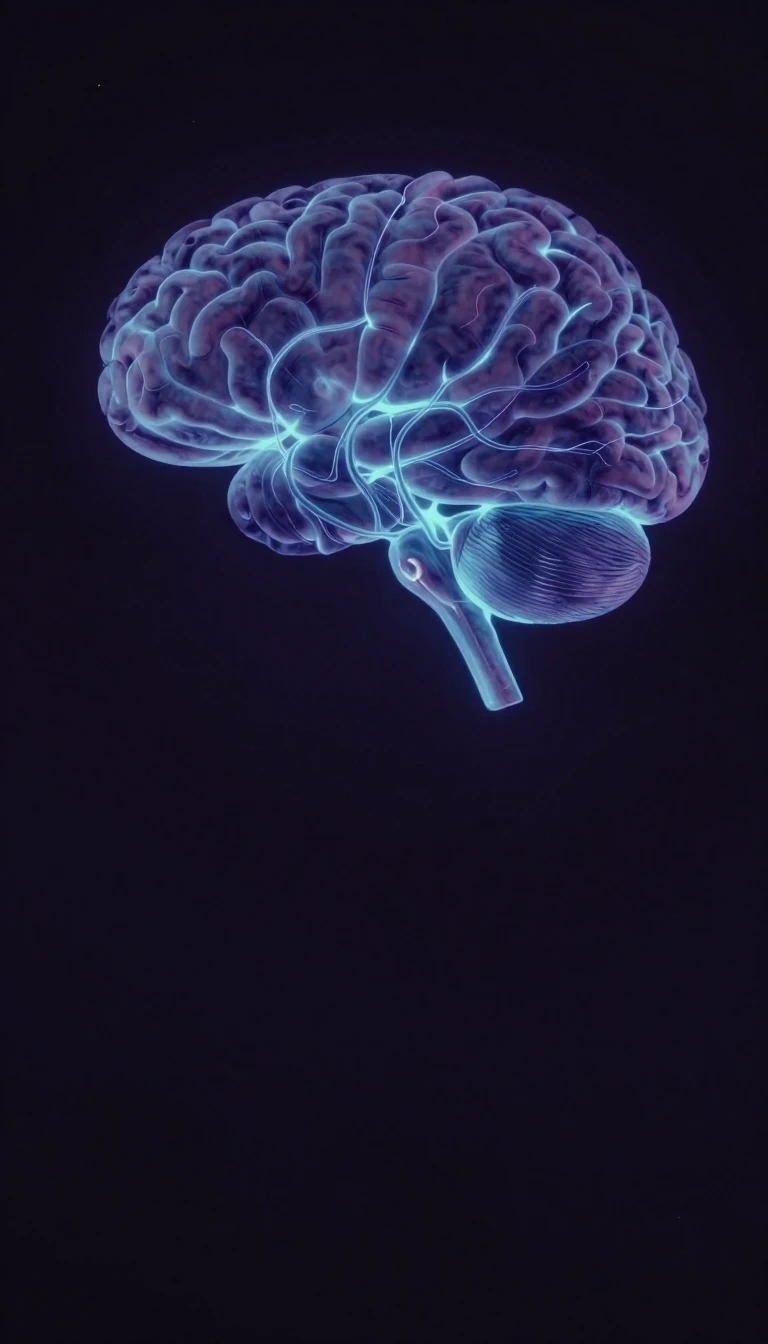
In short: Pareidolia is the human tendency to impose meaning on random stimuli, turning clouds into animals or shadows into faces. This isn't just imagination; it is a hardwired cognitive shortcut. Our brains are optimized to detect faces instantly, a survival mechanism that likely evolved to help us identify threats or emotions quickly.
The term pareidolia, derived from the Greek words for 'beside' and 'image,' describes a specific type of apophenia—the perception of connections between unrelated things. While often dismissed as a quirk, it is a robust neurological process. Studies using magnetoencephalography show that when we perceive a face in an object, the fusiform face area activates in just 165 milliseconds. This is remarkably close to the 130 milliseconds required to process a real human face, suggesting that face detection is an early, automatic cognitive process rather than a late-stage reinterpretation.
This phenomenon has profound implications for how we interpret the world. Historically, it has fueled everything from the 'canal' sightings on Mars in 1877 to the religious imagery people claim to find in burnt toast or water stains. Even the Shroud of Turin has been subject to these effects; experiments show that when participants are primed to expect religious symbols, they report seeing significantly more patterns in plain linen than those who are not. The brain is essentially a pattern-matching machine that prioritizes speed over absolute accuracy, a trait that likely provided an evolutionary advantage by allowing ancestors to preemptively identify the demeanor of wildlife or potential human threats.
Beyond survival, pareidolia is a cornerstone of creative cognition. Renaissance masters like Leonardo da Vinci and Giuseppe Arcimboldo intentionally utilized ambiguous forms to spark inspiration, while Surrealists like Salvador Dalí used it to challenge rational perception. Today, the phenomenon even extends to technology. Artificial neural networks, such as the DeepDream software, can exhibit a digital version of pareidolia. By iterating feedback loops, these programs detect and exaggerate features like eyes or faces in random noise, effectively mirroring the way our own biological neural networks project familiar structures onto the unknown.
Opens the Intellect+ feed with this card first. Swipe up for the next one.
Sources
- Summary by Intellect · source: Pareidolia
- Also: www.britannica.com — Pareidolia | perception | Britannica
To cite this card, link to https://intellectplus.co.uk/app/technology-pareidolia.
How we source, check and correct cards: Editorial standards.
General information, not professional advice. Spotted an error? Flag the card or see corrections and complaints.
Intellect Plus is a visual educational discovery platform for exploring fascinating facts and ideas. Brain Food, Not Brain Rot. What is Intellect Plus?
Related
More in Electronics · More in Technology · Latest · A–Z · All topics
