This tar-like substance is actually a liquid, but it takes decades to prove it.
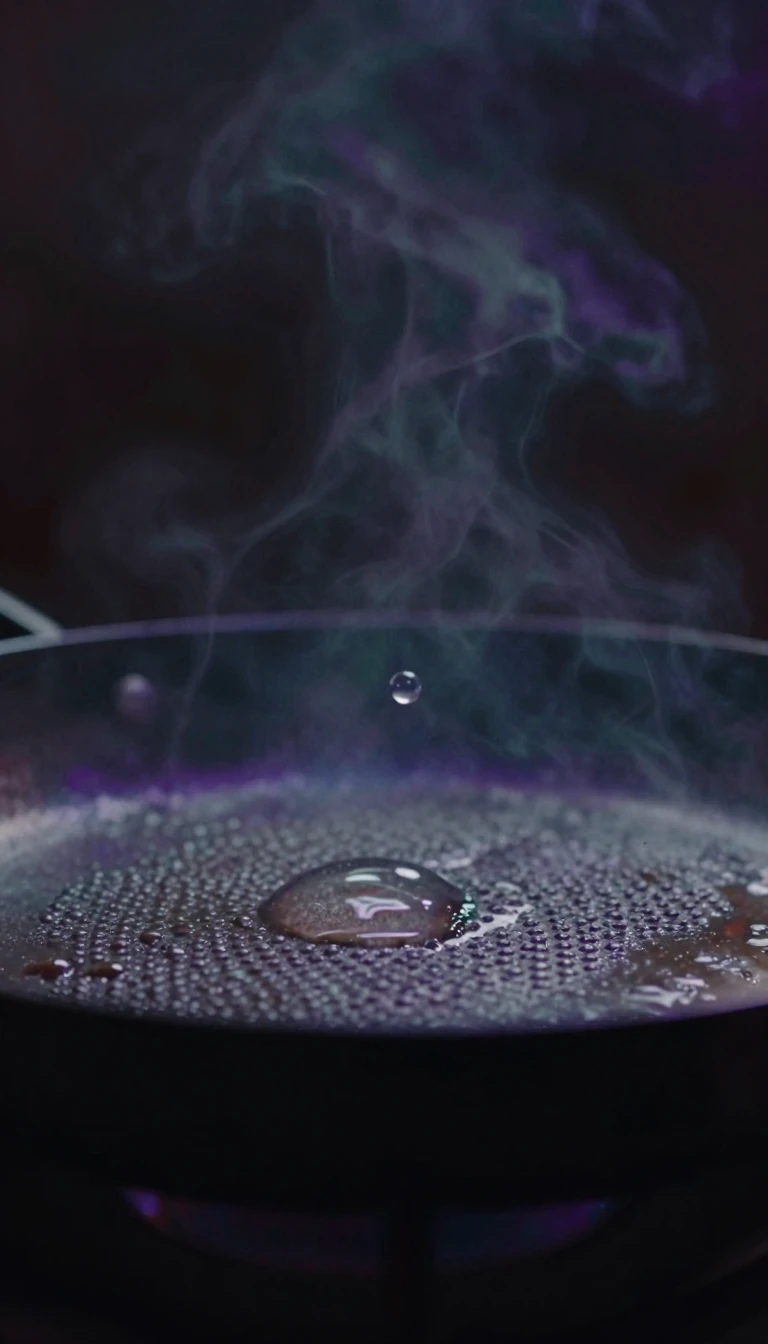
In short: Pitch appears solid enough to shatter with a hammer, yet it flows with extreme viscosity. Scientists have spent over a century running experiments to capture this movement. One famous setup has dripped only nine times in 88 years, proving that even the most patient observers can miss the action.
The pitch drop experiment is a long-term demonstration designed to show that substances appearing solid can be highly viscous fluids. Pitch, a tar-like material derived from tree sap or crude oil distillation, behaves like a glass at room temperature. While it can be smashed into pieces, it steadily flows over vast timescales. Physicist Lord Kelvin first explored this concept in the 1880s, and by the early 20th century, universities began setting up funnels to observe the phenomenon.
The most famous iteration was established by Thomas Parnell at the University of Queensland in 1927. Over 88 years, it dripped nine times, earning it a Guinness World Record for the longest continuously running laboratory experiment. Despite its fame, the experiment is notoriously difficult to monitor. John Mainstone, who oversaw the Queensland setup from 1961 until his death in 2013, famously missed every drop that fell during his tenure due to events like conference breaks and equipment failures. The ninth drop was finally captured on camera in 2014, though it required a manual intervention to snap away from the funnel.
Other experiments exist, including one at the National Museum of Scotland dating to 1902 and another at Trinity College Dublin, which successfully recorded a drop on camera in 2013. These studies have allowed physicists to calculate the viscosity of pitch, estimating it to be roughly 20 billion times that of water. While these experiments are fascinating, they are also highly sensitive to environmental factors. For instance, the addition of air conditioning at the University of Queensland increased the interval between drops from eight years to over a decade, illustrating how temperature fluctuations dictate the pace of this incredibly slow-motion science.
Ultimately, these experiments serve as a reminder of the limits of human observation. Even with modern technology, capturing a single drop requires immense luck and persistence. The Aberystwyth University experiment, started in 1914, has yet to produce a single drop, with experts predicting it may take over 1,000 years to do so. These setups continue to challenge our perception of material states, proving that what seems rigid is often just moving at a speed beyond our natural ability to perceive.
Opens the Intellect+ feed with this card first. Swipe up for the next one.
Sources
- Summary by Intellect · source: Pitch drop: One of the longest demonstrations in the world | National Museums Scotland
- Also: Pitch drop experiment
To cite this card, link to https://intellectplus.co.uk/app/technology-pitch-drop-experiment.
How we source, check and correct cards: Editorial standards.
General information, not professional advice. Spotted an error? Flag the card or see corrections and complaints.
Intellect Plus is a visual educational discovery platform for exploring fascinating facts and ideas. Brain Food, Not Brain Rot. What is Intellect Plus?
Related
More in Physics · More in Science · Latest · A–Z · All topics
