How sampling turns continuous waves into the digital reality of our modern world
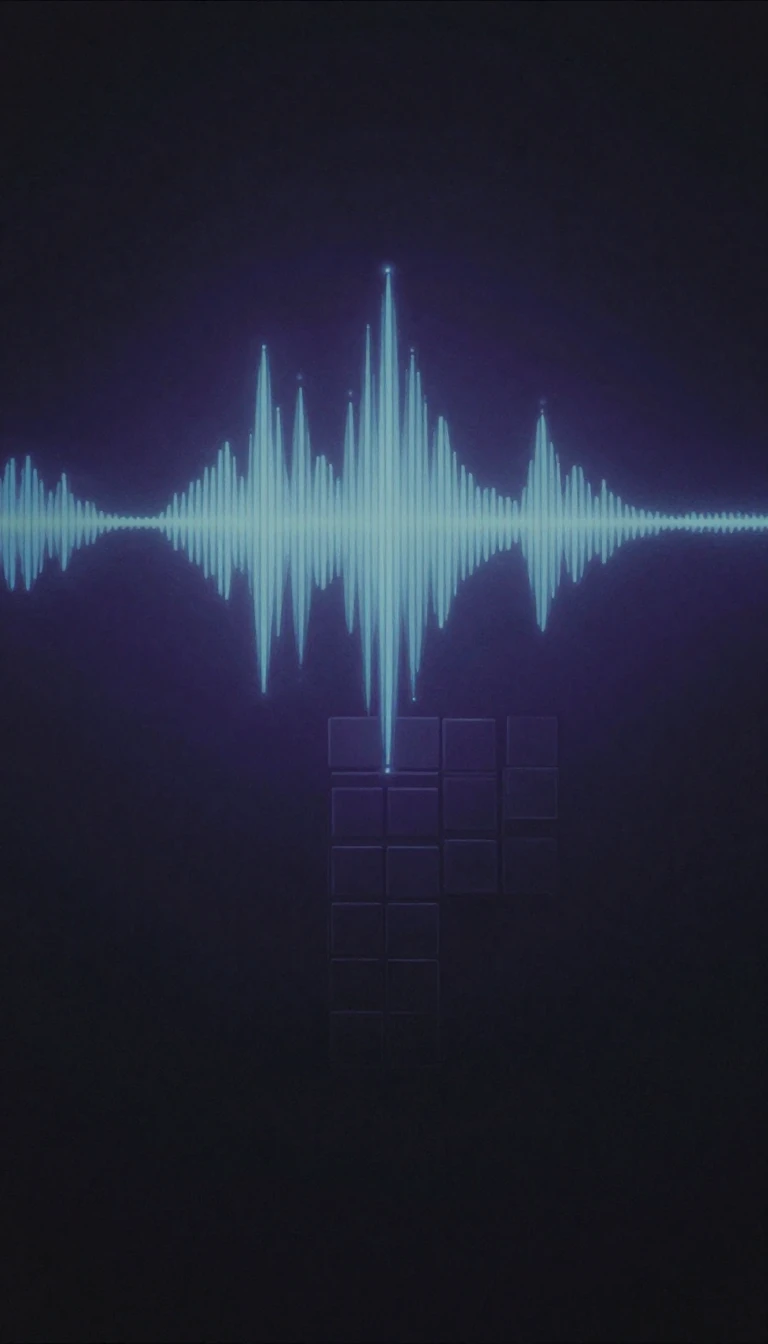
In short: Sampling is the bridge between the physical world and digital systems. By capturing discrete snapshots of continuous signals, like sound or light, we can store and manipulate information with incredible precision. Yet, this process is governed by strict mathematical limits that define the fidelity of everything we hear and see.
At its core, sampling is the process of reducing a continuous-time signal into a sequence of discrete values. An ideal sampler captures the instantaneous state of a signal at precise intervals. To reconstruct the original signal accurately, we rely on the Nyquist theorem, which dictates that we must sample at a rate at least twice as high as the highest frequency component present in the signal. If we fail to meet this requirement, we encounter aliasing, a phenomenon where high-frequency signals are misinterpreted as lower frequencies, leading to distortion.
In the real world, analog-to-digital converters (ADCs) face physical constraints that prevent perfect reconstruction. These include aperture error, where a sample is an average over time rather than an instantaneous point; jitter, which is a deviation from precise timing; and quantization, which arises from the finite precision used to represent values. While oversampling can mitigate some of these issues by shifting errors out of the audible range, it is not a universal solution, especially at high radio or microwave frequencies where analog noise often becomes the dominant limiting factor.
Audio and video systems apply these principles in distinct ways. For human hearing, which spans 20 to 20,000 Hz, industry standards like the 44.1 kHz CD rate or 48 kHz professional audio are chosen to satisfy the Nyquist limit while balancing filter design. Meanwhile, digital video samples both spatially—across pixels—and temporally, through frame rates. Whether it is telephony using 8 kHz for speech or high-definition television processing at hundreds of megahertz, the fundamental challenge remains the same: capturing enough data to faithfully represent the continuous world while managing the inevitable trade-offs of digital conversion.
Opens the Intellect+ feed with this card first. Swipe up for the next one.
Sources
- Summary by Intellect · source: Sampling (signal processing)
To cite this card, link to https://intellectplus.co.uk/app/technology-sampling-signal-processing.
How we source, check and correct cards: Editorial standards.
General information, not professional advice. Spotted an error? Flag the card or see corrections and complaints.
Intellect Plus is a visual educational discovery platform for exploring fascinating facts and ideas. Brain Food, Not Brain Rot. What is Intellect Plus?
Related
More in Electronics · More in Technology · Latest · A–Z · All topics
