How parallel processing allows modern electronics to capture signals at impossible speeds
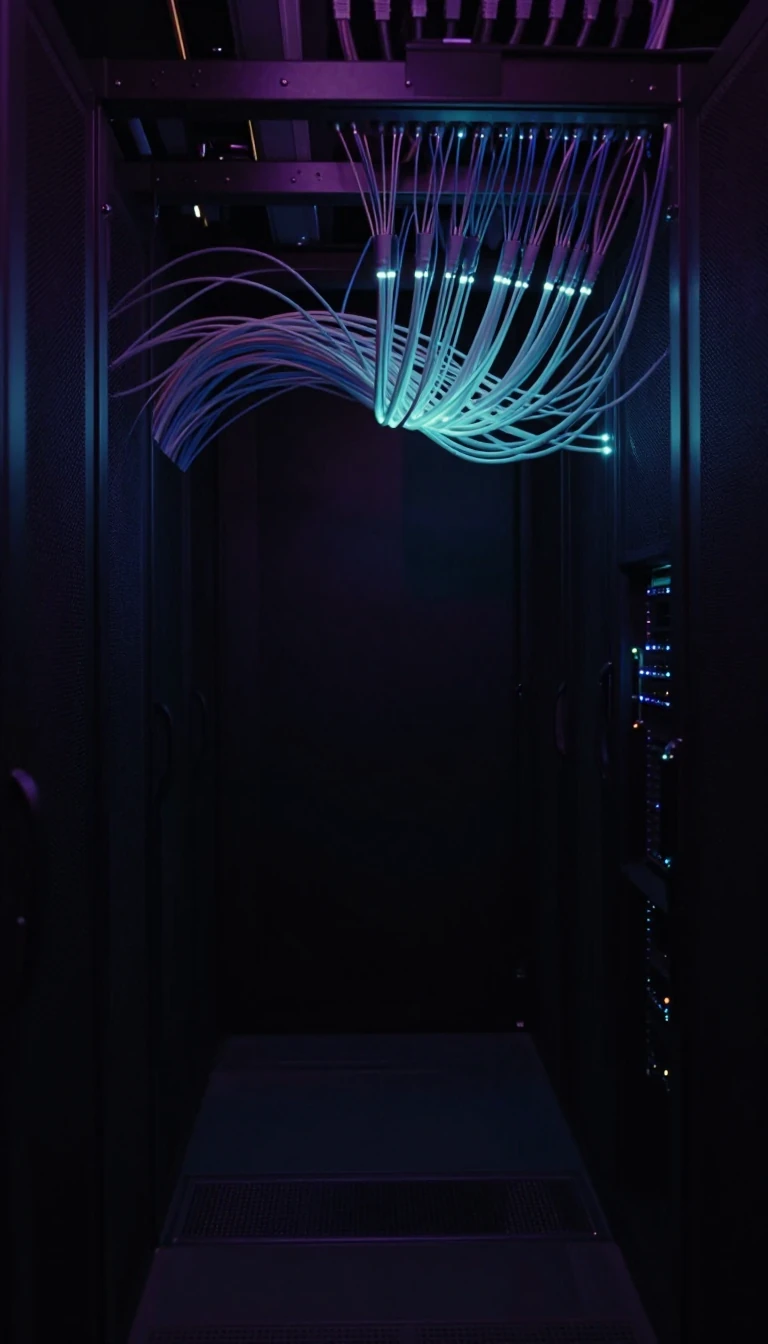
In short: To capture ultra-fast signals, engineers do not always build faster hardware. Instead, they use time-interleaved analog-to-digital converters, which act like multithreading in computing. By staggering multiple slower converters in parallel, they achieve a massive aggregate sampling rate, enabling everything from 5G telecommunications to high-resolution medical imaging.
The core concept of time-interleaved (TI) ADCs is to parallelize the conversion process. By using multiple sub-ADCs—often called slices or channels—to sample an input signal at staggered intervals, the system achieves a total sampling rate that exceeds the capability of any individual component. This technique, which traces its theoretical roots to the 1960s work of Bernard M. Oliver and Claude E. Shannon, allows designers to build high-speed systems using slower, more reliable hardware.
Practical implementation began in the 1980s, when W. C. Black and D. A. Hodges at Berkeley University created the first prototype: a 4-way interleaved converter operating at 2.5 MSample/s. By 1987, HP Labs released the HP 54111D, the first commercial product to utilize this technology. The 1990s saw further adoption, notably with the 1991 release of the Tektronix TDS350, a 1 GSample/s digital storage scope that relied on TI ADCs to capture fast transient signals.
Architectural choices define the system's performance. A single sample-and-hold (S&H) circuit architecture is compact and minimizes mismatches but demands extreme speed from the central sampler. Alternatively, using multiple S&H circuits distributes the load, allowing each to operate at a fraction of the total rate. While this eases speed requirements, it increases power consumption and physical footprint on the chip. Engineers must also manage sub-ADC mismatches caused by process, voltage, and temperature variations, which can introduce unwanted spectral tones if not properly calibrated.
Today, this technology is essential for modern digital systems. As demand grows for autonomous vehicles, radar, and AI-driven processing, researchers like Boris Murmann at Stanford continue to refine calibration and low-power design. By effectively multiplying the sampling rate by the number of channels, time interleaving remains a cornerstone of high-speed data conversion, bridging the gap between the speed of incoming signals and the limitations of individual silicon components.
Opens the Intellect+ feed with this card first. Swipe up for the next one.
Sources
- Summary by Intellect · source: Time-interleaved ADC
To cite this card, link to https://intellectplus.co.uk/app/technology-time-interleaved-adc.
How we source, check and correct cards: Editorial standards.
General information, not professional advice. Spotted an error? Flag the card or see corrections and complaints.
Intellect Plus is a visual educational discovery platform for exploring fascinating facts and ideas. Brain Food, Not Brain Rot. What is Intellect Plus?
Related
More in Famous patents · More in Technology · Latest · A–Z · All topics
