 Intellect Plus
Religion and spirituality
628 cards. Each one is a 40-second story with a five-minute read behind it. Page 11 of 11.
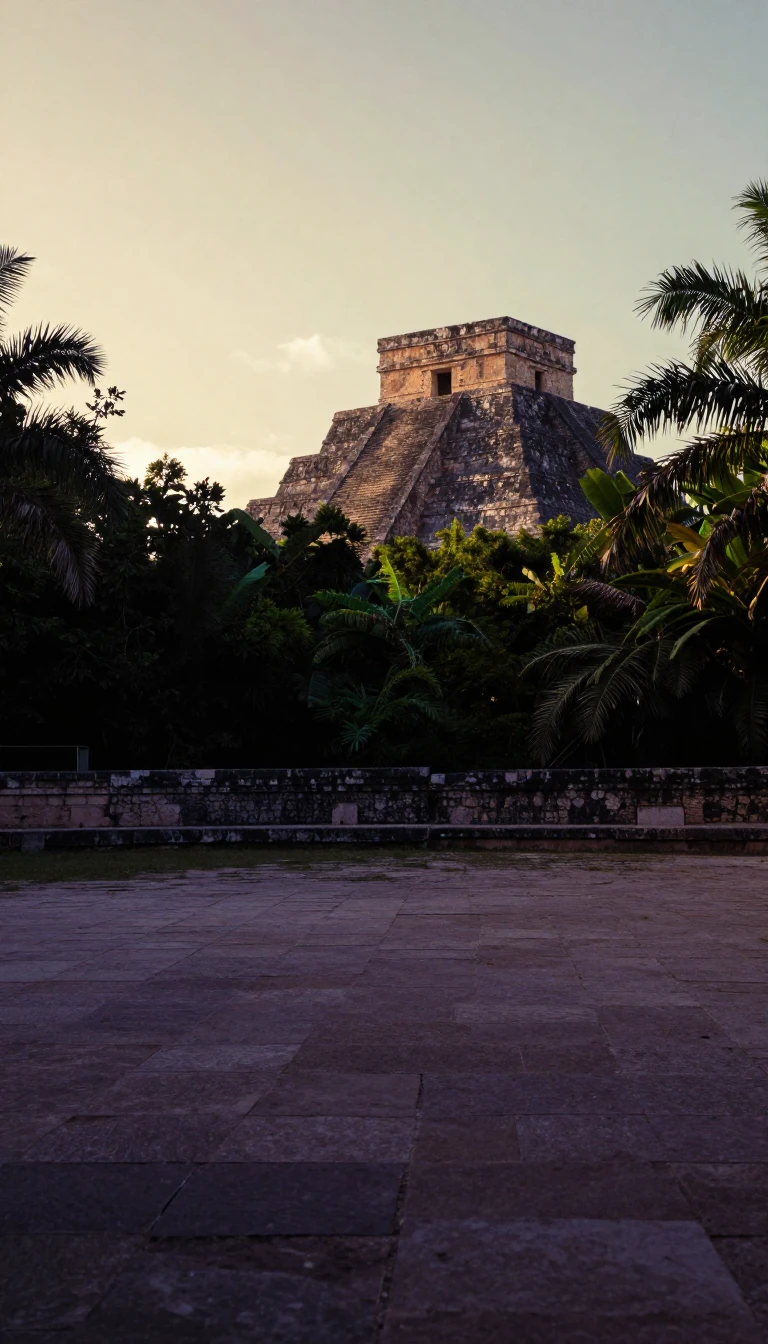 When the Aztecs called Spaniards teotl, they may not have meant godsMoctezuma II and his people described Cortés and his soldiers as teotl, a word often translated as god. Many historians took this as proof the Aztecs thought the Spaniards divine.…
 Almost nobody who leaves a religion calls themselves an apostateApostasy comes from a Greek word for defection or revolt, and it names the formal abandonment of a faith. The label carries such a negative charge that few former believers apply …
 A Dutch pastor's quarrel over predestination reshaped Baptists, Methodists and PentecostalsJacobus Arminius was trained by Calvin's hand-picked successor, then rejected his teacher's view that God unconditionally picks who will be saved. His followers were purged, jaile…
 Artemis protected children and midwives, yet Greek myth made her fearsomeThe Greek goddess of the hunt also watched over childbirth, young girls and animal cubs. Her temple at Ephesus ranked among the Seven Wonders of the Ancient World. Yet in tragedy …
 Astrology was respectable scholarship for millennia before science dismantled itFor most of recorded history, reading the heavens for earthly meaning sat alongside astronomy, medicine and alchemy in learned circles. Its Western form reaches back to Mesopotami…
 Romans once called Christians atheists for ignoring the pagan godsWhat counts as atheism depends on what counts as a god. Ancient Romans branded Christians atheists because they refused to worship Rome's deities. Today philosophers still argue o…
 Before she was Athena of wisdom, she may have guarded a palaceThe goddess behind the Parthenon probably began as a Bronze Age palace protector who watched over household crafts and the king. A single Linear B inscription at Knossos names a L…
 Atlantis was Plato's invented cautionary tale, not a lost real placeClassicists agree that Plato made up Atlantis as an allegory of national arrogance: a mighty western sea empire that attacked Europe, lost to ancient Athens and sank in a single d…
 Aboriginal stories may preserve volcanic eruptions from more than 10,000 years agoOn Queensland's Atherton Tableland, Aboriginal narratives describe how three crater lakes were born. Geologists dated those eruptions to over 10,000 years ago, and pollen buried i…
 One compassionate bodhisattva became Guanyin in China and Kannon in JapanAvalokiteśvara, the Buddhist embodiment of great compassion, has at least 108 recognised forms. In India the figure is a lord who looks down on suffering beings; across East Asia …
 Apollo healed plagues and sent them, sometimes with the same arrowsThe Greek god of light and music also carried a bow that could spread deadly disease. Apollo guarded shepherds' flocks, children growing into adults and the doorways of houses, an…
 The ancient Greeks had gods, temples and rituals, but no word for religionGreek worship had no scripture, no creed and no central priesthood. What mattered was doing the rituals correctly, not believing the right things. Even gods sharing a name could d…
 Mesopotamian gods got drunk, and scholars have counted about 2,400 of themThe gods of Sumer and Babylon ate, drank and suffered hangovers like people, yet glowed with a terrifying radiance called melammu. A 1938 survey tallied some 2,400 known deities, …
 Angels began as demoted gods, according to biblical scholarsThe Greek angelos just meant messenger, and in early Hebrew texts the equivalent word often described a human prophet. Scholars argue that once Israel's faith became strictly mono…
 A French war minister secretly blocked promotions for officers who attended MassIn 1904 France learned that its war minister, General Louis André, had been deciding army promotions with the help of a card index kept by the Masonic Grand Orient. The files note…
 Apocalypse originally meant revelation, not the end of the worldTo scholars, an apocalypse is not a catastrophe at all. The Greek word means an unveiling: a heavenly messenger shows a human secrets about the cosmos, the past or the future. The…
 The Amazons probably had real models in Scythian women buried with their weaponsGreeks never doubted the Amazons were real, and modern archaeology is finding reasons to agree. Graves across the Eurasian steppe hold women buried with arms, some bearing the inj…
 Anansi the spider crossed the Atlantic and became a hero of resistanceAnansi, the Akan trickster spider, wins by wit against rivals far stronger than himself. Enslaved Africans carried his stories across the Atlantic, and on Caribbean and American p…
 Pythagoras and Plato believed in rebirth long before most Westerners heard of karmaBelief in life after death splits into two great families. In one, the dead travel to another realm, sorted by gods according to how they lived. In the other, they come back in ne…
 A baby is not an agnostic, and philosophers can explain whyThomas Henry Huxley coined the word agnosticism in 1869, from Greek for without knowledge. Philosophers since have insisted it is not simple uncertainty. An agnostic has weighed t…
 Persian kings invited Ahura Mazda to battle in an empty chariotAt the Achaemenid court, the supreme god of Zoroastrianism had no statue. Instead an empty chariot pulled by white horses rolled out with the army, inviting Ahura Mazda to ride al…
- Arab Christians and Jews said Allah before Islam existed, and many still doAllah is simply the Arabic word for God. Pre-Islamic Arab Christians wrote it in inscriptions and poems and reportedly shouted it as a battle cry, and today Arabic-speaking Jews a…
 The word altar probably began as a Latin name for a burning placeAltar comes from Latin altare, probably tied to a verb meaning to burn and nudged by altus, high. That fits its long history as the spot where offerings went up in smoke, from Noa…
- Japan's emperors traced their line to a sun goddess born from an eyeIn the Kojiki, Japan's oldest book, the god Izanagi washes his left eye after a failed trip to the underworld and the sun goddess Amaterasu appears. She is set to rule heaven, and…
- Three world religions trace themselves to Abraham, a figure most historians call legendaryJews revere Abraham as their first patriarch, Christians as Jesus's forebear and spiritual father, Muslims as a prophet in the line leading to Muhammad. Yet most scholars think hi…
 The Iliad never mentions Achilles' heel, or even shows his deathHomer's greatest warrior is never described as invulnerable, and his death happens offstage, outside the poem. The story of Thetis dipping baby Achilles in the Styx while gripping…
 Genesis tells the creation of humans twice, and Adam barely appears againRead Genesis closely and there are two creation stories. In the first, humankind is made in God's image with no names given. In the second, Adam is shaped from dust and Eve from h…
- Over 100 million people across 43 countries still follow Africa's traditional religionsAfrica's indigenous faiths have no single scripture. They live in songs, myths, festivals and the memory of ancestors, who are believed to bless or trouble the living. Even where …