 Intellect Plus
Religion and spirituality
628 cards. Each one is a 40-second story with a five-minute read behind it. Page 8 of 11.
 Many 'ancient' royal ceremonies in Britain date from the late 1800sRituals turn up everywhere, from coronations and funerals to a simple handshake, and even elephants and crows perform them. Their power often rests on a claim to great age that is…
 Some American synagogues once held their Sabbath services on SundayReform Judaism began in 19th-century Germany as an attempt to fit an ancient faith to modern life. In the United States it went further than anyone in Europe dared: prayers almost…
 Calvinism was named by its Lutheran opponents, and Calvin disliked the labelLutherans coined the word Calvinism in the 1550s, and not as a compliment. Calvin himself objected, and modern scholars call the label misleading, since the movement began with Hu…
 The English word priest began life meaning simply an elderPriest descends, through Latin, from the Greek presbyter, an elder of a Jewish or Christian community. The proper Latin term for a sacrifice-offering priest was sacerdos. English …
 Biblical prophets mostly issued warnings, not fixed forecasts of the futureWe picture prophets predicting what must happen. Old Testament prophecy usually worked more like an ultimatum: turn away from a particular wrong, or suffer a particular result. Th…
 Official Catholic teaching on purgatory mentions neither a place nor firePopular imagination pictures purgatory as a fiery waiting room between earth and heaven. Yet when the Catholic Church first defined the doctrine in 1274, it said nothing about a t…
 The character for qi hides a pot of steaming riceQi, the vital force of Chinese philosophy, literally means vapour, air or breath. Its oldest written form was three wavy lines on Shang oracle bones. Around the Han dynasty, scrib…
 The Quran's very name means recitation, and it is still learned by heartQur'an comes from an Arabic verb for reading aloud or reciting. Fittingly, Muslims believe it arrived orally, delivered to Muhammad through the angel Gabriel over about 23 years. …
 Rabbi appears nowhere in the Hebrew Bible, and Hillel never carried the titleRabbis seem as old as Judaism itself, yet the title first surfaces in the first century CE. Famous early sages such as Hillel and Shammai bore no honorific before their names. The…
 Rama's name can mean both dark as night and utterly delightfulIn the Atharva Veda the Sanskrit word rama means dark or black; in other Vedic texts it means charming and lovely. The hero who carries the name is honoured as Vishnu's seventh av…
 The Ramayana's first and last books were probably added laterValmiki's epic runs to roughly 24,000 couplets in seven books, but scholars think only the middle five belong to the oldest layer. The opening Balakanda and closing Uttara Kanda d…
 Rastafari took its name from an Ethiopian emperor's title before his coronationBefore he was crowned Haile Selassie in 1930, the future emperor of Ethiopia was Ras Tafari Makonnen, ras being a noble rank like duke. Jamaican preachers such as Leonard Howell h…
 Pilgrims were walking to holy places long before Christianity named the practiceThe word pilgrim comes from the Latin peregrinus, someone who has come from far away. Yet sacred journeys are far older than the Latin term: Greeks trekked to the oracles at Delph…
 Counting gods is harder than it looks, even for expertsPolytheism simply means worshipping more than one deity, but deciding which faiths qualify is surprisingly slippery. Many Hindus call their beliefs monotheistic, Irish Christians …
 Pope once meant any senior bishop; Rome only claimed it laterThe title comes from the Greek pappas, father, and early Christians in the East gave it to bishops generally. The first known use honoured a patriarch of Alexandria, Heraclas. Onl…
 Before ruling the sea, Poseidon outranked Zeus on Mycenaean clay tabletsMost people know Poseidon as the trident-wielding sea god. Bronze Age scribes saw him differently: on Linear B tablets his name turns up more often than that of Zeus, he was chief…
 Kneeling with clasped hands may have come from feudal homage, not scriptureEarly Christians prayed standing, gazing upward with arms spread wide, much as their pagan neighbours did. The familiar pose of kneeling with hands pressed together seems to have …
 Augustine changed his mind about predestination, and Christianity split along the fault lineIf God knows everything in advance, can anyone truly choose? Predestination tries to answer that riddle. Before 396, Augustine thought grace rewarded people who said yes to God. A…
 For most of human history, faith left no words, only caves and stonesOver 99 per cent of prehistory falls within the Paleolithic, a stretch lasting more than two and a half million years with no writing at all. Religion appears for certain only aro…
 Presbyterians are named not for a belief but for how they run churchPresbyterianism takes its name from presbyters, the elders who govern it through layered assemblies rather than bishops. Born from Calvin's Geneva and carried home by John Knox, i…
 Parvati's name means she of the mountain, daughter of the HimalayasParvati is the Hindu goddess whose birth was meant to coax the ascetic Shiva into marriage. Daughter of the mountain king Himavan, mother of Ganesha and Kartikeya, she is both Gau…
 Pegasus opened springs with his hooves and hauled thunderbolts for ZeusThe winged horse of Greek myth was no mere mount. Wherever his hoof hit the ground, a spring of inspiring water gushed out, including the Muses' fountain on Mount Helicon. He carr…
 A small Los Angeles mission in 1906 launched a faith of hundreds of millionsIn April 1906 a one-eyed Black preacher named William Seymour began leading worship on Azusa Street in Los Angeles. Black and white believers prayed side by side, spoke in tongues…
 In Persian myth, the first human couple sprouted from a rhubarb plantIranian mythology frames the whole of time as a 12,000-year contest between Ahura Mazda and Ahriman, light against darkness. Along the way it gives us a tyrant with serpents growi…
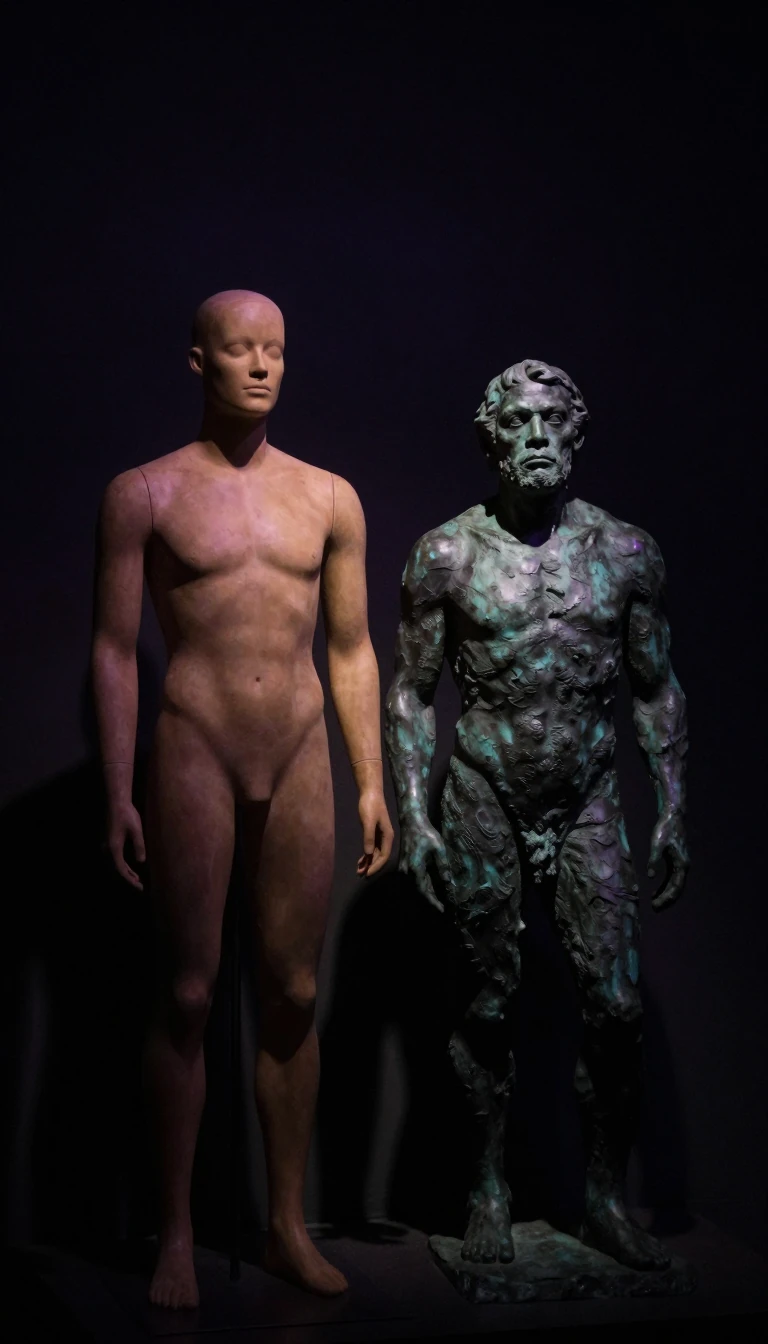 Why death is often a woman in Spanish-speaking cultures but a man in EnglishThe Grim Reaper with his scythe is only one face of death. Where the word for death is feminine, as with Spanish muerte, death tends to be imagined as a woman. Elsewhere death is …
 Rome once put a phoenix on public display, and even Pliny called it fakeIn 47 AD a supposed phoenix was brought from Egypt and exhibited in Rome's Comitium to mark the city's 800th anniversary. Pliny the Elder said nobody could doubt it was a fabricat…
 The pagan Norse had no word for religion; they called it old customBefore Christianity reached Scandinavia, its people practised their faith without scripture, creeds or even a term for religion. Only after conversion did they label it forn sið, …
 There is no single Old Testament: Protestants count 39 books, Catholics 46Ask how many books the Old Testament holds and the answer depends on which church you ask: 39 for most Protestants, 46 for Catholics, up to 49 in Orthodox traditions. The extra bo…
 In one Tamil dialect of Sri Lanka, aum simply means yesOm is chanted across Hinduism, Buddhism, Jainism and Sikhism as the sound of ultimate reality. Yet nobody agrees where the word came from. One leading theory traces it to a Dravid…
 Orthodox Judaism is ancient in belief but surprisingly modern as a movementThe word Orthodox was first applied to Jews in a Berlin magazine in 1795, borrowed from Enlightenment debate, and many traditionalists disliked it. Historians date the movement it…
 Orthodoxy needs a rulebook, which is why some traditions barely have oneOrthodoxy comes from Greek for correct opinion, and it only works where a community has agreed on what correct means. Christianity fought for centuries over its definition; Hindui…
- Buddhist monks memorised their scriptures for centuries before anyone wrote them downTheravada tradition holds that the Pali Canon was passed mouth to mouth for roughly four centuries, then inscribed on palm leaves in Sri Lanka around 29 BC. Memory still matters: …
 Everything is in God, but God is more than everythingPanentheism means all in God. Coined by Karl Krause in 1828, it sits between two familiar options: God as a distant creator, and God as identical with nature. The divine runs thro…
 The word pantheism was coined by a mathematician twenty years after Spinoza diedSpinoza is the thinker most tied to the idea that God and the universe are one, yet he never used the word. An English mathematician, Joseph Raphson, coined it in Latin in 1697. W…
 Paradise began as a Persian word for a walled royal parkBefore it meant heaven, paradise meant a wall around a garden. The Old Iranian term described enclosed estates of Persian kings; Greeks used it for animal parks, Hebrew for orchar…
 Odysseus tried to dodge the Trojan War by pretending to be madHomer's king of Ithaca is the hero who wins by thinking. He faked insanity to avoid sailing for Troy, unmasked a disguised Achilles with a hidden weapon, and spent ten years getti…
 Almost nobody inside the New Age ever called themselves a New AgerScholars built a whole field around the New Age, yet the people they studied mostly rejected the label, preferring to call themselves spiritual seekers. By 2003 one researcher fou…
 Roughly 40 new religions are born in the United States every yearSpeaking to The New York Times in 2006, the scholar J. Gordon Melton estimated that America sees between 40 and 45 fresh religious movements emerge each year. Worldwide they numbe…
- Testament originally meant a will, thanks to a curious Greek translation choiceThe Hebrew word brit meant a pact or alliance, nothing more. But when Jewish scholars in Alexandria translated scripture into Greek, they chose diatheke, a word Greeks used almost…
 Nirvana literally means blown out, like a flame starved of fuelThe Sanskrit nirvana joins nis, out, to vana, blown, so its root sense is extinguished. Buddhists pictured greed, hatred and delusion as three fires that keep rebirth burning. Put…
 Two stitched-together sources explain why Noah's animal count doesn't add upHow many of each animal did Noah bring aboard, and how long did the waters stay? Genesis gives confusing answers to both questions, and the documentary hypothesis offers an answer…
 Christians who reject the Trinity number about 3 percent of all believersMost churches treat the Trinity as settled since councils in 325 and 381. Yet roughly 3 percent of today's Christians, from Jehovah's Witnesses to Oneness Pentecostals, reject it.…
 To the Romans, a monster was a warning sent by the godsMonster comes from the Latin monstrum, rooted in moneo, to warn or foretell. For Greeks and Romans an unnatural birth or strange creature was a message of divine displeasure. The …
 One farm boy's movement has splintered into an estimated 400-plus denominationsJoseph Smith was about 14 when, confused by feuding churches in western New York, he prayed for guidance and later described a vision telling him to join none of them. The traditi…
- Was Moses' name Hebrew or Egyptian? Commentators have argued for centuriesExodus says Pharaoh's daughter named the baby Moses because she drew him out of the water, a Hebrew pun. Yet the name looks strikingly like the Egyptian mose, child of, found in p…
 China's Great Mosque of Xi'an looks like a pagoda, not a domed mosqueIn eighth-century Chang'an, then the largest city on Earth, one of East Asia's first grand mosques rose without a single minaret, because the state banned them. Its present buildi…
 Religious experience as a category was invented to shield faith from rationalismTalk of a distinct religious experience only took shape in the 19th century, when Friedrich Schleiermacher grounded religion in a feeling of the infinite to fend off scientific cr…
 Mysticism comes from a Greek verb meaning to shut your eyes and mouthThe Greek root múō meant to close or conceal, and its offshoot mystikos described an initiate into secret rites. A mystic was originally someone let in on a hidden ceremony. Only …
 English had the word mythology for centuries before anyone wrote mythMythology arrived in English around 1425, in John Lydgate's Troy Book, while the short word myth only surfaced in 1830. Samuel Johnson's dictionary listed one but not the other. A…
 In one Southeastern creation story, a water beetle dredged up the worldOnce, creatures lived in a crowded realm above the sky called Galvlo'i, with only ocean below. Water Beetle dived to the seabed, returned with mud that spread into an island, and …
 The Minotaur had a real name: Asterion, meaning starBefore he was a monster in a maze, the Minotaur was Asterion, a name tied to the stars and shared with the foster-father of King Minos. A coin from Knossos shows him ringed by lit…
 A mathematician reckoned you should meet a one-in-a-million event about monthlyJ. E. Littlewood argued that with so much happening every moment, each of us should expect a one-in-a-million coincidence roughly once a month. That puts the old question of mirac…
 Buddhist monasteries grew out of a rule to stop monks trampling monsoon seedlingsEarly Buddhist monks and nuns wandered, until they were told to stay put for about three months of the rainy season so they would not damage young plants or get stranded. Those se…
- Manichaeism once stretched from Roman Spain to China, then vanished almost completelyIn the third century a Parthian prophet named Mani founded a faith that aimed to absorb Zoroaster, the Buddha and Jesus into one final revelation. For a while it rivalled early Ch…
- The word mantra shares an ancient root with thinking, dating back about 4,000 yearsA mantra can be a single syllable like Om or a long sacred phrase, and some carry no literal meaning at all. The word comes from an Indo-European root meaning to think plus a suff…
 Rome's war god Mars also guarded farms and was honoured as a fatherGreeks often treated Ares with disgust, but Romans revered his counterpart Mars as father of their people, guardian of crops and a force that won peace through strength. His festi…
 For the Maya, mountains, caves and sinkholes form a sacred map of ancestorsMaya religion has endured as a recognisable tradition for more than 2,500 years. Today it blends with Catholicism, yet its heart is still a landscape where particular peaks, wells…
 Science still has no agreed definition of meditation, despite decades of studyMeditation runs from counting breaths to Zen koans to loving-kindness practice, and researchers have never pinned down what all of them share. One expert panel settled on three es…
 Medusa's power may have begun as a ritual mask, not a monsterOf the three Gorgon sisters, only Medusa could die. Perseus took her head by watching her reflection in a polished shield, and even severed it kept turning people to stone. One cl…
 Mermaids inherited their deadly song from sirens, who were originally half-birdThe seductive singing mermaid is a medieval merger. Homer's sirens were human-headed birds, and only gradually grew fish tails in art and text. That is why French and Spanish stil…